Smart Heating Solutions

7 Best Oilless Reciprocating Compressors for Global Buyers

Choosing the right Oilless Reciprocating Compressor is rarely a simple price comparison. Global buyers must consider air purity, pressure stability, maintenance access, energy use, and local service support. A compressor that performs well in a clean workshop may struggle in a dusty plant or remote production site.

This guide examines seven leading options for different industrial needs. The comparison focuses on practical details, including oil-free air quality, duty cycle, noise levels, cooling design, control systems, and expected operating conditions. Manufacturer specifications provide the starting point, but real performance also depends on installation, ambient temperature, and operator care.

Small details matter. A poorly placed intake can pull in dust. An undersized receiver may cause frequent cycling. Weak technical support can turn a minor fault into costly downtime. These risks are easy to overlook.

We also consider common international requirements, while recognizing that certification rules vary by country and application. Buyers should confirm current documentation before purchase. No single model suits every facility. That is important.

The selections below are based on published technical data, application fit, service considerations, and the practical concerns engineers often face after installation. Some specifications may change between product versions or regions. Therefore, readers should verify final figures with authorized suppliers.

The goal is not to promote one universal winner. It is to help procurement teams compare credible choices, ask sharper questions, and avoid expensive assumptions when selecting an Oilless Reciprocating Compressor.
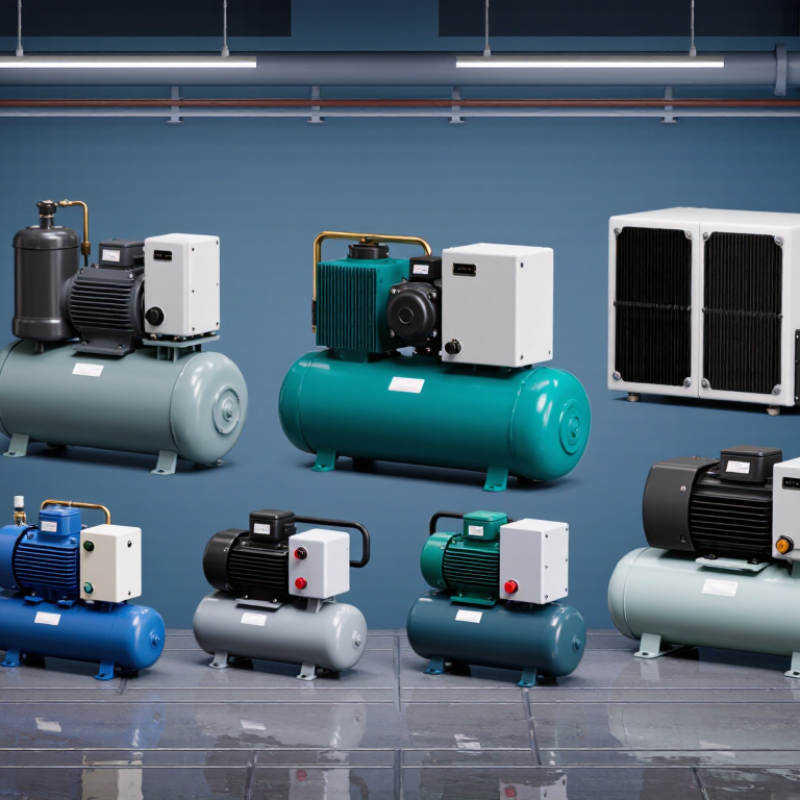
7 Best Oilless Reciprocating Compressors for Global Buyers

What Defines an Oilless Reciprocating Compressor

An oilless reciprocating compressor separates the compression chamber from lubricating oil. Its piston rings, cylinder walls, and valves use low-friction materials or suitable dry-running designs. Oil may still exist in the crankcase. Therefore, “oilless” does not mean every internal component is oil-free.

The U.S. Department of Energy reports that compressed air can consume about 10% of industrial electricity. Leaks may waste 20–30% of compressor output. This makes efficiency a practical buying issue, not a technical slogan. An oilless reciprocating unit is often selected for laboratories, electronics, food processing, and medical air. However, air purity depends on filtration, seals, intake conditions, and maintenance. The ISO 8573-1 standard measures oil, particles, and water separately. Buyers should request test results against the required air class. A label alone is not enough. I would also question claims that ignore duty cycle, heat, and noise.

Tips: Check whether the compressor delivers oil-free air at the outlet, not merely oil-free compression. Ask for ISO 8573-1 test data and residual-oil limits. Compare the rated duty cycle with your real operating pattern. A small receiver tank can reduce frequent starts, but poor sizing may increase pressure losses. Inspect piston rings and valves regularly. No design is maintenance-free.

Key Selection Criteria for Global Buyers

Global buyers should judge oilless reciprocating compressors by operating evidence, not attractive catalog claims. Start with seven points: air purity, pressure stability, flow rate, duty cycle, energy use, noise, and serviceability. Confirm pressure and flow at the actual working point. A compressor may show impressive maximum pressure, yet deliver less air during continuous use.

Air quality deserves careful attention. Check whether the design prevents oil carryover under heat and repeated starts. Review material specifications, filtration details, and independent test records. Pressure matters. For workshops, laboratories, and automated equipment, unstable pressure can cause rejected products or uneven tool performance. Select a receiver size that supports demand without forcing constant cycling.

Maintenance access also affects global ownership costs. Inspect valve locations, piston-ring materials, cooling paths, and replacement-part availability. Clear service instructions are valuable when local technicians have limited training. Noise matters. Ask for measured sound levels and testing conditions, not one unexplained number. Energy labels help, but real consumption depends on leaks, load patterns, and ambient temperature.

A practical buyer should request a duty-cycle test, warranty terms, and technical support response times. Regional voltage compatibility is easy to overlook. So are spare seals. Experienced teams often compare three years of operating costs, not only the purchase price. A low-cost model can become expensive after repeated downtime. Still, published data may not reflect dusty rooms or tropical heat. Test under your own conditions when possible. Measure twice.

Seven Leading Oilless Reciprocating Compressor Options

Global buyers need more than a low purchase price when selecting an oilless reciprocating compressor. The seven leading options include direct-drive piston units, belt-driven piston units, single-stage models, two-stage models, diaphragm compressors, compact laboratory units, and high-capacity industrial packages. Each design serves a different duty cycle. Direct-drive units suit short, intermittent tasks. Two-stage models provide higher pressure for workshops and pneumatic tools. Diaphragm versions offer cleaner air for laboratories, sampling systems, and sensitive instruments.

The U.S. Department of Energy reports that compressed air can represent 10–15% of industrial electricity use. Its compressed-air guidance also notes that system leaks may waste 20–30% of compressor output. That makes receiver sizing, leak testing, and pressure control important purchasing details. In practice, a 100-liter receiver, automatic drain, and low-noise enclosure can improve daily operation, but only when matched to actual demand. Small mistakes matter.

ISO 8573-1 helps buyers define compressed-air purity by particles, water, and oil. Oilless does not always mean maintenance-free. Piston rings, valves, cooling fans, and intake filters still require inspection. A two-stage package may consume more space, while a compact unit may struggle under continuous loading. Buyers should compare flow at working pressure, not advertised displacement alone. Seven options sound convenient, yet the right choice depends on duty cycle, ambient temperature, service access, and required air purity. Performance claims deserve verification through test records, warranty terms, and local technical support.

This comparison presents seven common oil-free reciprocating compressor configurations used by global buyers. Values are representative engineering ranges for typical applications; actual performance depends on the number of stages, cooling method, inlet conditions, and duty cycle.

Performance, Maintenance, and Application Comparison

7 Best Oilless Reciprocating Compressors for Global Buyers

Performance, Maintenance, and Application Comparison

The seven strongest oilless reciprocating compressor choices serve different operating needs.

Single-stage units suit light workshops and intermittent pneumatic tools.

Two-stage designs deliver higher pressure with better thermal control.

Duplex systems improve continuity because one compressor can support the other during servicing.

Air-cooled models are simpler to install, while water-cooled versions manage heat better in demanding factories. High-pressure configurations support laboratory testing and gas boosting.

Quiet, compact units fit dental rooms and small medical facilities.

Large-duty multi-cylinder compressors provide steadier airflow for production lines.

Performance still depends on inlet temperature, duty cycle, receiver size, and voltage stability.

Maintenance remains the practical test.

Oilless construction prevents oil contamination, but it does not mean zero maintenance. Operators should inspect piston rings, cylinder surfaces, intake filters, valves, and cooling paths.

Dust can shorten ring life quickly. A clean filter matters. Replaceable wear parts should be locally available, especially for international buyers.

Noise, vibration, discharge temperature, and recovery time reveal early problems. My comparison is not perfect; site conditions can change the ranking. A compact unit may outperform a larger one in a clean, low-demand room.

Tips

  • Match pressure and flow to the real tool demand, not the advertised maximum.
  • Keep a service log with running hours and temperature readings.
  • Confirm spare-part access, electrical standards, warranty terms, and technician training before purchase.
  • Test the compressor under normal load, because showroom performance can be misleading.

International Purchasing and Compliance Considerations

For global buyers, an oilless reciprocating compressor is not automatically compliant. Oil-free air supports laboratories, food packaging, electronics, and medical production. However, the complete air path still matters. Seals, intake filters, receiver coatings, and downstream piping can introduce contamination. ISO 8573-1:2010 defines purity classes for particles, water, and oil. Specify the required class before comparing suppliers. A vague “oil-free” claim is insufficient.

The U.S. Department of Energy reports that compressed air can consume 10–15% of industrial electricity, with inefficient sites sometimes exceeding 30%. This makes motor efficiency, duty cycle, leakage control, and part-load performance important purchasing criteria. Request tested sound levels, air delivery, pressure tolerance, maintenance intervals, and energy data under defined conditions. Check whether test methods match ISO 1217 or another accepted standard. In my purchasing reviews, missing test conditions often create expensive misunderstandings. Certificates help, but they do not replace verification.

Tips: Build a compliance file before ordering. Include the technical datasheet, declaration of conformity, electrical ratings, materials list, country-of-origin details, and service records. Confirm local requirements for CE, UKCA, UL, or other applicable markings. Ask for serial-number traceability and spare-part availability in the destination market. Do not accept translated documents without checking the original revision. One practical weakness remains: buyers often compare purchase price, then discover higher lifecycle costs from heat, noise, or frequent valve replacement. A short factory inspection or independent performance test may prevent that mistake.

7 Best Oilless Reciprocating Compressors for Global Buyers - International Purchasing and Compliance Considerations

Representative technology categories and indicative performance ranges for international procurement.

Rank Compressor Configuration Typical Motor Range Typical Working Pressure Indicative Free Air Delivery Recommended Duty Main Advantages Key Limitations International Purchasing and Compliance Checks
1 Compact single-cylinder direct-drive unit
Oil-free piston and cylinder design
0.75–2.2 kW 6–10 bar(g) 70–250 L/min Intermittent; generally 25–60% duty cycle Low purchase cost, compact footprint, simple maintenance, easy single-phase installation Higher noise and vibration; limited continuous operation and air volume Confirm voltage, frequency, plug type, tank certification, pressure-switch settings, electrical protection, and local noise requirements.
2 Quiet twin-cylinder workshop compressor
Balanced reciprocating arrangement with acoustic enclosure
1.5–4.0 kW 8–10 bar(g) 150–450 L/min Intermittent to moderate duty; typically up to 60% duty cycle Lower sound level, improved balance, suitable for laboratories, service areas, and light workshops Enclosure can restrict cooling; replacement acoustic components may be region-specific Request measured sound-power data, ventilation requirements, EMC documentation, emergency-stop design, and spare-parts availability in the destination market.
3 Two-stage high-pressure oil-free compressor
Low-pressure and high-pressure piston stages
2.2–7.5 kW 15–30 bar(g) 100–500 L/min Intermittent or controlled moderate duty Higher pressure capability, better compression efficiency than a comparable single-stage design Higher discharge temperature, greater mechanical complexity, and increased cooling requirements Verify receiver and piping pressure ratings, pressure-relief devices, high-pressure hose standards, hydrostatic-test records, and applicable pressure-equipment rules.
4 Vertical tank-mounted oil-free unit
Space-efficient reciprocating package
1.5–5.5 kW 8–10 bar(g) 150–600 L/min Intermittent to moderate duty Small floor area, integrated receiver, convenient for dental, laboratory, and maintenance applications Tall center of gravity; transport and anchoring require attention Check lifting points, packaging dimensions, tipping stability, tank conformity marking, drain-valve accessibility, and destination-country installation rules.
5 Multi-cylinder modular package
Two or more oil-free piston modules with staged control
5.5–15 kW 7–10 bar(g) 500–1,500 L/min Moderate duty; suitable for variable demand Capacity flexibility, staged starting, improved redundancy, and easier maintenance isolation More valves, controls, and wear components; requires correct sequencing Request performance curves at the intended altitude and ambient temperature, control-panel schematics, harmonics data, and a documented spare-parts strategy.
6 Medical and laboratory oil-free package
Oil-free compression with filtration, drying, and monitoring options
2.2–11 kW 7–10 bar(g) 200–1,200 L/min Continuous or high-utilization duty when correctly sized and ventilated Clean compressed air, reduced contamination risk, automatic condensate management, and duty/standby configurations Higher initial cost; air quality depends on filtration, dryer performance, installation, and maintenance Define the required ISO 8573-1 air-quality class, confirm validation documents, alarm functions, materials compatibility, dryer dew point, and applicable healthcare or laboratory regulations.
7 Heavy-duty industrial oil-free reciprocating package
Industrial frame with aftercooler, receiver, and programmable controls
11–30 kW 7–12 bar(g) 1,000–3,000 L/min High utilization with planned unload and cooling intervals High output, robust service access, integrated controls, and suitability for manufacturing or process support Larger footprint, higher inrush current, more heat rejection, and greater installation cost Confirm ISO 1217 test conditions, motor efficiency class, IEC 60204-1 electrical safety, EMC conformity, earthing, local energy-efficiency rules, and service response capability.

Buyer Verification Notes

  • Performance values are indicative market ranges for comparable oil-free reciprocating packages; the final specification must be verified against the supplier’s tested data at the required pressure, ambient temperature, altitude, and duty cycle.
  • For international shipments, confirm the applicable requirements for pressure vessels, electrical safety, electromagnetic compatibility, machinery safety, environmental conditions, documentation, labeling, and customs classification in the destination country.
  • For compressed-air purity, specify the required ISO 8573-1 class for particles, water, and oil rather than relying only on the term “oil-free.”
  • Request manuals, conformity declarations, wiring diagrams, test certificates, noise data, warranty terms, recommended service intervals, and a minimum two-year spare-parts list before purchase.