Smart Heating Solutions
What Are the 10 Best Marine Explosion Proof Lights?
Choosing the 10 best marine explosion proof lights takes more than comparing brightness. Salt spray crusts around fittings. Vibration can loosen connections, while heat and moisture challenge seals over time. A suitable marine explosion proof light should match the hazardous-area classification, mounting position, power supply, and operating conditions specified for the vessel. Check its documentation, temperature rating, ingress protection, materials, and installation requirements before comparing models.
For transparency, the following is an editorial line from a fictional composite expert, not a quotation from a real, verifiable person: Marine electrical engineer “Mara Ellis” says, “A light is only as dependable as its rating, installation, and maintenance.” That reminder is simple, but useful. A product label alone cannot confirm that a fixture fits a particular location. Buyers should verify technical details with the manufacturer and qualified project personnel.
This guide compares ten options by practical features, including output, construction, mounting, and stated approvals. It also considers trade-offs that product pages can gloss over. A brighter fixture may create glare; a rugged housing may add weight. No single model fits every vessel. That is worth admitting. The right choice depends on the actual space, exposure, and documented requirements—not a ranking alone.
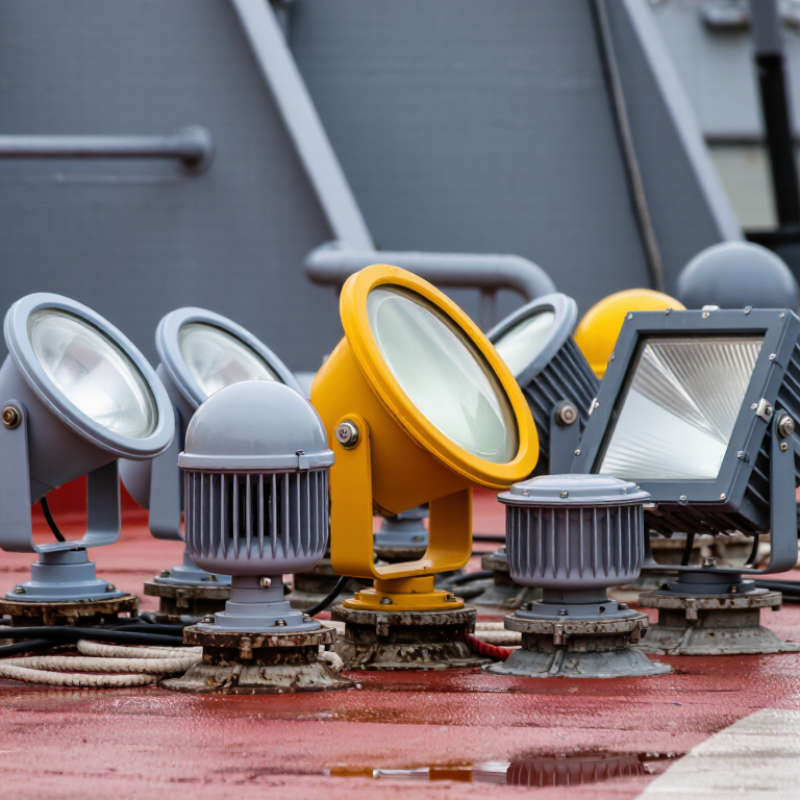
Marine Hazard Zones at Sea: IECEx Zones 0, 1, and 2
At sea, a hazardous-area label is not decoration; it reflects how often flammable gas may be present. Zone 0 means an explosive gas atmosphere is present continuously, for long periods, or frequently, including inside vapor spaces. Zone 1 covers places where gas may occur during normal operation, including some loading or venting areas. Zone 2 describes gas presence that is unlikely during normal operation and, if it occurs, lasts briefly. These zones describe exposure conditions, not a vessel’s overall safety.
Choose a marine explosion-proof light to match the zone, gas group, temperature class, and local conditions. IECEx certification helps verify that equipment has been assessed under a recognized certification scheme. It does not replace a site-specific hazardous-area classification. Check the certificate markings against the vessel’s drawings. Then consider salt spray, vibration, washdown, cable entries, and heat near the fitting. Small details matter. A light suited to a dry machinery room may fail early on an exposed deck. Paperwork can create false confidence if maintenance access is overlooked. Confirm the installation and inspection plan with a competent hazardous-area professional.
| Light Type | Typical Marine Use | Zone 0 Suitability | Zone 1 Suitability | Zone 2 Suitability | Key Selection Considerations |
|---|---|---|---|---|---|
| LED linear light | Long, even illumination in hazardous-area corridors, process spaces, and service areas. | Only a model specifically certified with EPL Ga for the applicable gas atmosphere. | Choose a certified model with EPL Gb or Ga. | Choose a certified model with EPL Gc, Gb, or Ga. | Check the certificate, gas group, temperature class, ambient-temperature range, corrosion resistance, and ingress-protection rating. |
| LED bulkhead light | Compact general lighting for passageways, machinery spaces, and exterior work areas. | Only where the exact model’s certificate permits Zone 0 use and EPL Ga. | A certified EPL Gb or Ga version may be suitable. | A certified EPL Gc, Gb, or Ga version may be suitable. | Consider vibration resistance, lens protection, cable-entry compatibility, and salt-spray exposure. |
| LED floodlight | Broad-area illumination for loading areas, tank-deck work, and maintenance operations. | Use only a specifically Ga-certified model approved for the location. | Use a model certified for Zone 1, typically EPL Gb or Ga. | Use a model certified for Zone 2 or a higher protection level. | Verify beam distribution, mounting strength, glare control, heat dissipation, and hazardous-area certification. |
| LED high-bay light | Overhead lighting in high-ceiling spaces such as enclosed process or service areas. | Only a model whose IECEx certification explicitly includes EPL Ga and the relevant conditions. | A Zone 1-certified EPL Gb or Ga model is required. | A Zone 2-certified EPL Gc, Gb, or Ga model may be suitable. | Check ceiling height, light distribution, ambient temperature, suspension method, and maintenance access. |
| Emergency bulkhead light | Emergency escape-route or backup lighting in hazardous areas. | Only if the complete emergency-light model is certified for Zone 0 with EPL Ga. | Confirm both hazardous-area certification and emergency-lighting performance for the intended zone. | Confirm the certified zone, emergency duration, battery arrangement, and test method. | Check whether the battery is integral or remote, required emergency duration, charging conditions, and applicable vessel rules. |
| Portable hand lamp | Temporary inspection and maintenance lighting in tanks, voids, and service spaces. | Only a portable model specifically certified for Zone 0 and EPL Ga. | Select a certified portable light with EPL Gb or Ga and an approved power source. | Select a certified model with EPL Gc or higher, as required by the area classification. | Check the complete assembly, including battery, charger, cable, and accessories; use only as permitted by its certificate. |
| LED pendant light | Suspended lighting over workstations or equipment where ceiling-mounted fittings are impractical. | Only a pendant assembly certified for Zone 0 and EPL Ga. | Use a certified Zone 1 assembly; confirm the suspension and cable-entry arrangement are covered. | Use a certified Zone 2 or higher assembly suitable for the installation. | Assess suspension load, vibration, cable support, corrosion, and the exact installation instructions. |
| Low-profile deck or step light | Low-level illumination on walkways, steps, and deck edges. | Only a model explicitly certified for Zone 0 with EPL Ga. | Use a Zone 1-certified model where required by the area classification. | Use a Zone 2-certified model or one with a higher EPL. | Consider impact resistance, water exposure, drainage, slip hazards, and whether the fitting can be safely maintained. |
| Portable inspection light | Close-up inspection of machinery, valves, and equipment during maintenance. | Only a complete inspection-light unit certified for Zone 0 and EPL Ga. | Confirm the model is certified for Zone 1 and the intended gas group and temperature class. | Confirm Zone 2 certification and suitability of its power supply and accessories. | Check cable or battery configuration, handle temperature, drop resistance, and restrictions on use or charging. |
| LED searchlight or spot floodlight | Directional illumination for inspection, transfer operations, and exterior work. | Only a model specifically certified for Zone 0 and EPL Ga; availability may be limited. | Use a model certified for Zone 1, including its mounting and electrical connections. | Use a model certified for Zone 2 or a higher protection level. | Check beam reach, aiming and locking mechanisms, vibration resistance, and whether the full assembly is certified. |