Smart Heating Solutions

2026 Best Glass Shelf Brackets Suppliers for Global Buyers

Choosing the right Glass Shelf Brackets Supplier in 2026 requires more than comparing catalogue prices. Global buyers now examine load performance, material quality, finish consistency, packaging, and delivery reliability. Grand View Research’s glass market studies identify construction and interior applications as important demand areas, supporting continued interest in glass display and storage systems. Meanwhile, reports from Mordor Intelligence on the furniture hardware market highlight customization, durable finishes, and international supply capability as major purchasing considerations.

A dependable supplier should provide clear technical drawings, tested load ratings, screw specifications, and compatibility guidance for tempered or laminated glass. Look closely at the details. A 6 mm glass panel needs different support planning from a 10 mm panel. Brushed stainless steel may suit a humid bathroom, while powder-coated steel can support a different visual and cost target. ISO 9001 certification can strengthen confidence, but it does not replace product inspection or sample testing.

No supplier is perfect. That matters. Product photos may hide uneven polishing, weak anchors, or careless carton protection. Buyers should request samples, batch records, packaging images, and recent export references before placing larger orders. The 2026 supplier landscape also reflects findings from Deloitte global manufacturing outlooks, where resilience, traceability, and flexible production remain important sourcing themes. This guide evaluates leading suppliers through practical criteria: engineering support, material transparency, quality control, minimum order quantities, customization, shipping performance, and after-sales response. The strongest partner is not always the cheapest. It is the one that performs reliably when the glass is installed, loaded, and used every day.
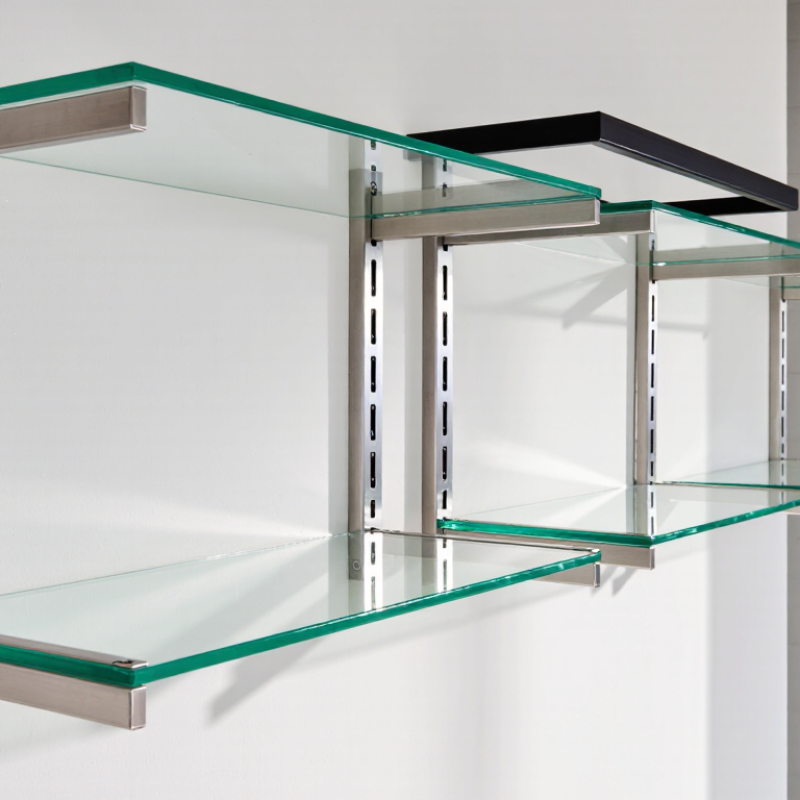
2026 Best Glass Shelf Brackets Suppliers for Global Buyers

Types of Glass Shelf Brackets and Their Main Applications

Glass Shelf Brackets: Types and Main Applications

Glass shelf brackets differ by load path, adjustment, and installation surface. Point-support clamps grip the glass edge and suit bathroom niches, retail displays, and light wall shelving. Slot-in brackets support a glass panel inside a channel, creating a cleaner line for kitchens and offices. Floating brackets hide the fixing plate, but they demand accurate drilling and stronger wall anchors. Adjustable systems help installers correct uneven walls.

Material choice matters. Stainless steel performs well in humid bathrooms and commercial interiors. Zinc alloy can reduce cost, but its finish and structural consistency require closer inspection. For transparent glass, silicone pads are essential. They reduce slipping and protect against concentrated stress. Tempered glass is widely preferred, while laminated glass can provide better retention after breakage. Never assume thicker glass solves every problem.

The International Energy Agency’s Buildings 2023 report states that buildings consume about 30% of global final energy. This supports growing interest in durable, low-maintenance interior fittings that reduce replacement work. Grand View Research’s architectural glass market analysis also identifies continued demand from offices, hospitality projects, and residential construction. These applications need different bracket responses: retail shelving prioritizes visibility, bathrooms need corrosion resistance, and offices often need concealed hardware. A neat catalogue is not enough. In practice, installers still overlook anchor capacity, edge distance, and the actual shelf load. Suppliers should provide tested load data, compatible fasteners, and clear installation limits rather than relying on attractive product photographs.

Key Factors for Evaluating Global Glass Shelf Bracket Suppliers

For global buyers, supplier evaluation should begin with measurable engineering evidence, not polished photographs. Request drawings showing bracket thickness, hole spacing, glass contact width, and stated load limits. Ask whether testing covers static load, repeated loading, corrosion, and accidental impact. A bracket holding a light display is not equal to one supporting books or bathroom items. The specification must name glass thickness and safety assumptions.

Traceability matters. Require batch numbers, inspection records, material certificates, and a documented corrective-action process. ISO 9001 certification can support process control, but it does not prove bracket strength. Independent test reports are more useful when they identify the laboratory, method, sample size, and failure point. This detail is often missing.

Logistics can quietly decide supplier performance. UNCTAD’s Review of Maritime Transport reports that over 80% of global merchandise trade by volume moves by sea. The World Bank’s 2023 Logistics Performance Index found that goods averaged about 44 days from exporter warehouse to importer warehouse, representing roughly 60% of total trade time. Therefore, compare production lead time, port options, packaging design, and spare-part response. Use trial orders before annual contracts. I have seen attractive quotations fail because cartons crushed polished surfaces. A spreadsheet may look exact, yet it can hide weak packaging assumptions. Buyers should also verify compliance documents for every destination market, since requirements vary and may change.

Key Factors for Evaluating Global Glass Shelf Bracket Suppliers

Suggested evaluation weights for comparing suppliers. Adjust the weighting to match your product requirements, market, and procurement priorities.

Top Supplier Regions and Manufacturing Capabilities in 2026

Global buyers in 2026 are comparing more than price when sourcing glass shelf brackets. China remains a strong production base for die-cast zinc, stainless steel, and adjustable bracket systems. Its factories often support CNC machining, surface finishing, custom packaging, and large-volume orders. Coastal manufacturing clusters can also coordinate glass hardware with screws, pads, and installation tools.

Germany and Italy remain important for precision engineering and refined surface quality. Their suppliers commonly provide tight tolerances, tested load ratings, and detailed technical files. Turkey offers useful access between European, Middle Eastern, and Asian markets. Vietnam and India are gaining attention for stainless steel fabrication, smaller production runs, and flexible labor capacity. Regional strengths differ.

Ask for material certificates, coating data, sample measurements, and independent load-test reports. A serious supplier should explain the tested load, mounting surface, safety factor, and glass thickness range. Salt-spray testing matters in bathrooms and coastal projects. Rubber pads should fit firmly, not slide during installation. Small details prevent expensive callbacks.

No region is perfect. I have seen attractive brackets fail because the screws were weak or the wall structure was ignored. Some catalogs also show tolerances more confidently than factories can maintain. Buyers should inspect pilot samples, repeat measurements, and verify batch consistency before approving mass production. Clear drawings and traceable inspection records make supplier claims easier to trust.

Quality Standards, Materials, and Customization Options

For global buyers, reliable glass shelf brackets begin with verifiable quality standards. Suppliers should provide material certificates, load-test records, and inspection reports for each production batch. Tempered glass needs controlled heat treatment and smooth, polished edges. Brackets require stable dimensions, accurate drilling, and secure contact points. Ask how loads are tested, including shelf weight and repeated daily use. A beautiful finish means little if the fixing holes shift by two millimeters.

Material selection affects safety, appearance, and service life. Stainless steel suits humid bathrooms and coastal interiors when its grade matches the environment. Aluminum reduces weight but may need stronger wall anchors. Zinc alloy offers design flexibility, although thin cast sections can fail under stress. Rubber pads should grip the glass without staining or cracking. Small details matter. I have seen projects delayed because pads softened under warm lighting.

Customization should cover more than color. Confirm glass thickness, bracket projection, hole spacing, corner shape, surface finish, logo-free packaging, and mounting hardware. Request a physical sample before approving mass production. Drawings should show tolerances, screw positions, and allowable load limits. No checklist is perfect. A supplier may answer quickly yet overlook installation conditions. Buyers should compare test methods, not only test numbers, and record every approved change. Clear communication, traceable inspections, and protective packaging often separate a dependable shipment from an expensive replacement.

How to Select and Purchase Glass Shelf Brackets Internationally

2026 Best Glass Shelf Brackets Suppliers for Global Buyers

How to Select and Purchase Glass Shelf Brackets Internationally

Buying glass shelf brackets internationally requires more than comparing catalog prices. Start with the glass thickness, shelf depth, load, and installation surface. Ask suppliers for dimensioned drawings, material grades, finish samples, and tested load data. Confirm whether the bracket suits tempered or laminated glass. Some fittings look identical, yet their fixing methods differ. A small mismatch can crack glass during tightening. That detail deserves careful review.

For reliable sourcing, evaluate the supplier’s technical response, not only its website. Request a sample before placing a large order. Check tolerances, edge protection, screw quality, packaging, production time, and replacement support. Ask for inspection records and clear export documents. Independent testing can help when shelves carry heavy or public-facing loads. Do not accept vague claims. A low quote may look attractive, but it can hide weak packaging or inconsistent finishing. I would rather delay approval than repeat an expensive shipment.

Tips: Compare at least three quotations using the same specifications. Send photos and drawings of the installation area. Confirm minimum order quantities, delivery terms, and customs paperwork in writing. Test the sample with real glass before mass production. Remember that factory data cannot replace careful local installation.

2026 Best Glass Shelf Brackets Suppliers for Global Buyers - How to Select and Purchase Glass Shelf Brackets Internationally

Evaluation Dimension Common Options or Information to Request International Buyer Checks
Bracket type Clamp-style brackets, support pins, concealed supports, and wall-mounted shelf supports. Confirm whether the design suits the intended installation, shelf edge, wall construction, and required appearance.
Compatible glass thickness Specify the exact glass thickness required. Some adjustable clamp designs cover a stated range; compatibility is product-specific. Obtain the supplier’s dimensional drawing and confirm the minimum and maximum glass thickness before ordering. Do not assume one bracket fits all glass.
Load capacity Request the stated load per bracket and per shelf, along with the test method and installation conditions. Check whether the rating accounts for the number and spacing of brackets, wall substrate, fasteners, shelf dimensions, and load distribution. Avoid comparing ratings tested under different conditions.
Material and corrosion resistance Common materials include stainless steel, zinc alloys, and aluminum alloys. Stainless steel grades such as 304 and 316 are used in different environments. Request the exact material grade and any supporting documentation. Consider 316 stainless steel for more corrosive environments, while verifying suitability for the actual exposure and finish.
Finish and appearance Possible finishes include brushed, polished, plated, and coated surfaces. Ask for finish specifications, color references where applicable, sample approval, and confirmation that production finish will match the approved sample.
Glass protection Some clamp brackets use pads or liners between the metal and glass; designs and replacement options vary. Confirm pad material, fit, and replacement availability. Installation should avoid point loading, overtightening, and direct metal-to-glass contact unless the product instructions specifically permit it.
Drawings and product data Request a dimensioned drawing, material details, finish information, installation instructions, and product-specific load data. Check hole positions, bracket projection, glass engagement, fastener requirements, and tolerances against the project drawings before approving production.
Testing and compliance evidence Request relevant test reports or declarations for the specific product and intended application. Verify the issuing laboratory, test scope, product model, and report date. Do not treat a general quality-management certificate as proof of a bracket’s load capacity or product compliance.
Supplier quality controls Ask about incoming material checks, dimensional inspection, finish inspection, traceability, and handling of nonconforming goods. Agree on inspection criteria and acceptance requirements before production. A quality-management certificate, if supplied, does not replace product-specific inspection or testing.
Samples and pre-production approval Request samples or a pre-production sample for fit, finish, and installation review. Record the approved sample, drawing revision, and specifications in the purchase order to reduce the risk of substitutions or mismatched production.
Quotation and order quantities Request unit pricing at relevant quantities, minimum order quantity, tooling charges if any, sample costs, and spare-part pricing. Compare quotations on the same material, finish, packaging, quantity, and delivery basis. Minimum order quantities and prices vary by supplier and specification.
Lead time and production capacity Ask for sample lead time, production lead time, order cut-off dates, and the estimated ready-to-ship date. Get the schedule in writing and confirm which events start the production clock, such as deposit receipt or drawing approval. Lead times are order- and supplier-specific.
Packaging and shipment protection Confirm individual protection, carton quantity, carton dimensions and weight, and export packing requirements. Request packaging details suitable for international handling and confirm who is responsible for any project-specific labeling or pallet requirements.
Trade terms and freight Compare quotations using a clearly stated Incoterms® 2020 rule and named place or port, where applicable. Clarify which party arranges carriage, export clearance, insurance, import clearance, and delivery costs under the chosen rule. Incoterms® do not determine product quality or payment terms.
Import classification and documents Request a commercial invoice, packing list, transport document, and any origin or compliance documents required for the destination. Confirm the applicable tariff classification, duties, taxes, and document requirements with the destination country’s customs authority or a qualified customs broker. Classification can depend on product details and local rules.
Payment and contract terms Document the price, currency, payment milestones, inspection arrangements, delivery schedule, and remedies for nonconforming goods. Use a written purchase order or sales contract, and agree on the process for claims, replacement parts, and warranty handling before payment.
Warranty and after-sales support Ask for the warranty period, covered defects, exclusions, claim evidence, and availability of replacement pads or hardware. Confirm the warranty’s start date, geographic coverage, and return or replacement process in writing. Terms vary by supplier and transaction.

Note: Product options, load ratings, lead times, minimum order quantities, and regulatory requirements vary. Verify all specifications and import obligations for the exact bracket, installation, and destination market before placing an order.