2026 Best Rubber Dam for River Water Level Control?
Choosing the 2026 Best Rubber Dam for River Water Level Control requires more than comparing product prices. River width, seasonal flow, sediment, debris, temperature, and foundation conditions all influence performance. A dam that works beside a calm irrigation channel may struggle after a sudden storm.
In field assessments, practical details often decide the result. Technicians inspect anchor lines, inspect the riverbed, and measure upstream and downstream levels before recommending a system. They also examine how leaves, stones, and branches may collect near the structure. Small debris can create uneven pressure. That pressure may shorten the membrane’s service life.
A reliable Rubber Dam For River Water Level Control should include a durable membrane, dependable inflation or deflation equipment, secure anchoring, and accessible monitoring points. Material selection matters. EPDM may provide strong weather and ozone resistance, while other rubber compounds may suit different water and temperature conditions. Manufacturer data must support those claims.
Safety deserves equal attention. Engineers should review hydraulic loads, emergency lowering procedures, inspection access, and local environmental requirements. Automated sensors can help maintain a target level, but they still need calibration and human oversight. Technology is useful, not magical.
There is no perfect model.
This guide compares key design features, operating methods, maintenance needs, and lifecycle costs for 2026 projects. It also questions common purchasing assumptions, because the cheapest dam may become expensive after repeated repairs. Independent engineering review remains valuable, especially where flood risk, public access, or sensitive habitats are involved. Real performance depends on installation quality and daily management, not the brochure alone.
Rubber Dam Basics and Its Role in River Water Level Control
Rubber Dam Basics and Its Role in River Water Level Control
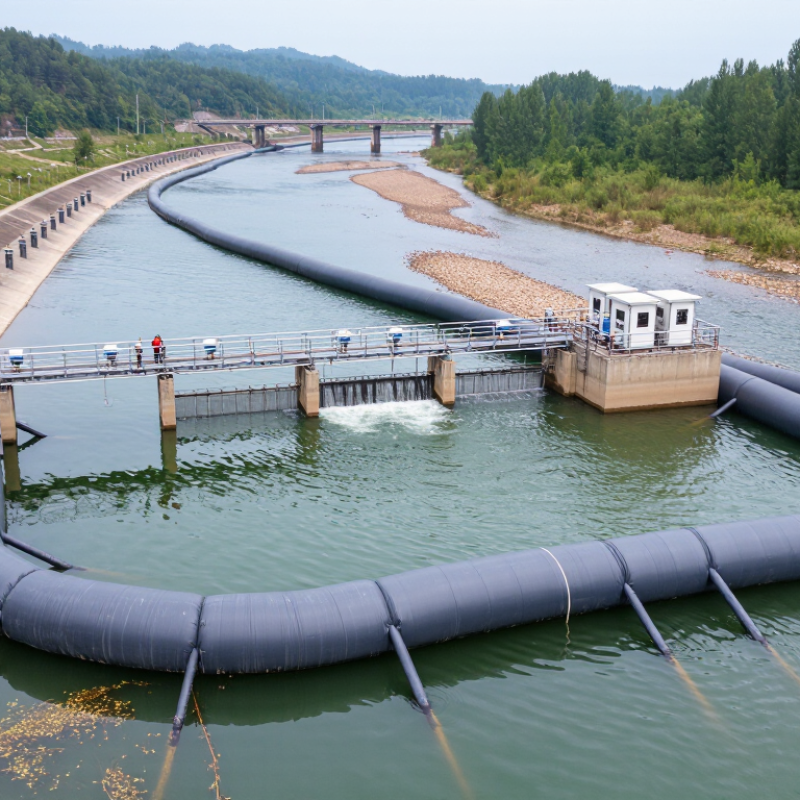
A rubber dam is an inflatable barrier fixed across a river channel. It uses water or air pressure to raise, lower, and regulate the river level. When inflated, the rubber membrane forms a temporary crest. When deflated, it allows floodwater and sediment to pass more freely. This flexible operation supports irrigation, urban water supply, ecological flow management, and small hydropower systems.
Choosing the best rubber dam for river water level control requires site-specific engineering. Engineers examine river width, foundation quality, flood discharge, sediment movement, and seasonal water changes. The membrane must resist abrasion, ultraviolet exposure, and repeated pressure cycles. Anchoring details are equally important. A strong membrane cannot compensate for weak foundations. Field inspections should check leakage, surface damage, control valves, and nearby structures. In practice, maintenance records often reveal problems before visible deformation appears. Still, rubber dams are not perfect. Poor operation during sudden floods may increase upstream risks, while neglected sediment can reduce performance.
Tips: Measure river flow during both dry and wet seasons. Install reliable water-level sensors and emergency release controls. Keep the membrane free from sharp debris. Train operators to adjust inflation gradually. Review the design after major floods, because real river behavior may differ from original calculations.
2026 Best Rubber Dam for River Water Level Control?
Rubber Dam Basics and Its Role in River Water Level Control
Hydrostatic pressure increases with retained water depth. The values are calculated for freshwater using the standard relationship p = ρgh, with a water density of 1,000 kg/m³ and gravitational acceleration of 9.81 m/s². A rubber dam can adjust its crest height by changing internal air or water pressure, helping regulate upstream river levels while allowing the crest to be lowered during floods.
Key Design Factors for Choosing a Rubber Dam in 2026
2026 Best Rubber Dam for River Water Level Control?
Key Design Factors for Choosing a Rubber Dam in 2026
A rubber dam should match the river, not merely the project drawing. The World Meteorological Organization’s State of Global Water Resources 2023 reported normal conditions in only one-third of monitored river basins. This variation makes flexible operation essential. Engineers should check seasonal flow, flood discharge, sediment load, bed width, and foundation stability. A dam that performs well in clear water may suffer rapid abrasion in a gravel-heavy channel.
Material selection also matters. EPDM or similar elastomers can improve resistance to sunlight, ozone, and temperature changes. Reinforcement must tolerate repeated inflation cycles and uneven pressure. The UNESCO World Water Development Report 2024 states that agriculture represents about 70% of global freshwater withdrawals. Therefore, level control may support irrigation, but environmental flows must remain protected. Design calculations should include emergency deflation, upstream debris, leakage monitoring, and access for inspection. Small omissions become expensive problems.
Tips: Ask for independently verified tensile strength, tear resistance, and aging data. Request hydraulic modeling for normal and flood conditions. Inspect anchor bolts, air pipes, and the riverbed after major storms. Do not choose by height alone. A lower dam with better sediment handling may be safer. I would also challenge optimistic maintenance estimates; field conditions are rarely as clean as the tender documents suggest. Use current site measurements and follow applicable national water engineering standards.
Installation, Operation, and Maintenance Requirements
2026 Best Rubber Dam for River Water Level Control?
Choosing the best rubber dam for river water level control in 2026 starts with site evidence, not a sales brochure. Measure channel width, flood discharge, sediment depth, bed slope, and expected operating head. Inspect the riverbank after heavy rain; hidden erosion often changes the installation plan. Select a membrane and anchoring system rated for local pressure, abrasion, ultraviolet exposure, and temperature. Do not guess. A qualified hydraulic engineer should verify uplift, overflow paths, and foundation stability before construction.
Installation requires a clean, level foundation with reliable seepage control. Remove sharp stones, loose concrete, and trapped debris near the membrane. Check anchor bolts, clamping plates, drainage channels, and access routes before filling. Keep inflation pipes protected from vehicles and floating timber. Commissioning should occur slowly, while staff record pressure, crest height, upstream level, and downstream flow. Sudden filling can hide alignment problems. It may also stress weak foundations.
During operation, trained personnel should inspect the dam after storms, unusual vibration, and rapid water-level changes. Follow the approved pressure range and keep emergency deflation equipment ready. Never allow uncontrolled overtopping. Monthly checks should examine wrinkles, cuts, leaks, anchors, valves, and sediment buildup. Seasonal maintenance should include cleaning intake screens and testing alarms. Field inspections often reveal small leaks before operators notice level changes. One uncomfortable lesson remains: a perfect installation can still fail when maintenance records are incomplete. Record every adjustment, repair, inspection, and weather event with photographs and measured readings.