2026 Best Threaded Shaft End Types for Global Buyers
Choosing the right Threaded Shaft End is a practical decision, not a catalog exercise. Global buyers must compare load direction, torque, available space, corrosion exposure, and production volume. A male threaded end may simplify assembly, while a female threaded end can protect exposed threads. Stepped and reduced ends may solve alignment problems. Cross-drilled versions can support locking hardware, but they may reduce local strength.
Dr. Robert C. Juvinall, a respected machine-design authority, once stressed, “A design must satisfy function, strength, and manufacturability at the same time.” That principle remains valuable in 2026. A shaft used in a conveyor gearbox faces different demands from one used in agricultural equipment. Thread pitch, engagement length, shoulder geometry, and material grade deserve careful review. Stainless steel may resist moisture, yet it can gall during assembly. Carbon steel may offer better strength, but surface protection becomes essential.
This guide compares the best Threaded Shaft End types for international purchasing teams. It considers performance, machining accuracy, installation speed, maintenance, and total cost. Supplier drawings should confirm thread standards, tolerances, runout, and heat treatment. Small details matter. A 0.2-millimeter shoulder error can affect bearing seating. A mismatched thread standard can stop an entire assembly line. That risk is easy to underestimate. I would also question one common assumption: the strongest-looking end is not always the best choice. Application data must lead the decision, even when the first specification seems obvious.
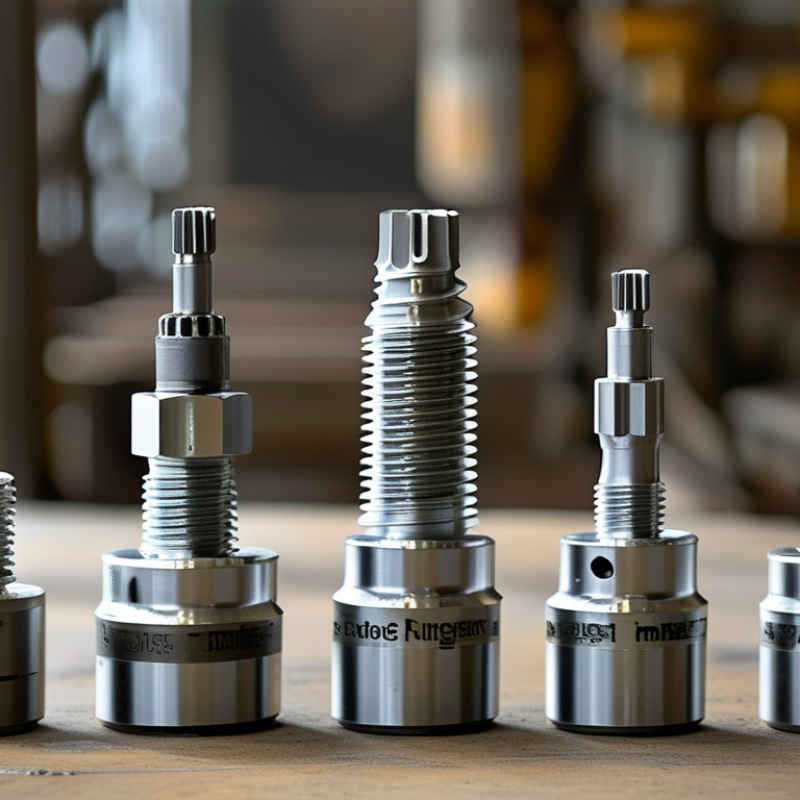
Threaded Shaft End Types: Definitions and Core Design Features
Threaded Shaft End Types: Definitions and Core Design Features
Threaded shaft ends connect rotating components, couplings, bearings, or fastening nuts. The most common types are male-threaded, female-threaded, stepped, and shoulder-threaded ends. A male-threaded end has external threads cut around the shaft tip. A female-threaded end contains an internal tapped hole. Stepped designs reduce the shaft diameter near the end. Shoulder types add a locating surface for accurate axial positioning.
Thread form, pitch, diameter, and engagement length directly affect performance. Coarse threads resist dirt and assembly damage. Fine threads offer better adjustment and clamping control. A shoulder can transfer axial loads more reliably than threads alone. Fillets near the thread root also reduce stress concentration. In practical inspections, I check thread runout, surface finish, concentricity, and burrs. Small defects matter. A shaft may assemble correctly but still create vibration under speed.
Tips: Match the thread system with the mating component and local measurement practice. Confirm right-hand or left-hand direction before production. Specify material hardness, corrosion resistance, and allowable load. Leave enough unthreaded shaft for bearing seats or seals. Avoid excessive thread length, which can weaken the effective cross-section. Tolerances should reflect actual machining capability, not ideal drawings. This is often overlooked. For global purchasing, request clear dimensional drawings, inspection records, and sample approval. A thoughtful design may still need revision after real assembly testing.
How to Compare Thread Profiles, Sizes, Materials, and Load Ratings
For global buyers, a threaded shaft end should match the load path, not merely the drawing. Male threads suit couplers and locknuts; female threads protect compact assemblies. Metric coarse threads tolerate dirt better, while fine threads provide greater tensile area and adjustment control. ASME B1.1 and ISO 261 define the principal inch and metric profiles. Mixing them is an expensive mistake.
Compare size using tensile stress area, not outside diameter alone. An M12 × 1.75 thread has about 84.3 mm² of tensile area, while M12 × 1.5 provides roughly 88.1 mm².
Under ISO 898-1, class 8.8 steel has an 800 MPa nominal tensile strength and 640 MPa yield strength.
The theoretical yield load is therefore about 54 kN for the coarse thread, before safety factors, bending, fatigue, or surface damage.
Real assemblies often perform worse.
Material selection changes the risk. Carbon steel offers high strength and predictable machining. Stainless steel improves corrosion resistance, but galling can appear during repeated tightening. Hardened alloy steel suits shock loads, yet poor heat treatment may cause brittle failure.
Check proof load, thread engagement, shoulder diameter, and applied side loads against VDI 2230 calculations. Do not trust a catalog load rating blindly. I would also request lot-level test records. That extra step feels slow, but it can expose a flawed assumption before installation.
Best Threaded Shaft End Types for Different Industrial Applications
Choosing a threaded shaft end depends on the machine’s load, alignment, maintenance routine, and operating environment. A male threaded end suits couplings, pulleys, and compact drive assemblies where external access is available. Female threaded ends protect the connection inside the shaft and work well with exposed studs or adjustable rods. Stepped ends help when a bearing, spacer, and retaining nut must share one shaft.
For conveyors and packaging equipment, a standard metric thread can simplify replacement across international facilities. Rotating machinery may require fine threads for better preload and vibration resistance. Heavy agricultural equipment often benefits from coarse threads because dirt and impact can damage delicate thread profiles. Linear actuators need accurate shoulders and controlled runout, not just a strong thread. Small errors matter.
Material selection should match the application. Hardened alloy steel supports repeated torque, while stainless steel helps resist moisture and cleaning chemicals. Surface coatings can improve durability, but they may change thread dimensions. Check this carefully. Buyers should confirm thread form, pitch, engagement length, shoulder diameter, keyway position, and allowable runout on a controlled drawing. Thread gauges and sample fit checks are more dependable than visual inspection alone.
A perfect catalog choice can still fail after installation. I have seen shafts fit the nut but bind under heat. That issue was easy to miss. Global buyers should request material certificates, dimensional reports, and batch traceability. It is also wise to verify whether regional thread standards match existing tools, replacement parts, and maintenance skills.
Selection Guide: Cost, Durability, Manufacturing Quality, and Delivery Terms
2026 Best Threaded Shaft End Types for Global Buyers
Selection Guide: Cost, Durability, Manufacturing Quality, and Delivery Terms
Choosing a threaded shaft end starts with the load, not the catalog image. Male threads suit direct nuts, while female threads protect compact assemblies. Stepped ends help when a bearing shoulder needs precise seating. Custom profiles may reduce assembly time, but tooling increases the initial cost. That trade-off is often missed.
For cost control, compare the complete delivered price. Include machining, surface treatment, inspection, packaging, freight, and import charges. A low unit quote can still become expensive. Standard thread sizes usually shorten production time and reduce gauge costs. However, the cheapest steel is rarely the safest choice. Match hardness, corrosion resistance, and operating temperature to the application. A shaft used near moisture needs more than attractive machining.
Manufacturing quality depends on measurable details. Request thread tolerances, concentricity data, material certificates, and inspection records. Check whether the supplier uses calibrated thread gauges. A clean surface can hide a poor root radius. That small defect may start fatigue cracking under repeated loads.
Delivery terms deserve equal attention. Confirm production days, sampling approval, packaging strength, and the agreed Incoterm. Ask how delays are reported. I would also question optimistic schedules, because one missing heat-treatment slot can stop an entire assembly line. The specification may look complete, yet the acceptance criteria can still be unclear.