Smart Heating Solutions

2026 Top Insulated Terminals for Global Buyers?

Global buyers face a crowded market for Insulated Terminals in 2026. A low unit price can look attractive on a spreadsheet. On a factory floor, however, a loose crimp, cracked sleeve, or mismatched wire range can cost far more in rework. Small details matter.

MarketsandMarkets estimated the global electrical connectors market at $84.2 billion in 2023, with a projected rise to $111.3 billion by 2028. That broader category includes many products beyond insulated terminals, so the figures are context, not a terminal-specific forecast. Still, they point to sustained demand for dependable electrical connections. Quality expert W. Edwards Deming’s well-known reminder, “In God we trust; all others must bring data,” is useful here: supplier claims should be checked against test records, material specifications, and traceable certifications.

Good connections are verified.

This guide compares leading Insulated Terminals for international purchasing, focusing on crimp consistency, insulation performance, material options, documentation, and supply reliability. Standards such as UL 486A-486B and IEC 61238-1 offer useful reference points for connector evaluation, but buyers should confirm the applicable requirements for each product and application. A standard number alone does not prove a terminal suits a specific conductor, tool, or operating environment. That distinction is easy to overlook. It is also where a comparison can become more useful than a ranking. We will examine what suppliers publish, what buyers should request, and where available evidence leaves unanswered questions. Market growth is not proof of quality. Real confidence comes from verifiable specifications and samples tested under the conditions they will actually face.
2026 Top Insulated Terminals for Global Buyers?

What Insulated Terminals Are and How They Work

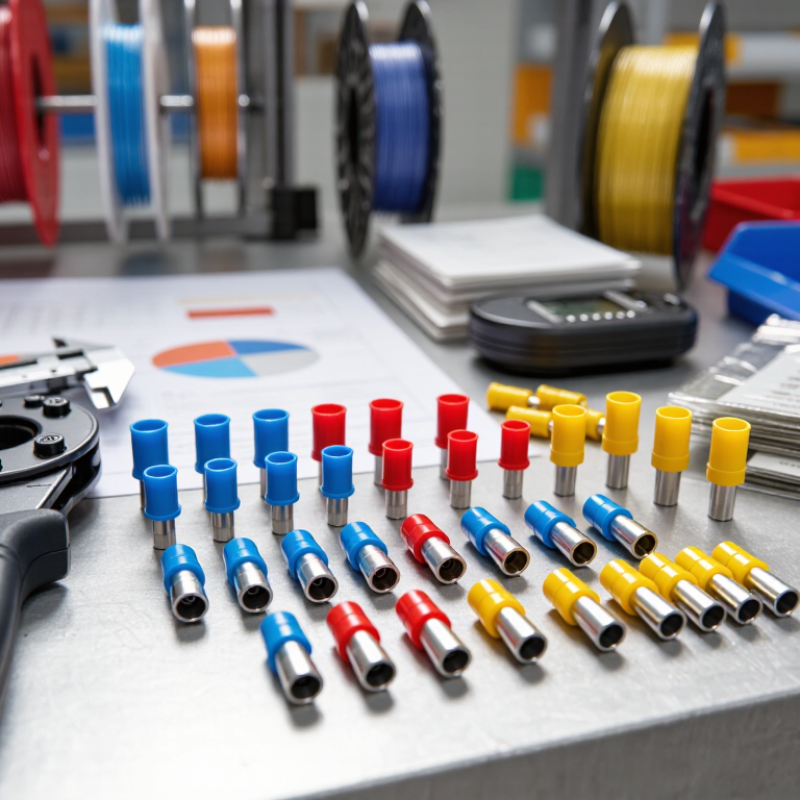
Insulated terminals join a wire to a screw, stud, or another conductor. Each has a conductive metal section and a sleeve made from insulating material. The metal carries current; the sleeve helps prevent accidental contact and supports the wire near the connection. Common forms include ring, fork, pin, and butt terminals.

Small details matter. A ring terminal, for example, stays captured under a loosened screw, while a fork terminal can be removed without fully taking off the fastener.

Installation relies on a sound crimp, not the sleeve alone. Strip the wire to the length specified for the terminal, keeping the copper strands intact. Insert them fully, then use a crimping tool matched to the terminal and wire size. A proper crimp should hold firmly, with no loose strands or exposed copper beyond the barrel.

Give it a gentle pull. Color bands often indicate wire-size ranges, but conventions can vary, so check the product specifications rather than relying on color alone.

Not foolproof. Heat, moisture, vibration, and limited space can affect material choice and service life.

Insulation reduces contact risk, but it does not replace suitable protection for the entire electrical assembly. The easy mistake is choosing a terminal that fits the wire but not the actual operating conditions.

Key Materials and Design Features of Insulated Terminals

Insulated terminals combine a conductive metal barrel with a protective outer sleeve. Copper offers strong conductivity, while tinned copper can help limit surface oxidation in damp or industrial settings. Brass may suit some applications, but material choice should match the circuit’s current, environment, and connector specification. The sleeve is commonly made from PVC or nylon. PVC is flexible and practical for general wiring; nylon often provides greater resistance to heat and abrasion. Check the stated temperature range rather than judging suitability by appearance.

Design details affect installation quality. A flared barrel opening can guide stranded wire into the terminal, while a well-sized crimp zone helps the tool compress the conductor evenly. The insulation should cover the barrel without obstructing the crimp area. Fit matters. Select a terminal that matches both the wire gauge and the crimp-tool profile; a loose fit can leave strands exposed, while excessive compression may damage them. Color coding is useful, but conventions can vary, so confirm the printed size or product data. After crimping, inspect the joint for stray strands and uneven deformation, then perform a pull check where appropriate. Even careful selection has limits: vibration, moisture, and repeated heating can expose weaknesses that a quick bench test misses. Verify ratings for the actual installation.

2026 Top Insulated Terminals for Global Buyers

Typical continuous temperature ratings by insulation material

Representative examples: PVC 75°C, nylon 105°C, heat-shrink polyolefin 125°C, and silicone rubber 200°C. Actual limits depend on the terminal design, material formulation, and product specifications; check the manufacturer’s datasheet for the rated assembly.

Main Types of Insulated Terminals and Their Applications

Insulated terminals connect conductors while reducing accidental contact at exposed metal. Ring terminals suit screw or stud connections in battery leads, grounding points, and control panels. Fork terminals allow faster removal from screw posts, while pin terminals fit many screw-clamp blocks. Butt splices join two wire ends; blade terminals support quick-disconnect circuits. The sleeve material matters. Vinyl, nylon, and heat-resistant insulation tolerate different temperatures and environments.

Applications are expanding alongside electrical systems. The International Energy Agency’s Global EV Outlook 2024 reports nearly 14 million electric cars sold in 2023, about 18% of global car sales. More vehicle wiring does not prove demand for one terminal type, but it does raise the importance of reliable crimped connections. In renewable power, the IEA’s Renewables 2024 report records about 510 GW of renewable capacity added in 2023. Terminals appear in inverter cabinets, equipment controls, and service wiring. Not every connection is alike.

Match the terminal to wire gauge, conductor material, current, temperature, vibration, and available crimp tooling. A correctly sized die matters; a tidy-looking crimp can still be loose inside. Color coding helps, but it is not a guarantee across products. Check the manufacturer’s technical data and applicable connector standards, then inspect sample crimps with a pull test. In damp or vibrating locations, verify that insulation and retention suit the actual installation. The awkward part: field conditions rarely match a clean workbench.

How to Compare Insulated Terminals for Global Purchasing

2026 Top Insulated Terminals for Global Buyers?
How to Compare Insulated Terminals for Global Purchasing

Global purchasing starts with fit, not price. Match the terminal’s wire range and stud opening to the actual cable and equipment. Check conductor material, plating, insulation type, and temperature rating. A terminal that looks right may still crimp poorly with your tooling. Small differences matter.

Use IEC 60352-2 as a reference for solderless crimped connections, and request test records for the exact product range. The IEA’s Electricity 2025 report estimates global electricity demand grew by 4.3% in 2024. That is useful context for electrical supply chains, but it does not prove demand for any specific terminal type. Compare samples under your own installation conditions: pull strength, insulation damage, and consistency across batches. Ask for traceable lot numbers and clear packaging labels. Documentation can be uneven, so verify details rather than assuming every supplier uses the same test method.

Tips: Test one sample with your production crimper. Confirm the wire size, die, and terminal match. Keep the result with the purchase record. Also check carton quantities and moisture protection before shipment; these details are easy to overlook.

2026 Top Insulated Terminals for Global Buyers? — How to Compare Insulated Terminals for Global Purchasing
Terminal Type Typical Wire-Size Range* Common Conductor / Insulation Materials Typical Use Key Comparison Points Global Purchasing Checks
Ring terminal Common sizes include approximately 0.5–6 mm² (about 20–10 AWG) Copper or tinned copper barrel; commonly PVC or nylon insulating sleeve Bolted or stud-mounted electrical connections where the terminal must remain secured around the fastener Match wire range, stud-hole diameter, barrel length, insulation coverage, and required crimp profile Confirm hole dimensions in millimetres or inches, conductor material compatibility, and the specified crimp tool
Fork (spade) terminal Common sizes include approximately 0.5–6 mm² (about 20–10 AWG) Copper or tinned copper conductor section; typically PVC or nylon insulation Screw-terminal connections where the terminal may be fitted or removed without fully removing the screw Compare fork width, screw size, metal thickness, wire range, and whether the connection needs a locking feature Check screw-size conventions and dimensional drawings; “fork” and “spade” descriptions can vary by supplier
Blade / quick-disconnect terminal Common sizes include approximately 0.5–6 mm² (about 20–10 AWG) Usually copper or tinned copper; insulating sleeves are commonly PVC or nylon Removable connections using a mating male blade and female receptacle Verify blade width and thickness, mating compatibility, retention force, wire range, and insulation coverage Request mating-part dimensions and confirm that both halves use the same blade-size system
Pin terminal Common sizes include approximately 0.5–6 mm² (about 20–10 AWG) Copper or tinned copper pin and barrel; often PVC or nylon insulation Insertion into screw-clamp terminals and other connection points designed for a pin-shaped conductor end Compare pin diameter and length, terminal-block compatibility, wire range, and the specified crimp method Confirm the pin geometry against the receiving terminal; do not assume all pin terminals fit all clamp designs
Butt-splice connector Common sizes include approximately 0.5–6 mm² (about 20–10 AWG) Typically copper or tinned copper splice barrel with an insulating sleeve; sleeve material varies by product Joining two compatible conductors end-to-end Check conductor-size range at each end, splice length, insulation type, and whether the product is intended for the environment Confirm whether the connector is insulated, sealed, or heat-shrink type; these features are not interchangeable
Insulated wire ferrule Common offerings span about 0.14–10 mm², with product-specific sizes Tin-plated copper tube with a plastic insulating collar is common Preparing stranded wire for insertion into compatible screw-clamp terminals Match ferrule size to conductor cross-section and check pin length, collar dimensions, and crimp-tool profile Confirm whether the terminal accepts ferrules and whether single-wire or twin-wire ferrules are needed
Important sizing note: Wire-size ranges above are indicative examples of commonly available product sizes, not universal limits. AWG-to-mm² values are approximate; use the terminal manufacturer’s dimensional drawing and the applicable wire specification when selecting a part.
Before ordering: Verify rated voltage and current, temperature range, applicable product standards or approvals, material and environmental declarations required in the destination market, packaging and traceability requirements, and the exact compatible crimp tool. These ratings and approvals are product-specific and should be confirmed from current technical documents.

Quality Standards, Supplier Checks, and 2026 Buying Considerations

2026 Top Insulated Terminals for Global Buyers?

For 2026 purchasing, match each insulated terminal to conductor size, current, temperature, and installation conditions. Color coding helps identify a size, but it does not confirm fit or performance. IEC 60352-2 describes requirements and test methods for crimped connections. Ask suppliers for test records that identify the conductor range, crimp tooling, and test conditions. Small details matter.

Supplier checks should go beyond a certificate. Request lot traceability, plating specifications, and inspection results for crimp dimensions and pull strength. For critical applications, compare contact resistance before and after relevant environmental testing. The test should reflect actual exposure; salt spray is not equally useful for every installation. A neat sample can still hide inconsistent production.

Demand signals deserve attention, too. The International Energy Agency’s Global EV Outlook 2024 reported that electric car sales were expected to exceed 17 million in 2024, more than one in five cars sold worldwide. That growth does not prove a shortage of terminals, but it makes capacity and batch consistency worth checking. Ask suppliers how they handle peak orders and material changes. Then verify their answers against dated records. A quotation alone is thin evidence.