Smart Heating Solutions
For global buyers planning 2026 projects, choosing a Led Poster Screen requires more than comparing cabinet prices. The right display must match the venue, audience distance, content style, and operating environment. A bright retail entrance needs different performance from a portable exhibition screen.
This guide examines the main Led Poster Screen types expected to serve international markets in 2026. It considers indoor poster displays, outdoor weather-resistant models, rental units, transparent designs, and fine-pitch commercial screens. Key factors include pixel pitch, brightness, refresh rate, viewing angle, weight, power use, and control systems. Small details matter. A heavy frame can slow installation. Weak handles can damage workflow.
Real purchasing experience shows that specifications rarely tell the complete story. A screen may look impressive in a showroom, yet perform poorly under direct sunlight. Warranty coverage, spare parts, certifications, software support, and local service deserve equal attention. They often determine the true ownership cost.
No single model wins every project. That is worth remembering. Some buyers also overvalue ultra-fine pixel pitch, although viewers may stand several meters away. Others ignore ventilation and electrical planning until installation day. This overview aims to reduce those mistakes through practical comparisons and reliable selection criteria. Product quality can vary between suppliers, even when the listed specifications appear identical. Buyers should request test videos, sample units, inspection records, and clear after-sales commitments before placing a large order.
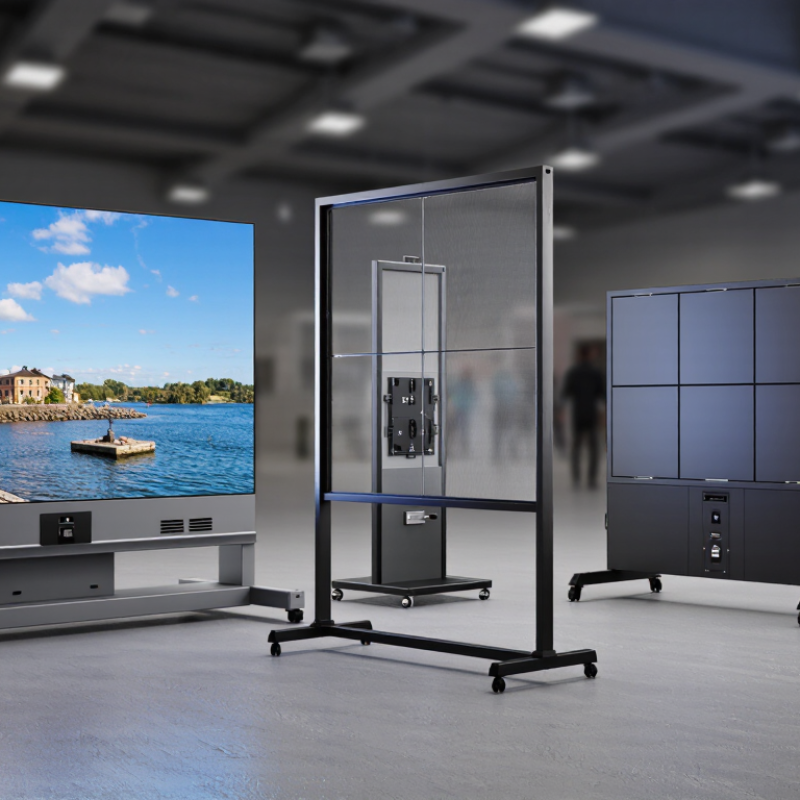
An LED poster screen is a slim, freestanding digital display designed for shops, exhibitions, transport areas, and events. Unlike a printed poster, it uses many small light-emitting diodes to create moving images, text, and video. Its cabinet usually contains LED modules, a power supply, receiving cards, and a control system.
Here is how it works. A media player sends image data to the controller. The controller divides that data into sections and delivers signals to each LED module. Red, green, and blue diodes combine at different brightness levels to form each pixel. Millions of pixels can then display a clear advertisement or announcement. The process happens continuously, often dozens of times per second.
Simple in theory.
Common 2026 poster screen types include indoor fine-pitch models, brighter outdoor models, double-sided units, and lightweight rental versions. Fine-pitch screens look sharper at close viewing distances, while outdoor screens need stronger brightness, weather protection, and heat management. In practical installation work, cabinet weight and cable access often matter as much as resolution. A screen may look excellent on paper but become difficult to move through a narrow doorway. That detail is easy to underestimate. Buyers should also check refresh rate, service access, warranty terms, operating temperature, and local electrical requirements. Specifications can be confusing, and higher brightness is not always better indoors. A careful site test remains valuable.
An LED poster screen is a portable, cabinet-based digital display made from modular LED panels. It receives video signals through a controller, processes the image, and uses individual red, green, and blue LEDs to create full-color visuals.
The chart shows representative brightness levels commonly used for different LED poster screen applications. Indoor displays generally use lower brightness to protect image quality and viewer comfort, while outdoor models require higher brightness to remain visible in direct sunlight. Actual specifications vary by pixel pitch, environmental conditions, and product configuration.
LED poster screens are not one universal product. Their best type depends on light, viewing distance, mobility, and installation time. Indoor retail spaces usually need fine-pitch displays for sharp product images and readable prices. Slim cabinets fit beside shelves, entrances, and narrow corridors. Brightness should remain comfortable under artificial lighting. Keep brightness controlled.
Outdoor storefronts require higher brightness, stronger sealing, and stable temperature performance. Weather-resistant poster screens can handle rain, dust, and sudden sunlight changes. However, outdoor visibility depends on more than brightness. Glass reflections, viewing angles, and nearby signs can reduce impact. A practical site check should cover noon sunlight and evening reflections.
Events, exhibitions, and temporary promotions benefit from lightweight rental-style poster screens. Built-in wheels, front access, and quick setup reduce labor pressure. Transport cases also protect panels during repeated movement. Transport screens need stable power and simple signal management. In transport hubs, public venues, and large retail spaces, networked poster screens support remote content updates. Buyers should confirm local voltage, plug standards, safety certification, and service availability before ordering. I have found that a perfect specification on paper can still fail in a crowded space. Viewing distance is often misjudged. A short on-site test remains more reliable than a brochure.
2026 Top LED Poster Screen Types for Global Buyers
How LED Poster Screen Specifications Affect Performance
An LED poster screen’s specifications directly shape visibility, transport, and daily reliability. Pixel pitch matters first. A 2.5 mm pitch produces sharper close-up images than a 4 mm model. However, smaller pixels usually increase cost and maintenance complexity. Choose based on viewing distance, not maximum resolution.
Brightness affects readability under changing light. Indoor screens may perform well around 800 to 1,500 nits, while bright storefronts often need higher output. Excessive brightness can cause glare and unnecessary energy use. Refresh rate also deserves attention. A rate above 3,840 Hz helps cameras capture cleaner video, especially during events and retail demonstrations. Viewing angle, contrast, and color calibration influence whether content remains clear from the side.
Tips: Request measured specifications, not rounded marketing figures. Check power consumption at normal operation. Inspect cabinet weight, wheel quality, cable protection, and front-service access. Small details matter.
Heat management is easy to underestimate. Poor ventilation can shorten component life in warm environments. Look for temperature monitoring and practical airflow design. Weather resistance should match the installation location, not an imagined worst case. An outdoor-rated screen may still need shelter from direct rain. I have seen buyers focus on brightness while overlooking service access. That mistake becomes expensive. A lightweight design helps mobility, but extremely thin cabinets may sacrifice durability. Balance matters.
Choosing an LED poster screen starts with the project site, not the product image. A freestanding screen suits retail entrances, exhibitions, and temporary promotions. A wall-mounted model saves floor space in narrow corridors. Foldable units help teams that frequently move between venues. I have found that portability often matters more than a slightly higher display resolution.
Measure the viewing distance before selecting pixel pitch. A fine pitch looks sharper at close range, while a wider pitch can reduce project cost for distant viewers. Check brightness carefully. Excessive brightness may waste power indoors and cause visual discomfort. Outdoor projects need weather protection, stable housing, and clear temperature limits. Indoor screens may need quieter fans and lighter frames.
Do not overlook installation details. Confirm the screen’s weight, wheel quality, power requirements, and transport dimensions. A compact cabinet can still become difficult on stairs. Refresh rate, color consistency, and viewing angle should match the content and audience movement. Ask for operating tests, safety documents, and service procedures before purchase. These records make technical claims easier to verify.
Remote content control can simplify multi-location campaigns, but network access must be reliable and properly managed. Local playback is useful when connectivity is uncertain. This choice is not always obvious. A team should test the screen in realistic lighting, with real content, before final approval. Even experienced buyers sometimes prioritize specifications and underestimate daily handling.
For global buyers, certification should be checked before pixel pitch. LED poster screens may need electrical safety, electromagnetic compatibility, and ingress protection evidence. Relevant references include IEC 62368-1, IEC 61000, and IEC 60529. Ask for complete test reports, not only certificate logos. Check the actual certificate number. Requirements also differ between indoor retail spaces, outdoor streets, and temporary events. A beautiful screen can still fail local inspection.
Shipping deserves equal attention. UNCTAD’s Review of Maritime Transport reports that over 80% of global merchandise trade by volume moves by sea. Packaging should protect modules, power supplies, and fragile receiving cards from vibration and moisture. Confirm carton dimensions, spare-part quantities, HS codes, and delivery responsibilities before payment. The World Bank’s 2023 Logistics Performance Index shows major differences in customs efficiency and delivery reliability across countries. Cheap freight is not always cheap.
Installation planning should include wall strength, wind load, ventilation, power distribution, and service access. A 2-metre screen may still need two technicians and lifting equipment. Support matters after commissioning. Require wiring diagrams, remote troubleshooting, replacement modules, and a written response time. The Global E-waste Monitor 2024 recorded 62 million tonnes of electronic waste in 2022, with much less properly recycled. Designing repairable screens is therefore practical, not cosmetic. One weakness remains: buyers often compare brightness first and total ownership cost later.