Smart Heating Solutions
Choosing a sourcing partner can feel simple on a polished website. The harder test comes later: a sample arrives late, a specification changes, or a factory gives an unclear answer. One-Stop Sourcing Services can coordinate supplier search, product development, quality checks, and shipping, but one provider does not automatically mean fewer risks. The details matter.
Sourcing specialist Mike Bellamy’s guidance can be fairly paraphrased this way: “Good sourcing depends on clear communication and verification, not promises alone.” This is a paraphrase, not a verbatim quotation. It points to a practical starting question: what can the provider show you? Ask for examples of supplier screening, inspection reports, production updates, and shipment tracking. A dated report with product photos is more useful than a broad claim of “strict quality control.” Small evidence matters.
The seven tips in this guide focus on the checks buyers can make before committing. They cover service scope, supplier access, communication, quality assurance, pricing transparency, logistics coordination, and risk management. Compare providers against the same product brief, sample requirements, and delivery expectations. Then notice what remains unclear. A vague answer is not always a warning sign, but it deserves a follow-up. No partner removes every uncertainty. A careful choice makes the important ones visible early—and that can still take work.
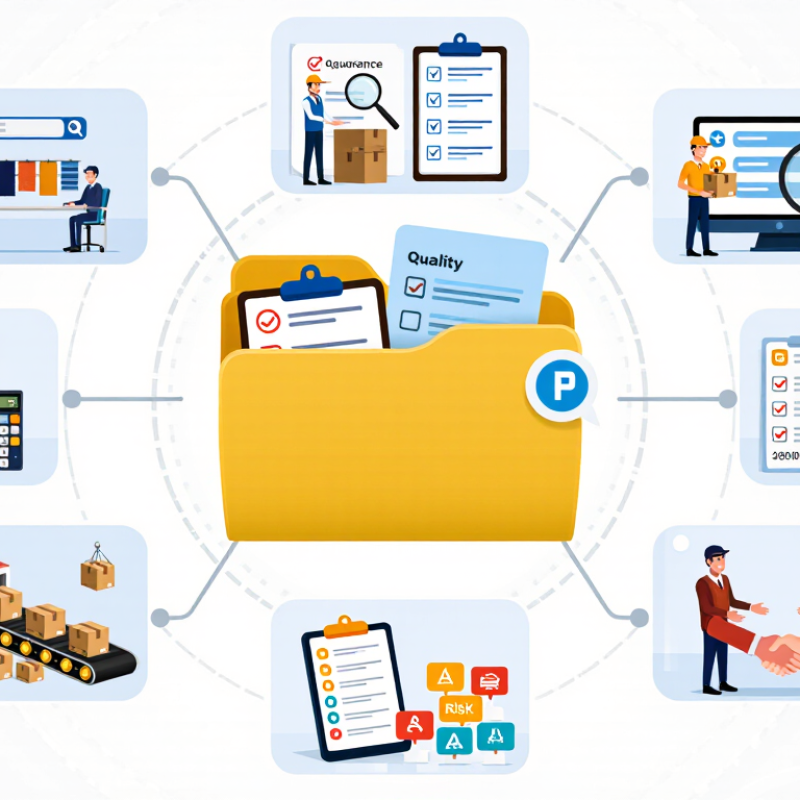
Before requesting quotes, write down what the project must deliver. Specify the product, materials, target quantity, acceptable quality range, packaging, destination, and deadline. Add measurable checks, such as fabric weight, carton dimensions, or a permitted defect rate. “Good quality” is too vague to guide sampling or inspection. Be specific.
Then separate essential requirements from preferences. Note your budget range, order volume, required certifications, communication needs, and tolerance for delays or substitutions.
McKinsey’s 2020 supply-chain survey found that 93% of respondents planned to increase supply-chain resilience. For sourcing, that means discussing backup suppliers and lead-time risks before production begins, not after a shipment slips.
The World Bank’s 2023 Logistics Performance Index assesses customs, infrastructure, shipment arrangements, logistics competence, tracking, and timeliness. Use these areas to ask practical questions about delivery and visibility.
Share the brief with potential sourcing providers and ask how they will verify each requirement. Request a sample plan, inspection checkpoints, and a clear process for reporting changes. A low unit price may not include sampling, freight, or rework. That part is easy to miss. One honest limitation: early estimates can change when specifications are incomplete, so keep assumptions visible and revise them openly.
Verify the provider’s service scope before comparing prices. “One stop” can mean supplier discovery, sampling, inspections, order coordination, and shipping—or only a few of these. Request a written service list and a sample project timeline. Check who handles defects, delays, and changing specifications. Small details matter: a clear inspection checklist can prevent disputes over stitching, finish, or packaging.
Industry expertise should match your product and production risks. Ask for anonymized case studies, quality records, and examples of how the provider resolved a real production issue. A polished presentation is not proof. McKinsey’s 2020 survey on supply-chain resilience found that 93% of respondents planned to make their supply chains more resilient. That makes practical risk controls worth checking, not just broad claims. Still, one report cannot tell you whether a particular provider performs well.
Tip: Ask the provider to explain how it qualifies suppliers, checks samples, and reports inspection results. Request a redacted inspection report and confirm how often updates arrive. Notice vague answers. A provider may have deep experience in one category but limited knowledge of yours; that gap deserves a candid discussion before you share detailed requirements.
7 Tips for Choosing One Stop Sourcing Services
A broad supplier network is useful only when its strengths are visible. Ask for a current supplier map showing locations, capabilities, and backup options. Can a second facility handle the same product if the main site is delayed? Request examples of recent production schedules, not just a list of factory names. Ask for proof. A polished presentation is not the same as verified capacity.
Quality controls should be specific and repeatable. Look for written inspection criteria, sample records, and clear steps for handling defects. For example, a supplier should be able to show how it checks fabric color consistency or measures a component against a drawing. Details matter. Ask who signs off each check, and whether buyers can review inspection results before shipment. A quick factory visit may help, but it cannot replace ongoing records. I would also ask how corrective actions are tracked; this is easy to overlook.
Compliance needs the same practical scrutiny. Request current documentation for relevant product and market requirements, then confirm its scope, date, and issuing source. Check whether material declarations and production records can be traced to specific batches. Do not assume one certificate covers every item or destination. Documents can be outdated, and I have seen that assumption create avoidable delays. A dependable sourcing partner should flag gaps early, explain what remains unverified, and agree on a realistic timeline for closing them.
Illustrative supplier evaluation scores (out of 5) across key sourcing criteria. Use these dimensions as a starting point and verify each supplier with documented evidence.
Assess supplier network coverage, quality processes, compliance documentation, communication, pricing transparency, delivery performance, and risk management before making a decision.
A trustworthy one-stop sourcing quote should separate product cost, inspection, packaging, inland transport, freight, insurance, and destination fees. Ask for the assumptions behind each figure: order volume, carton size, shipping route, delivery terms, and quote validity. Compare landed cost, not just the factory price. A low quote can hide extras. The World Bank’s 2023 Logistics Performance Index reports a 44-day average for international shipments across ports, airports, and land borders. Roughly 60% of delays occur at these facilities. Request a route-specific schedule and a realistic buffer, rather than a guaranteed arrival date. Small delays matter.
Compare providers on how they manage those uncertainties. Ask who tracks shipments, checks product quality, documents inspections, and handles damage claims. Request a written plan for missed sailings, supplier delays, and route changes. UNCTAD’s Review of Maritime Transport 2024 says ships carry over 80% of world trade by volume, making freight disruptions relevant to many sourcing plans. Check whether logistics costs include alternative routing and cargo insurance. No spreadsheet catches everything. One awkward gap is often the claims process: ask who files the paperwork, what evidence is needed, and how quickly the provider responds. A clear answer is more useful than a polished promise.
Choosing one-stop sourcing services is not just a price comparison. Communication, contract clarity, and after-sales support shape what happens when a shipment is late or a sample misses specification. Salesforce’s 2023 State of the Connected Customer report found that 88% of customers consider a company’s experience as important as its products or services. The finding is not sourcing-specific, but it underscores why clear responses matter.
Tip: Test communication before signing. Send a detailed request with materials, dimensions, packaging, and delivery dates. Notice whether the provider confirms details in writing, names a contact, and explains response times. Ask for a sample weekly update, too. A polished sales call is not proof of reliable project management. No checklist catches every delay.
Tip: Read the contract for measurable terms. Check inspection criteria, sample approval, payment milestones, revision limits, delivery responsibilities, and remedies for missed requirements. Ask how changes are documented and who pays for rework. Vague promises can sound reassuring until a carton arrives with the wrong label. I would still leave room for judgment: an exhaustive contract cannot predict every production issue.
Tip: Verify after-sales support with specific scenarios. Ask how defects are reported, what evidence is needed, and when replacement or corrective-action decisions arrive. Request a named escalation contact and written response targets. A provider’s process should be clear after payment, not just before it.