10 Best Car Battery Jumpers to Buy in 2026?
A dead battery rarely announces itself at a convenient moment. The engine clicks in a dim parking lot, while a phone flashlight catches corrosion around the terminals. AAA’s roadside assistance reporting identifies battery trouble as a recurring reason drivers need help. That everyday risk makes a dependable Car Battery Jumper more than a glove-box gadget.
Cold weather adds another complication. AAA automotive research has documented how low temperatures can reduce a battery’s ability to start an engine, while the engine itself may demand more power. Ratings on jumper packs can look impressive, but peak amps alone do not tell the full story. Cable reach, clamp quality, safety protections, charging options, and performance in realistic conditions matter too. Small details matter.
This guide compares ten models for different vehicles and budgets. It draws on manufacturer specifications and established automotive guidance, while treating advertised numbers with caution. A compact pack may suit a small sedan, yet struggle with a larger engine or a deeply discharged battery. And even a strong unit needs correct connection and careful storage. That part is easy to overlook. No ranking can replace checking your vehicle manual, verifying compatibility, and following the jumper’s instructions. Expect useful comparisons, not a miracle box.
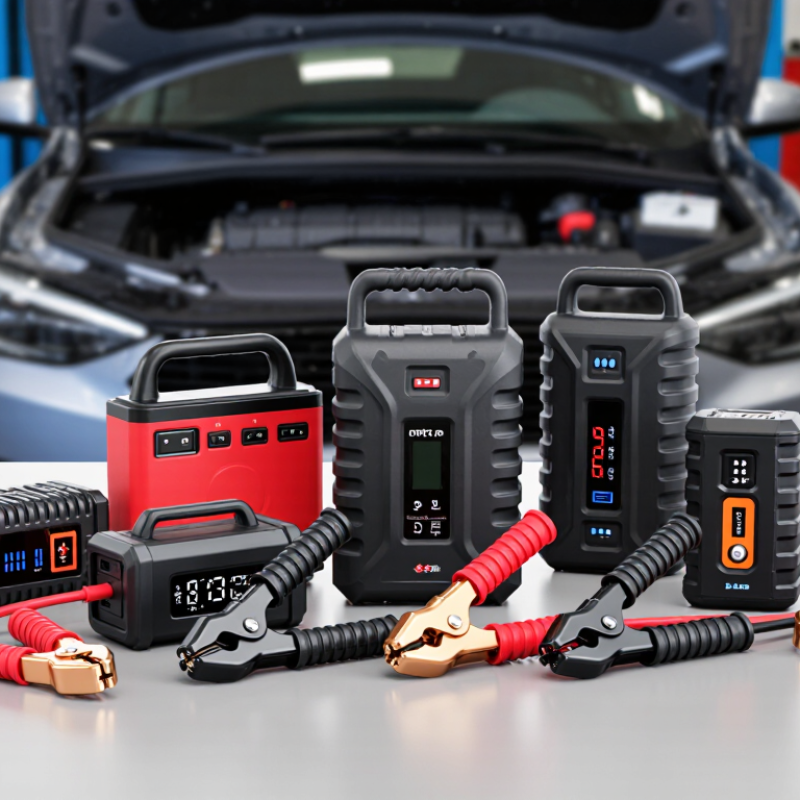
What a Car Battery Jump Starter Is and How It Works
A car battery jump starter is a portable power pack, usually built around lithium-ion cells, that supplies a brief surge to help a discharged 12-volt battery turn the starter motor. It does not repair the battery or fully recharge it. Think of it as a temporary boost: current travels through the clamps and cables, giving the starter enough power to crank the engine. The alternator can recharge the battery once the engine is running, but a weak or damaged battery may still need testing.
The rating needs context. SAE International’s J537 standard tests a battery’s cold-cranking ability at -18°C: it must deliver its rated current for 30 seconds while maintaining at least 7.2 volts. Portable jump starters are not necessarily rated using the same test, so a large “peak amps” figure alone does not prove how well a unit will start your car. Check the vehicle manual and the starter’s instructions. Numbers can mislead.
Tips: Switch off the ignition, connect the clamps to the marked battery terminals, and follow the unit’s indicator lights. Keep the clamps apart. If cables feel hot, the pack swells, or the battery is cracked, stop and get professional help. A jump starter can be handy in a cold driveway, but I’d still want the battery checked if the car repeatedly needs a boost. One missed detail can matter.
Key Features to Compare When Choosing a Jump Starter
A jump starter should match your vehicle’s engine and battery type. Check the maker’s recommended engine range, then compare it with your car’s requirements. Peak amps look impressive, but they do not tell the whole story. I still find that number easy to overvalue. Cold weather and a weak battery can make a real difference.
Look for clear reverse-polarity, overcurrent, and short-circuit protection. These safeguards reduce the chance of damage if clamps are connected incorrectly, but they do not replace careful use. Check the clamp design, too. Insulated handles and sturdy cables are easier to manage beside a dim roadside. Small details matter. Read the manual before an emergency, and follow its connection sequence.
Battery capacity affects how many attempts the unit may support between charges. A built-in charge indicator helps, while USB ports are useful but secondary. Consider whether the unit can hold a charge during months in a glove box; some need periodic recharging. Check its operating-temperature range, storage instructions, and warranty terms. A compact case may fit neatly under a seat, though tiny clamps can feel awkward with gloves on. Test the light and inspect the cables at home, not in the rain.
Ten Car Battery Jump Starters to Consider in 2026
Ten Car Battery Jump Starters to Consider in 2026
A practical shortlist can include more than one style of jump starter. Consider a pocket-size lithium pack, a high-capacity unit for larger engines, and a model rated for cold weather. Other options include a built-in air compressor, a clear battery display, USB-C charging, heavy-duty clamps, a rugged water-resistant case, a bright work light, or a kit designed for multiple vehicles. These are ten useful directions, not ten guaranteed winners. Small details matter.
Compare the stated voltage and starting-current rating with your vehicle’s manual. Check whether the clamps have reverse-polarity protection, and read how the unit signals a poor connection. A large current figure may look impressive, but ratings are not always easy to compare. I would not choose on that number alone. Also consider storage temperature, recharge time, and whether the pack still holds charge after sitting in a glove box for months.
Tips: Keep the starter charged and inspect its cables for cracks. Park safely, switch off accessories, and connect the clamps exactly as instructed. Never jump a damaged or leaking battery. If the unit behaves oddly, stop and check the manual; guessing is a poor roadside plan.
How to Match a Jump Starter to Your Vehicle and Needs
When choosing a jump starter, match its rated starting output to your engine, not just the biggest number on the package. Gasoline and diesel engines place different demands on a battery, and larger engines generally need more starting current. Check your vehicle manual and the starter’s stated compatibility range. Cold weather can weaken battery performance, so drivers in freezing climates may need extra capacity. Cold changes everything. Confirm the unit supports your battery type, such as lead-acid or AGM, when the manufacturer specifies one.
Think about where and how you will use it. A compact unit is easier to keep in a glove box, but very small models may not suit a large engine. Check that the cables reach the battery terminals without stretching, and look for reverse-polarity and short-circuit protection. These features reduce the chance of a connection mistake; they do not replace careful use. Check the manual. If you drive long distances, a clear charge indicator and a battery that holds its charge in storage can matter more than extra features. I once focused too much on peak amps. The number looked reassuring, but the operating range and instructions were more useful. Keep the device charged, and inspect its cables for cracks before an emergency.
Safe Use, Charging, and Storage of a Jump Starter
A jump starter is useful only when it is charged, undamaged, and matched to your vehicle’s voltage. Check its manual before connecting anything; cable and grounding instructions can vary. Park safely, switch off the ignition, and keep the unit away from rain and moving engine parts. Never try to start a battery that is swollen, cracked, leaking, or frozen. That is a job for a technician.
Connect the clamps in the order specified by the manufacturer, checking that red reaches the positive terminal and the black clamp reaches the recommended ground point. Keep the clamps apart. A reversed connection can damage electronics or cause sparks. Once the engine starts, disconnect the clamps as directed, without letting them touch each other. If the first attempt fails, pause rather than holding the starter button repeatedly; the unit and cables can heat up. A little patience helps.
Recharge the jump starter with its supplied cable and a suitable power source. Let it cool before charging if it feels warm, and charge it in a dry, ventilated place. Before storage, check the indicator and top it up according to the manual. Many units lose charge over time, especially in a hot trunk. Set a calendar reminder to inspect it every few months. Easy to forget. Batteries age, and a jump starter is not a substitute for diagnosing a weak car battery.
Jump Starter Storage: Suggested Check Intervals
A practical routine for a portable 12V car jump starter kept in storage.
Check the case and cables and verify the charge indicator about once a month. Recharge after use, and check the manual for the maker’s storage and recharge schedule; requirements vary by model. Store the unit in a cool, dry place, and follow the vehicle and jump-starter instructions before connecting clamps.