Smart Heating Solutions
Choosing the best Date Bar Extrusion Line in China starts with the product, not the brochure. A soft date paste behaves differently from a firm blend containing nuts, seeds, or cereal. The line must feed, extrude, cut, and convey the mixture without tearing its edges or warming it excessively. Small details matter: hopper flow, screw design, die width, cutter accuracy, and how quickly operators can clean contact surfaces.
The scale of the raw-material sector makes this choice significant. FAOSTAT’s 2022 production data records more than nine million tonnes of dates worldwide, underscoring the importance of reliable processing capacity. Yet that figure does not tell buyers which machine is best. No independent, widely recognized dataset ranks Chinese date-bar extrusion lines by verified performance. That matters. Buyers should compare documented output, product dimensions, changeover time, food-contact materials, and service response—not just advertised speed. Ask for proof.
A useful supplier evaluation should include a sample run using your actual recipe. Check whether bars hold their shape after cutting, and whether the machine handles sticky paste without frequent manual adjustment. Request a clear capacity range, a line layout, and references from comparable installations. Also confirm what the quoted package includes; mixers, cooling conveyors, and packing equipment may be separate. A factory visit or live video trial can reveal practical issues that a specification sheet misses. Still, recipe differences make direct comparisons imperfect. The best choice is the line that consistently meets your product and operating requirements, with measurable results and support you can verify.
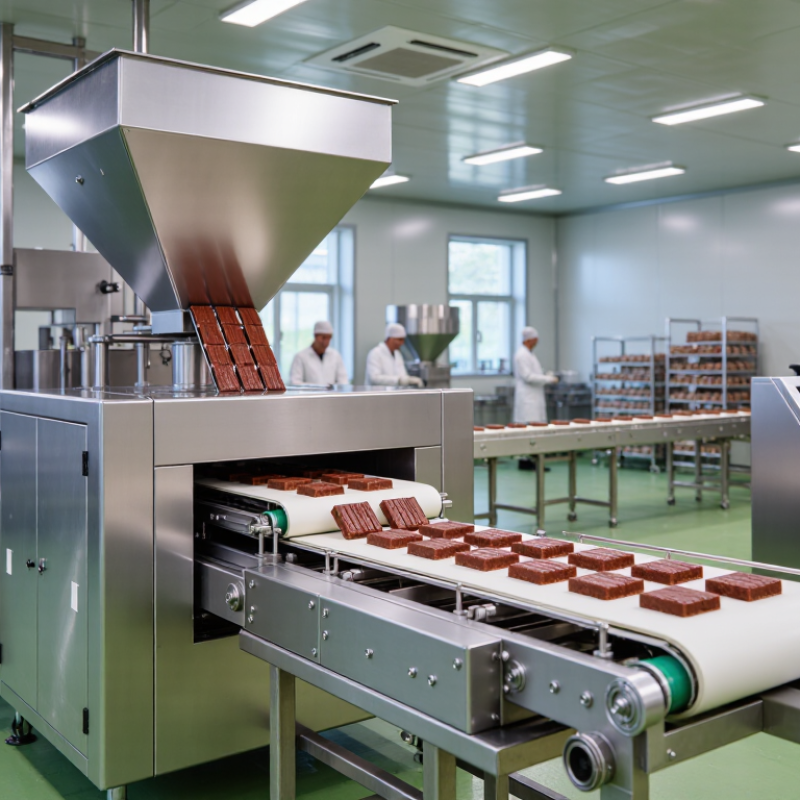
A date bar extrusion line is a connected set of machines that turns a prepared date mixture into evenly shaped bars. The process usually includes mixing, feeding, forming, cutting, and sometimes cooling or wrapping. A screw or roller system pushes the mixture through a shaped opening, creating a continuous strip. A cutter then divides it into portions with consistent lengths.
The line begins with recipe preparation. Dates may be pitted and blended into a paste, then combined with ingredients such as oats, seeds, or nuts. The mixture must hold together without becoming too sticky or dry. Operators monitor feed rate, product temperature, and cutter timing. Small changes matter. A few degrees or a slightly uneven feed can affect the bar’s surface and weight. Not every recipe runs smoothly on the same settings.
Equipment choice depends on the product’s texture, size, and planned output. A softer date paste may need gentler feeding, while visible nut pieces require openings that avoid crushing them. Cleanable contact surfaces and accessible adjustment points also help with routine production. An extrusion line is not a magic fix. Recipes still need testing, and some trial batches may come out uneven before settings are properly tuned.
A date bar extrusion line mixes ingredients and shapes the mixture into continuous bars through a forming die. The chart shows the macronutrient content of raw Medjool dates, a common base ingredient, per 100 g. Actual values vary by variety and moisture content.
Source: USDA FoodData Central, raw Medjool dates. When evaluating an extrusion line, consider whether its mixing, feeding, forming, and cutting functions suit your recipe and required output.
What Is the Best Date Bar Extrusion Line in China?
How Does the Date Bar Extrusion Process Work?
Date bar production starts with preparing the ingredients. Dates may be pitted and chopped, or processed into a thick paste. The recipe can include grains, nuts, or binding ingredients, depending on the desired texture. These are mixed until the mass holds together without becoming overly sticky. Small details matter. Uneven mixing can leave hard pieces or soft patches in the finished bar.
The mixture enters a hopper and moves through the extruder toward a shaping die. Pressure pushes it into a continuous strip or rope, which cutters divide into set lengths. Operators adjust feed rate, die size, and cutting speed to control bar dimensions. There is no single setting for every recipe. A date-heavy blend behaves differently from one with more dry ingredients, so test runs help identify a stable setup. The bars may then pass through a cooling section to firm up before optional coating and packaging. Moisture and temperature need regular checks; the process is not automatic. Even a small change in date paste consistency can affect clean cutting, and that is easy to underestimate.
| Category | Selection Point or Process Stage | Practical Guidance | What to Verify |
|---|---|---|---|
| Choosing a Date Bar Extrusion Line | |||
| Best-fit configuration | Integrated line with controlled feeding, extrusion, cutting, and optional cooling | For continuous production, choose a line that can handle the date mixture consistently and connect to the required downstream packaging equipment. The best option depends on the recipe, target output, and available floor space. | Request a production test using your own recipe and confirm the measured output, bar consistency, and changeover requirements. |
| Capacity | Rated throughput in kilograms per hour | Size the line around the required saleable output, not only the extruder’s stated maximum. Sticky, fibrous, or inclusion-rich mixtures may run differently from a supplier’s test material. | Confirm the test recipe, operating duration, acceptable product quality, and whether the quoted figure is raw throughput or finished-product output. |
| Product flexibility | Adjustable die, portion length, and cutting system | Check that the line can produce the intended bar profile and weight. As a starting product brief, some manufacturers test formats around 25–50 g per bar; this is an example range, not a universal standard. | Ask for samples at the intended dimensions and verify weight variation, clean cutting, and ease of changing dies or settings. |
| Hygiene and maintenance | Food-contact construction, accessible parts, and cleanable surfaces | Choose equipment designed for food processing, with accessible areas around the hopper, screw, die, and cutting assembly. Cleaning procedures should suit the ingredients and factory sanitation plan. | Review food-contact material documentation, disassembly instructions, cleaning method, spare parts, and maintenance access. |
| Controls and safety | Speed adjustment, guarding, and emergency stops | Controls should allow operators to adjust feeding, extrusion, and cutting in a coordinated way. Safety guards and emergency stops should be included where required by the installation and applicable regulations. | Check the control system, operator instructions, electrical requirements, safety features, and local compliance documentation. |
| Installation and support | Layout, commissioning, training, and service arrangements | Confirm the line’s footprint, utilities, installation scope, commissioning plan, and operator training before purchase. These requirements vary by configuration and site. | Obtain a written scope covering delivery, installation, warranty, technical support, and recommended spare parts. |
| Buying recommendation | Choose by tested product performance rather than a single specification | A suitable line should meet the required output while producing bars that hold their shape, cut cleanly, and match the target weight and dimensions with your actual formulation. | Compare documented recipe trials and total operating requirements. No single configuration is best for every date bar product. |
| How the Date Bar Extrusion Process Works | |||
| 1. Ingredient preparation | Inspect and prepare pitted dates and other ingredients | Remove unsuitable material and check that dates are pitted. Ingredients such as nuts, seeds, or grains should be prepared to the size and condition required by the recipe. | Check ingredient quality, foreign-material controls, and any allergen-handling procedures. |
| 2. Grinding or paste preparation | Make a uniform date base | Dates may be ground or supplied as paste, depending on the product and equipment. The base should feed consistently and have a texture suitable for forming. | Check for even texture and confirm that the mixture can pass through the selected feed and extrusion system. |
| 3. Mixing | Combine the date base with recipe ingredients | Mix until the ingredients are distributed evenly. The formulation’s moisture, temperature, particle size, and inclusions can affect flow and bar texture. | Check blend uniformity, mixture consistency, and any recipe-specific limits before feeding. |
| 4. Feeding | Transfer the mixture steadily into the extruder | A consistent feed helps reduce interruptions and variation in the extruded strand. Hopper and feeder settings should be matched to the mixture’s texture. | Watch for bridging, irregular feeding, excessive residue, or changes in strand shape. |
| 5. Extrusion | Force the mixture through a shaped die | The die forms a continuous strand or selected profile. Screw speed, feed rate, die opening, and mixture condition are adjusted together to achieve the desired shape. | Check strand dimensions, surface condition, density, and whether the product holds its shape after exiting the die. |
| 6. Cutting and portioning | Cut the strand into individual bars | A synchronized cutter portions the extrudate to the target length. Cutting settings should suit the product’s firmness and stickiness. | Check portion length, weight variation, cut edges, and whether bars deform or stick to the cutter. |
| 7. Cooling or setting | Stabilize the bars before handling or wrapping | Some formulations benefit from a cooling or resting stage to improve handling. The need and conditions depend on the recipe and product characteristics. | Confirm that bars remain intact during transfer and do not become excessively hard, soft, or sticky. |
| 8. Inspection and packaging | Inspect, verify, and package the finished bars | Check product appearance and weight before packaging. Packaging should suit the product’s shelf-life, storage, and distribution requirements. | Apply the factory’s food-safety checks, including applicable foreign-material controls, traceability, and packaging checks. |
| Note: Throughput, dimensions, settings, and cooling requirements are recipe- and machine-dependent. Confirm operating figures through a documented trial with the intended ingredients and product specification. | |||
A complete date bar extrusion line begins with ingredient preparation. Dates may need inspection, destoning, and controlled chopping before mixing. A mixer combines the paste with grains, nuts, or other recipe ingredients. Consistent particle size helps the mixture feed evenly. Small details matter.
The mixture then enters a hopper and passes through an extruder or forming unit. Adjustable rollers or a shaping die set the bar’s width and thickness. Operators should check the texture at the machine: a dry mix can crack, while an overly soft one may stick. In practice, this handoff is often underestimated. The line also needs a cooling conveyor, which helps bars hold their shape before cutting. A cutter sets the length; optional coating or topping equipment can add chocolate or seeds.
A complete setup usually includes a metal detector, a suitable weighing system, and a flow wrapper or other packaging machine. Controls should let operators adjust speed and temperature without disrupting the whole line. Cleaning access matters, especially around the hopper and cutter, where sticky date residue can collect. Not always obvious. The best equipment arrangement depends on recipe, target output, and bar dimensions, so trial runs with the actual mixture are more useful than relying on rated capacity alone.
A reliable comparison starts with the product, not the advertised output. Date paste varies in moisture, fiber, and stickiness, so ask suppliers to run your own recipe. Watch whether the feeder delivers evenly, whether the extrusion head keeps a consistent shape, and whether the cut bars hold their weight. Record kilograms per hour alongside rejected pieces and cleaning time. A fast line that needs frequent stops may be slower in practice.
Check the figures carefully.
FAO’s 2023 Statistical Yearbook estimated that 13.2% of food was lost between harvest and retail worldwide in 2021. That is not a date-bar factory benchmark, but it underlines why tracking material loss matters.
Ask for a measured yield trial, with product temperature, bar dimensions, and start-up waste recorded. Compare sanitation access, changeover time, spare-parts availability, and operator training in China. Request a factory acceptance test using your ingredients, then verify the same settings during installation. A neat quotation can still hide gaps. I would also compare energy use per kilogram, though suppliers may calculate it differently; insist on a shared measurement method before choosing.
Choosing a date bar extrusion line in China starts with the product, not the machine’s advertised speed. Soft date-and-oat mixtures need steady feeding and gentle forming. Dense recipes with chopped nuts may need stronger pressure and a wider feed system. Small batches? A compact line with manual loading can handle frequent recipe changes without adding unnecessary automation.
For regular production, a continuous mixer, controlled feeder, extruder, and cutter can reduce handling between stages. Sticky date paste may cling to rollers, so ask how contact parts are cleaned and adjusted. A cooling section can help bars hold their shape before cutting or wrapping, but its length depends on the recipe and room conditions. More equipment is not always better.
Match the line to target output, bar size, available floor space, and staffing. A practical evaluation uses your own mixture, because moisture and particle size can change feeding behavior. Check whether operators can adjust thickness and cut length without lengthy stops. Ask for a trial run and record actual output, rejects, and cleaning time. The figures may be less impressive than a brochure, but they are more useful. A line designed for one stable recipe may disappoint when asked to switch products every hour.