Smart Heating Solutions
Choosing an Ev Power Station in 2026 means matching real power needs with the right equipment. A home setup may support overnight vehicle charging, essential backup circuits, or both. A business may need several charging points, dependable load management, and room to expand. The best choice depends on more than a headline power rating. Check connector compatibility, charging speed, usable capacity, installation needs, warranty terms, and support availability. Small details matter.
This guide compares ten options for homes and businesses, focusing on practical strengths and trade-offs. We consider whether a unit suits daily charging, backup use, or higher-demand sites. We also look at the limits behind advertised performance. Actual charging speed can depend on the vehicle, electrical supply, temperature, and installation. That part is easy to overlook. Product specifications can change, too, so confirm current details with the manufacturer and a qualified installer before buying. No single station fits every property. A modest home may value quiet operation and simple controls, while a busy workplace may prioritize multiple ports and monitoring tools. The comparisons aim to make those differences clearer—not to promise that any one product is perfect. Some trade-offs remain. Use the shortlist as a starting point, then compare each model against your daily energy use, site capacity, and budget.
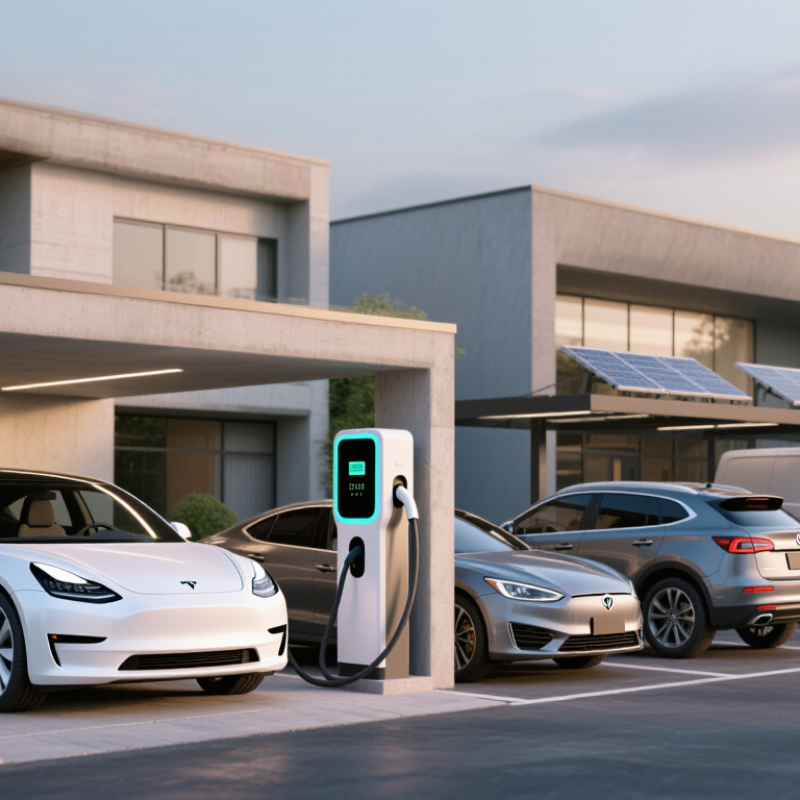
An EV power station is equipment that supplies electricity to charge an electric vehicle. At home, it may connect to a household circuit; at a business, it can serve several parking spaces. Some units draw power from the grid, while others can pair with solar panels or battery storage. The station controls the connection and communicates with the car before charging begins. That matters.
With AC charging, the station delivers alternating current, and the vehicle’s onboard charger converts it for the battery. A DC fast-charging station performs that conversion itself and sends direct current to the vehicle. Charging speed depends on the station, the car’s limits, and available electrical capacity. A high-rated station cannot make every vehicle charge faster.
One easy-to-miss detail: cable reach and circuit capacity can matter as much as the advertised power.
Tips: Check your vehicle’s connector and maximum charging rate before choosing equipment. Ask a qualified electrician to assess the panel, wiring, and expected load. For businesses, consider how many vehicles may charge at once. Read the station’s specifications carefully; I’ve seen people focus on peak speed and overlook daily fit. That can mean paying for capacity they rarely use.
Choosing an EV power station starts with the vehicle, the site, and the hours it must serve. The International Energy Agency’s Global EV Outlook 2024 reports that public charging points grew about 40% worldwide in 2023; fast chargers grew 55%. That growth makes capacity planning more than a spec-sheet exercise. Check connector compatibility, output power, and whether the electrical supply can support several vehicles charging at once. A home unit may suit one car overnight, while a business site may need load sharing across multiple parking bays.
Look beyond peak charging speed. Ask how the system manages demand, reports faults, and restores service after an outage. For outdoor installations, inspect enclosure ratings, cable reach, and protection against heat, rain, and dust. Check the warranty, software support period, and whether energy use can be measured per vehicle. Small details matter. A cable that barely reaches a parking space can become a daily frustration.
Compare total cost, including installation, electrical upgrades, network fees, and maintenance. For business use, uptime and clear service records may outweigh a slightly lower purchase price. Request evidence for safety testing and ask who handles repairs. A spreadsheet can miss the realities of a crowded lot or an older home panel. Site assessment is still essential.
Ten leading EV power stations for home and business differ in installation, charging speed, and daily use. A wall-mounted Level 2 unit suits a private garage, while a pedestal model can serve an exposed driveway. Shared workplace chargers help employees top up during the day. Dual-port stations can serve two vehicles, though available power may be divided between them. Networked chargers support access controls and usage records. Load-managed models adjust charging when a building is busy. Solar-compatible units can use surplus generation when conditions allow. Weather-rated stations suit outdoor parking. Fleet-focused units support repeated daily use. Portable charging equipment offers flexibility, but usually charges more slowly.
The right choice depends on the vehicle, electrical service, parking pattern, and local installation requirements. That matters. A site assessment can confirm whether the panel has capacity and whether new wiring or protective equipment is needed. Businesses should consider cable reach, accessibility, billing needs, and maintenance response times. Homeowners may care more about overnight charging and a tidy cable path. Check the station’s operating limits, warranty terms, and software support before purchase. A high output rating looks impressive, but it cannot overcome a limited circuit. Not always. Real use can also disappoint: cars arrive at different charge levels, and shared stations may sit idle at odd hours. Planning around actual parking habits is more useful than chasing the highest specification.
A configuration-based comparison of common EV charging station types, rather than a ranking of branded products. Charging speed depends on the vehicle, electrical supply, battery state, temperature, and installation.
| No. | Station configuration | Typical output | Typical electrical setup | Estimated charging rate | Best suited to | Key planning consideration |
|---|---|---|---|---|---|---|
| 1 | Portable Level 1 AC | About 1.4 kW at 120 V, 12 A | Standard 120 V outlet; use a properly rated circuit | Roughly 3–5 miles of range per hour | Low-mileage drivers, overnight top-ups, and backup charging | Slow for daily high-mileage use; avoid extension cords and unsuitable outlets. |
| 2 | Entry-level Level 2 AC | Up to about 3.8 kW at 240 V, 16 A | Dedicated 240 V circuit; breaker sized to the equipment and local code | Roughly 11–15 miles per hour | Home charging with modest daily driving or limited electrical capacity | Confirm the vehicle’s onboard AC charger can accept the available power. |
| 3 | Standard Level 2 AC | Up to 7.7 kW at 240 V, 32 A | Typically a dedicated 40 A circuit in the U.S.; installation must follow local code | Roughly 23–31 miles per hour | Most single-EV homes and small workplace parking areas | A common balance between charging speed and circuit capacity. |
| 4 | High-output Level 2 AC | Up to 9.6 kW at 240 V, 40 A | Typically a dedicated 50 A circuit in the U.S. | Roughly 29–38 miles per hour | Homes with higher daily mileage or shorter overnight charging windows | The vehicle may draw less than the station’s rated output. |
| 5 | 48 A Level 2 AC | Up to 11.5 kW at 240 V, 48 A | Typically a dedicated 60 A circuit in the U.S. | Roughly 35–46 miles per hour | Higher-use homes and small business sites with suitable service capacity | Requires compatible vehicle hardware and an electrician’s load assessment. |
| 6 | 80 A Level 2 AC | Up to 19.2 kW at 240 V, 80 A | Typically a dedicated 100 A circuit in the U.S. | Up to roughly 58–77 miles per hour when the vehicle supports it | Specialized commercial, fleet, or vehicle-compatible applications | Many EVs cannot accept 19.2 kW AC; electrical upgrades may be substantial. |
| 7 | Three-phase Level 2 AC | Up to 22 kW at 400 V, 32 A, three-phase | Three-phase service; common in some commercial and international settings | Vehicle-dependent; only vehicles supporting three-phase AC can use the full rate | Business sites and homes with compatible three-phase supply | Availability and connector requirements vary by country and vehicle. |
| 8 | 50 kW DC fast charging | Up to 50 kW DC | Commercial-grade power supply; site design and utility capacity determine requirements | Vehicle-dependent; output generally declines as the battery fills | Small public sites, destination charging, and selected fleet depots | Assess utility connection, demand charges, accessibility, and payment needs. |
| 9 | 150 kW DC fast charging | Up to 150 kW DC | High-capacity commercial site connection; may require utility upgrades | Vehicle-dependent; actual charging speed varies with battery and conditions | Busy public charging locations and high-turnover fleet operations | Plan for utilization, grid capacity, cooling, maintenance, and payment processing. |
| 10 | 350 kW DC high-power charging | Up to 350 kW DC | Major commercial power infrastructure; grid connection and site engineering are essential | Only compatible vehicles can approach peak output; charging tapers as the battery fills | High-traffic highway hubs and large-scale commercial charging sites | Usually unsuitable for ordinary homes; evaluate demand management and project economics. |
Notes: Level 2 range estimates use a broad planning assumption of about 3–4 miles per kWh; real-world results vary by vehicle efficiency and driving conditions. In the U.S., EV charging is generally treated as a continuous load, so circuit sizing commonly allows 125% of the charging current; local electrical codes and a qualified electrician determine the final installation. All ratings are illustrative configuration values, not guarantees for a specific product.
For residential charging, begin with the car’s typical overnight needs, not the charger’s biggest advertised number. The U.S. Department of Energy’s Alternative Fuels Data Center estimates Level 1 charging adds about 2–5 miles of range per hour, while Level 2 adds roughly 10–30. That gap matters. A 240-volt Level 2 station can be a practical fit when a car returns home with a low battery and leaves early the next morning. Actual charging speed varies by vehicle and electrical setup.
Before choosing a unit, check the parking distance, available circuit capacity, and where the cable must reach. A 30-amp, 240-volt circuit supplies up to 7.2 kilowatts, but an electrician should assess the home’s existing load before installation. Smart scheduling can shift charging to cheaper hours where utility rates vary. The U.S. Energy Information Administration reported an average residential electricity price of 16.48 cents per kilowatt-hour in 2024; local rates can differ substantially. So the national figure is only a rough cost reference.
Weather protection and cable length sound mundane. They matter when the car parks outdoors or the outlet sits across the garage. Check that the connector fits the vehicle, and consider load management if other large appliances run overnight. It is easy to overbuy peak output; pause before paying for capacity the household may rarely use. I might still miss something: future vehicle needs can change, and no single setup suits every home.
Choosing an EV power station for a workplace starts with actual charging demand, not the biggest number on a brochure. A six-car office with all-day parking may need fewer high-output ports than a fast-turnover delivery hub. Count vehicles, arrival times, daily mileage, and parking duration. Estimate energy needs in kilowatt-hours, then compare them with the building’s available electrical capacity. Timing matters. A slower charger can serve more vehicles when they remain parked for several hours.
Installation costs depend on more than the charging units. A site assessment should check panel capacity, cable routes, parking layout, and the distance to each charging bay. Long cable runs or electrical upgrades can raise the budget quickly. Ask a qualified electrical contractor to assess the site before comparing quotes. Include networking, maintenance, and any needed load-management equipment in the cost estimate. Small details add up.
For a business, managed charging can help distribute available power across vehicles instead of drawing full output from every port at once. This may avoid some costly upgrades, but it depends on fleet schedules and local electrical limits. Compare the upfront price with expected use over several years, and ask how equipment downtime is handled. Estimates are estimates; actual use can surprise you. Leave room in the plan for changing fleet size or operating hours.
Compare typical Level 2 AC and DC fast-charging power ratings when assessing charging needs for homes and businesses.
These are representative charger power ratings, not product rankings. Actual charging speed depends on the vehicle’s onboard charger or DC charging capability, while installation requirements and costs vary with site electrical capacity and construction needs.