2026 Best Wear Resistant Solid Wheels for Global Buyers
Choosing the best Wear Resistant Solid Wheels in 2026 requires more than comparing prices or tread patterns. Global buyers must examine load ratings, compound quality, heat resistance, floor protection, and expected service hours. A wheel that looks durable may still develop flat spots beside a hot loading dock. That detail matters.
Rubber technology educator Dr. John S. Dick offers a useful reminder: “A tire survives by managing heat, load, and wear—not by hardness alone.” This principle guides our evaluation. The strongest solid wheels balance abrasion resistance with controlled elasticity. They should roll steadily across concrete, steel plates, warehouse joints, and uneven factory floors. Buyers should also request test data, compound specifications, production records, and clear warranty terms. Independent verification remains valuable, especially when suppliers use similar performance claims.
This guide compares practical options for forklifts, pallet trucks, airport equipment, industrial carts, and heavy-duty material handling systems. We consider operating temperature, wheel diameter, hub design, braking demands, and maintenance conditions. We also acknowledge an uncomfortable truth: no solid wheel is perfect. A wheel optimized for maximum wear life may feel harder and transmit more vibration. A softer compound may protect floors better but wear faster under heavy loads. Real experience can challenge laboratory results. Therefore, purchasing decisions should match the wheel to the site, not merely to a catalog ranking. The following overview helps global buyers ask sharper questions and avoid expensive replacements.
What Are Wear-Resistant Solid Wheels?
What Are Wear-Resistant Solid Wheels?
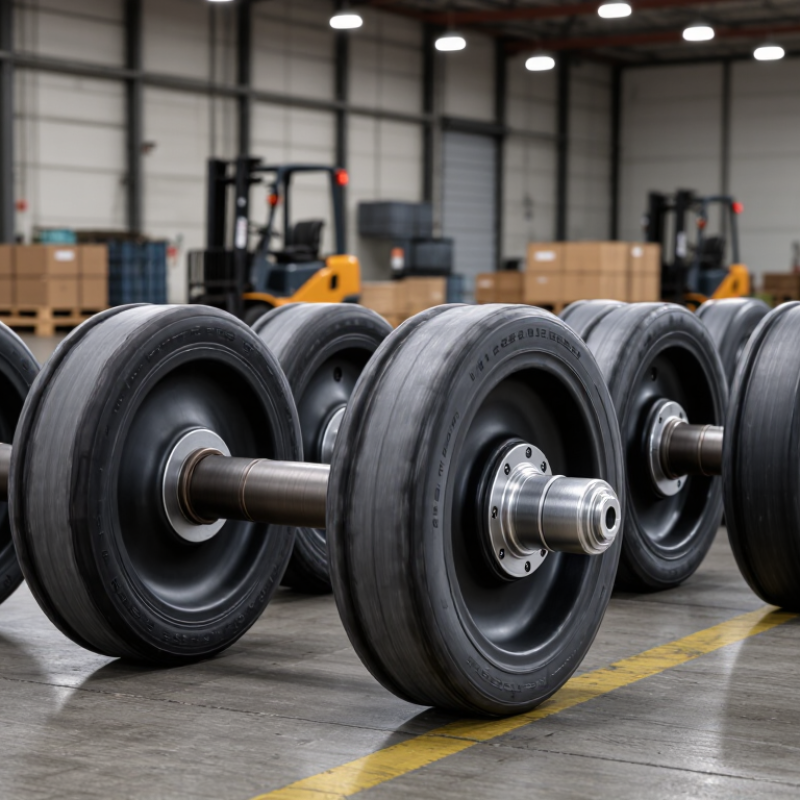
Wear-Resistant Solid Wheels are non-pneumatic wheels designed to handle repeated contact, friction, and heavy loads. Unlike pneumatic tires, they contain no air and cannot suffer ordinary punctures. Their rubber, polyurethane, or composite bodies are molded around a strong core. This construction supports stable movement on warehouse floors, carts, platforms, and material-handling equipment.
A quality wheel should resist chunking, cracking, and rapid tread loss. It should also roll smoothly under its rated load. In practical inspections, small details matter. A wheel may look durable but wear quickly on rough concrete. Excessive hardness can leave marks or create vibration. Softer materials often improve grip, yet they may increase rolling resistance. Temperature, moisture, floor debris, and daily travel distance also affect service life. Hardness alone is not enough evidence.
Tips: Check the load rating for each wheel, not only the total equipment weight. Measure the mounting plate, axle diameter, and wheel clearance carefully. Ask for abrasion, impact, and temperature data when available. Test a sample on the actual floor before placing a large order. This step may reveal noise, tracking problems, or unexpected surface wear. Specifications can be incomplete, so independent inspection remains worthwhile.
How Solid Wheel Materials Affect Wear Resistance
Choosing the best wear-resistant solid wheel in 2026 starts with its material, not its appearance. Material controls abrasion resistance, load capacity, heat tolerance, and floor protection. A wheel that survives metal chips may damage polished concrete.
Polyurethane offers a balanced option for warehouses and production areas. It resists cuts, oils, and repeated rolling better than many soft rubbers. Its elastic surface also reduces noise and vibration. However, excessive heat can soften it. Heat changes everything. Rubber provides strong grip and quieter movement, especially on uneven floors. Yet it may wear faster under heavy loads, sharp debris, or constant turning.
Nylon performs well in clean, dry environments with high loads. It rolls easily and resists many chemicals, but hard nylon can mark delicate floors or create more noise. Cast iron and steel handle extreme loads and rough surfaces with confidence. Their hardness brings a cost: they can crack floor coatings and transmit shock into equipment frames. In field inspections, I look for flat spots, edge tearing, embedded particles, and uneven wear. These details often reveal misuse before a wheel fails. Load charts help, but real conditions are messier. A wheel rated for a high capacity may still wear early when overloaded during tight turns. Selecting material requires matching the wheel to floor type, temperature, debris, speed, and maintenance habits. I sometimes see buyers focus on capacity alone. That remains an avoidable mistake.
2026 Best Wear-Resistant Solid Wheels for Global Buyers
How solid wheel materials affect wear resistance
The chart compares representative abrasion-loss values for commonly used solid-wheel materials under DIN 53516-style laboratory testing. Lower abrasion loss indicates better wear resistance. Actual wheel performance depends on load, floor condition, temperature, speed, chemicals, and material formulation.
What Should Global Buyers Check Before Purchasing?
2026 Best Wear Resistant Solid Wheels for Global Buyers
What Should Global Buyers Check Before Purchasing?
Choosing wear resistant solid wheels requires more than comparing prices on a product sheet. Buyers should match the wheel compound with the floor, load, temperature, moisture, and daily travel distance. A wheel used on rough concrete needs different protection from one moving across smooth warehouse epoxy. Small details matter.
Check the wheel diameter, width, axle bore, and total load rating. The rating should cover the complete equipment load, not one wheel alone. Ask how the supplier measures wear resistance and whether test data reflects real working conditions. Clear reports are more useful than broad claims. Request samples when possible, then inspect rolling noise, surface damage, and heat after repeated use.
Do not ignore bearings, hubs, and mounting plates. A durable tread can still fail when the axle fit is loose or the bracket bends. Buyers should also confirm drawings, packaging strength, replacement availability, and delivery terms before placing a global order. Product documents should show material details, inspection procedures, and traceable batch information.
Practical experience often reveals gaps in specifications. A wheel may perform well in a dry factory but lose traction in oil-contaminated areas. I would not trust a single laboratory figure without field feedback. Compare trial results from similar floors and loads. Also review the supplier’s quality history, communication speed, and ability to correct defects. The cheapest option may become expensive after downtime, uneven wear, or premature replacement.