China Top Industrial Communication Module Manufacturers?
China has become a major manufacturing base for industrial networking equipment, including gateways, protocol converters, edge devices, and Industrial Communication Module products. However, identifying the “top” manufacturers requires more than checking export volume or website claims. Buyers should examine engineering capability, factory consistency, protocol support, and after-sales reliability.
A strong manufacturer typically supports Ethernet, RS-485, CAN, Modbus, PROFINET, EtherNet/IP, or MQTT applications. Its modules should operate reliably inside control cabinets, production lines, and outdoor enclosures. Practical details matter. Look for wide temperature ratings, DIN-rail installation, electrical isolation, surge protection, and stable firmware updates. A supplier with documented testing procedures is usually easier to evaluate. Certifications, factory audits, sample testing, and traceable quality records also provide useful evidence.
This overview will introduce leading Chinese manufacturers and explain how they differ in technology, customization, production capacity, and industry experience. The evaluation should include both established brands and specialized companies serving automation, energy, transportation, and smart manufacturing. No list is flawless. Product quality can vary between models, batches, and application environments. Therefore, technical datasheets should not replace field validation. Ask for communication logs, test reports, lifecycle information, and integration support before making a decision. A reliable supplier should answer clearly, not only promote features. This approach helps readers select an Industrial Communication Module manufacturer based on measurable performance, practical experience, and long-term service value.
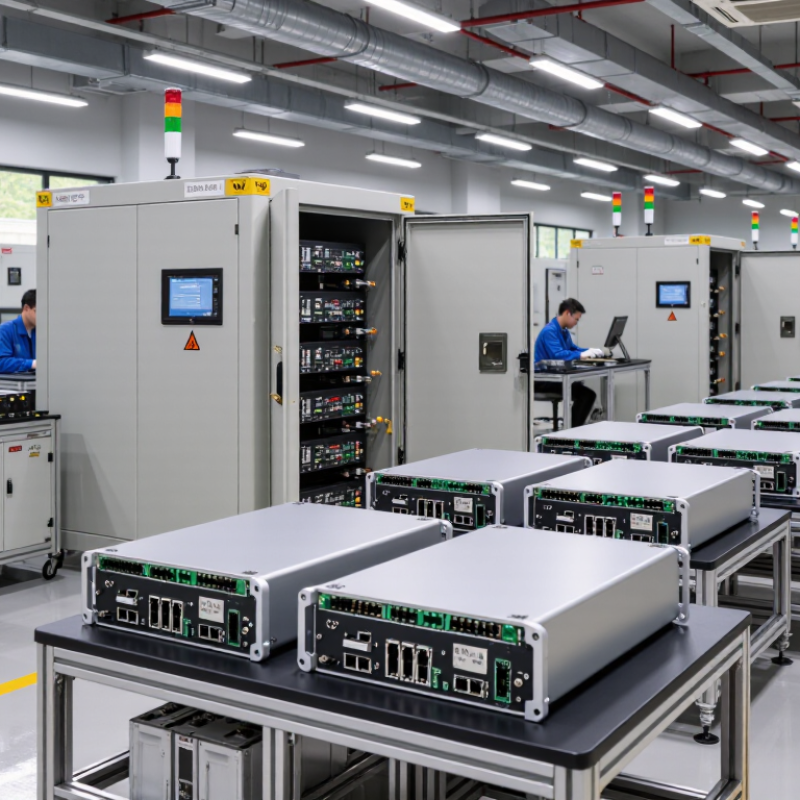
Industrial Communication Modules: 5G, Ethernet, CAN, RS-485, and Wireless IoT
Industrial communication module manufacturers now compete across 5G, Ethernet, CAN, RS-485, and wireless IoT. The best choice depends on factory conditions, not brochure claims.
GSMA Intelligence reported about 1.6 billion global 5G connections at the end of 2023. Its forecast expects roughly 5.5 billion by 2030. Industrial 5G modules can support mobile robots, remote maintenance, and low-latency machine control. Ethernet modules remain practical for fixed production lines. They offer stable wiring, predictable diagnostics, and high data throughput. CAN modules suit vehicles, drives, and embedded controllers. RS-485 still matters where long cable runs, simple wiring, and low cost dominate. IoT Analytics estimated 18.5 billion connected IoT devices in 2024. Wireless IoT modules therefore need careful power, security, and network planning.
Tips: Check protocol conversion, operating temperature, isolation, surge protection, and firmware update methods. Test modules beside motors and inverters. Laboratory performance can mislead. Ask manufacturers for packet-loss data, recovery behavior, and lifecycle support. Verify certification for each target market. A cheaper module may create higher installation costs later.
Experienced buyers should compare real deployment evidence. Look for watchdog recovery, timestamp accuracy, connector strength, and stable operation after power interruptions. Ethernet may win inside a cabinet, while wireless IoT may reduce wiring across moving assets. 5G is powerful, but coverage and subscription costs remain variable. CAN and RS-485 are slower, yet often easier to repair. The International Electrotechnical Commission’s standards provide useful technical references, but compliance does not guarantee a perfect factory fit. Measure first. Reject vague claims.
Key Performance Metrics: 9.6 kbps RS-485 to 10 Gbps Industrial Ethernet
China Top Industrial Communication Module Manufacturers?
Key Performance Metrics: 9.6 kbps RS-485 to 10 Gbps Industrial Ethernet
Industrial communication modules must match the machine, not just the catalog. At the low end, 9.6 kbps RS-485 supports stable links across sensors, meters, and older controllers. Engineers should check bus loading, termination, isolation, and surge protection. A module may advertise a long distance, but cable quality and grounding can reduce real performance.
At the high end, 10 Gbps Industrial Ethernet demands more than a fast port. Packet forwarding, latency, jitter, thermal design, and connector quality affect continuous operation. Check whether the module sustains full traffic under high temperature and multiple connected nodes. A strong evaluation also includes electromagnetic compatibility tests, vibration testing, and power interruption recovery. These details often reveal weaknesses hidden by laboratory throughput figures.
Reliable manufacturers should provide clear datasheets, production traceability, firmware records, and practical test reports. Ask for operating temperature ranges, isolation voltage, protocol support, and failure-rate data. Field experience matters here. Some modules perform well in clean test rooms but struggle near motors and variable-frequency drives. I have also seen teams overestimate bandwidth while ignoring latency. That mistake is easy to repeat. The word “top” needs evidence: stable supply, responsive engineering support, consistent samples, and documented results from both 9.6 kbps serial networks and 10 Gbps Ethernet systems.
Representative Chinese Manufacturers: Moxa, Kyland, 3onedata, InHand, and Robustel
China’s industrial communication module market includes five representative manufacturers with different strengths. One focuses on rugged Ethernet switches for factories and transport systems. Another develops rail-certified networking equipment for harsh environments. A third emphasizes compact serial-to-Ethernet gateways and protocol conversion. The fourth combines edge computing with cellular connectivity. The fifth is known for industrial routers used in remote monitoring. This range gives buyers more practical options than a single ranking suggests.
From field evaluation experience, I check more than port counts. Stable communication depends on temperature tolerance, surge protection, firmware updates, and recovery after power loss. Modbus TCP, PROFINET, MQTT, and OPC UA support can reduce integration work. Dual SIM design helps remote sites maintain connectivity. DIN-rail mounting and clear LED indicators also matter during maintenance. Small details become expensive problems later.
Performance claims still need verification. A module may pass laboratory tests but behave differently beside motors or variable-frequency drives. I prefer pilot installations, packet-loss records, and documented support response times. Certification evidence should be reviewed carefully, not accepted from a sales sheet alone. Some products offer impressive features but limited diagnostic tools. That weakness deserves attention before procurement.
Standards and Security: IEC 61158, IEEE 802.3, and IEC 62443 Compliance
When evaluating China’s top industrial communication module manufacturers, standards should guide the technical review. IEC 61158 defines fieldbus communication principles, including data exchange and timing behavior. IEEE 802.3 supports Ethernet-based connections across industrial networks. These standards help engineers compare module interfaces more accurately.
A reliable manufacturer should provide clear protocol documentation, test records, and revision histories. Ask how modules behave during cable faults, electromagnetic noise, and sudden power loss. In a factory cabinet, a small timing error can interrupt a moving conveyor. Practical testing matters.
IEC 62443 adds the security perspective. It addresses secure development, system zones, access control, and industrial network risk. A capable supplier should explain vulnerability handling, firmware updates, authentication, and security testing. Compliance claims need evidence, not attractive wording. Request certificates, test scopes, and applicable product versions. Standards are not magic shields. A module may meet communication requirements while still exposing weak passwords or unsafe update paths.
Experience also reveals uncomfortable gaps. Documentation may be incomplete. Test conditions may differ from your site. Engineers should inspect sample modules under realistic traffic and temperature conditions. Reviewers should record failures, not hide them. The strongest manufacturers usually accept technical questions, disclose limitations, and improve designs through traceable corrective actions. Reliability begins with evidence.
Industrial Communication Module Standards Reference
The chart compares selected nominal Ethernet physical-layer data rates standardized within IEEE 802.3. IEC 61158 defines industrial communication and fieldbus protocol profiles, while IEC 62443 provides cybersecurity requirements and processes for industrial automation and control systems. Ethernet speed alone does not prove IEC 61158 or IEC 62443 compliance; module qualification should be verified against the applicable profile, security level, and certification scope.
Reference: IEEE 802.3 Ethernet standards; IEC 61158 Industrial communication networks; IEC 62443 Security for industrial automation and control systems.
Application Comparison: PLCs, Energy Systems, Rail Transit, and Smart Factories
China’s Top Industrial Communication Module Manufacturers: Application Comparison
Industrial communication modules are not interchangeable across these four environments. For PLCs, manufacturers should prioritize deterministic Ethernet, Modbus TCP, PROFINET compatibility, and fast fault recovery. A packaging line may tolerate milliseconds, but repeated packet loss can still stop production. Compact DIN-rail designs also simplify cabinet installation. Field experience shows that protocol support alone is not enough.
Energy systems demand stronger time synchronization and electrical isolation. The IEA’s Electricity 2024 report expects renewables to supply about 90% of global electricity demand growth through 2025. This expansion increases communication needs between inverters, substations, meters, and storage units. Modules should support IEC 61850, redundant networks, wide temperature ranges, and surge protection. Cost remains important. However, the cheapest unit may create expensive maintenance later.
Rail transit needs stable links under vibration, dust, and electromagnetic interference. UITP’s World Metro Figures 2024 reports more than 200 metro systems worldwide, showing the scale of this application. Railway modules should support redundant ring topologies, time-sensitive data, and long lifecycle management. Smart factories add another layer. Deloitte’s 2024 Smart Manufacturing Survey found that 86% of manufacturers view smart manufacturing as a major competitiveness driver within five years. Edge processing, cybersecurity aligned with IEC 62443, and cloud connectivity therefore matter. The comparison is imperfect: factory networks change quickly, while rail systems often preserve equipment for decades. Manufacturers must test both realities.