China Top 10 Rake System Manufacturers for Global Buyers
Choosing the right Rake System manufacturer can shape field productivity, crop quality, and long-term operating costs. Global buyers need more than attractive catalogs. They need evidence from real fields, clear engineering data, and dependable support after delivery. A well-designed rake should gather hay evenly, protect forage quality, and maintain stable performance across changing moisture conditions. Small details matter. Rotor balance matters. Tine strength matters.
Agricultural machinery specialist Dr. David R. Pullen once noted, “Good field performance begins with consistent material flow.” This practical view remains important when comparing China’s leading manufacturers. Buyers should examine working width, rotor configuration, gearbox design, hydraulic requirements, spare-parts availability, and operator safety features. Factory audits can reveal details that brochures often hide. Watch the welds. Inspect the bearings. Ask for test records.
This guide introduces ten Chinese Rake System manufacturers serving international markets. It considers product range, manufacturing capability, customization experience, export service, and buyer feedback. Several companies may offer impressive specifications, yet their service systems can differ sharply. That difference becomes obvious when a machine stops during harvest.
The ranking is not perfect. Market data changes, and supplier claims require independent checking. Buyers should request samples, certifications, performance videos, and written warranty terms before making commitments. A low purchase price may look attractive, but downtime can quietly cost more. Careful comparison remains essential for farms, distributors, and agricultural contractors seeking reliable equipment worldwide.
What Is a Rake System and How Does It Work?
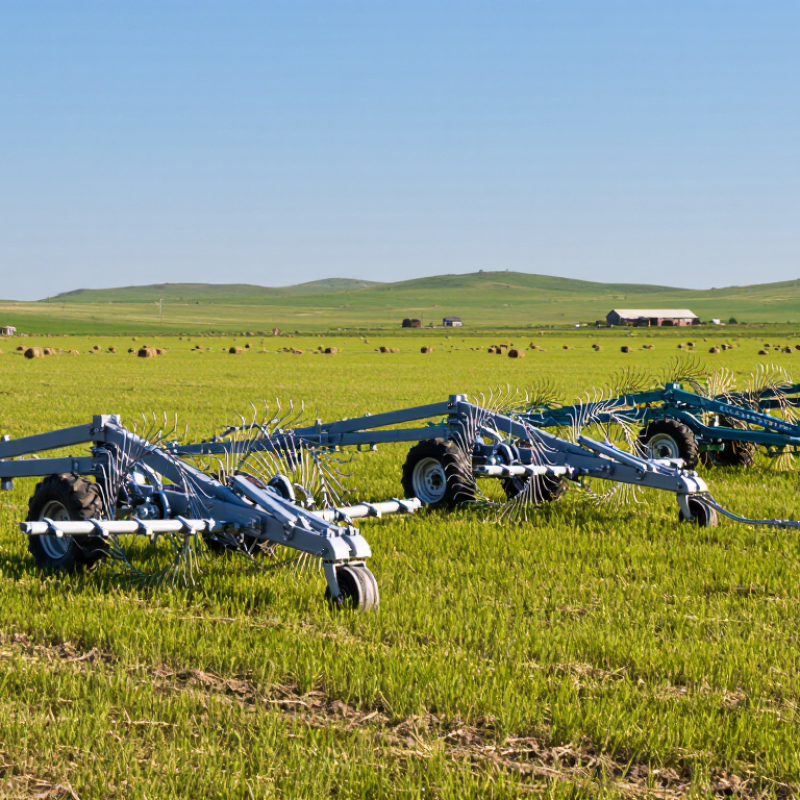
A rake system gathers cut forage into clean, manageable windrows before baling or chopping. Its main parts include tines, wheels, rotors, a frame, and a height-adjustment mechanism. The implement usually follows a tractor. Ground contact moves the tines, or the PTO drives rotating arms. These components lift scattered hay and place it into a continuous row.
According to USDA NASS, U.S. all-hay production reached about 119 million tons in 2023. That scale makes field efficiency important. A well-adjusted rake reduces missed material and limits soil contamination. Operators should match rake speed with forage moisture, field roughness, and crop density. Faster is not always better. Excessive speed can scatter leaves and increase losses. FAO also identifies mechanization as an important factor in improving farm productivity and labor efficiency, especially where seasonal labor is limited.
Common designs include wheel rakes, rotary rakes, and parallel-bar rakes. Wheel models are simple and economical, while rotary systems offer more precise windrow shaping. Field tests should check pickup quality, windrow width, and leaf retention. One overlooked detail is tire pressure. Uneven pressure can change ground contact and leave strips of hay behind. Manufacturer data helps, but real field conditions still require adjustment. That part is easy to underestimate.
How to Evaluate China’s Top Rake System Manufacturers
China Top 10 Rake System Manufacturers for Global Buyers
How to Evaluate China’s Top Rake System Manufacturers
China’s agricultural machinery base is substantial. The National Bureau of Statistics reported about 1.1 billion kilowatts of agricultural machinery power in 2023. This scale supports strong manufacturing capacity, but capacity alone proves little. Buyers should inspect tine durability, rotor balance, working width, hydraulic response, and spare-part availability. A rake that performs well on dry grass may struggle in wet, heavy windrows. Ask for field-test videos and measurable results, not polished catalog claims.
Technical compliance matters. ISO 4254-1 provides safety principles for agricultural machinery, while ISO 9001 certification can indicate controlled production processes. However, certificates require verification. Request the certificate number, issuing body, scope, and recent audit date. Compare steel grades, weld penetration, bearing brands, paint thickness, and fatigue-test records. Price deserves attention, but lifetime downtime deserves more. I have seen low-cost specifications hide weak guards and limited after-sales support. That lesson is easy to overlook.
Tips: Build a scorecard before contacting suppliers. Give separate scores for output, safety, customization, delivery, warranty, and service response. Request three references from similar farms. Check whether replacement tines, belts, and bearings are stocked locally. The FAO emphasizes that sustainable mechanization depends on reliable services, operator skills, and maintenance access. A factory may look excellent during a visit. Real reliability appears after one demanding season.
How Global Buyers Evaluate China’s Top Rake System Manufacturers
The chart presents a practical procurement weighting model for comparing rake system manufacturers. Product quality, compliance, engineering capability, delivery performance, and after-sales support are emphasized because they directly affect project risk and total cost of ownership.
Evaluation weights total 100% and are intended as a buyer-oriented benchmark rather than a ranking of individual companies or brands.
Rake System Features, Applications, and Industry Standards
Rake systems prepare forage, crop residue, and light soil with rotating tines or spring teeth. Common features include adjustable working widths, hydraulic folding, ground-following wheels, and PTO-driven assemblies. These details affect field capacity, transport safety, and maintenance time. A poorly adjusted tine can leave uneven windrows or damage young plants.
The OECD-FAO Agricultural Outlook 2024-2033 projects global agricultural production will grow by about 1.1% annually. This growth increases demand for efficient haymaking and residue management equipment. Buyers should compare rake output, pickup losses, power requirements, and performance on wet or uneven fields. Field tests matter more than catalogue figures.
Safety evaluation should reference ISO 4254-1 for agricultural machinery and ISO 500-1 for tractor power-take-off interfaces. For electrical or hydraulic components, suppliers should provide conformity documents and clear operating limits. ASABE guidance can also support testing methods and performance comparisons. ISO 730-1 remains relevant when checking three-point hitch dimensions.
No rake performs perfectly. Dust, stones, moisture, and narrow headlands expose design weaknesses quickly. A reliable system should offer guarded moving parts, accessible grease points, replaceable tine sections, and stable transport locking. Buyers should request service records, spare-part lead times, and measured field results. Reported capacity may differ substantially from real field performance. That trade-off deserves attention.