How to Choose the Right Regulated Power Supply for Your Needs?
Choosing the right Regulated Power Supply can be challenging. Experts agree that understanding your needs is crucial. John Smith, a leading specialist in the power electronics field, stated, “The right power supply transforms your project’s potential.” His words resonate deeply in the industry.
Regulated Power Supplies come in various types. Each type serves different applications. You may need a supply for a sensitive electronic device or a robust industrial machine. Consider the voltage and current requirements carefully. A mismatch can lead to inefficient performance or even damage.
Many end-users make assumptions about their needs. They often overlook important specifications. For instance, the ripple voltage and regulation factors can impact performance. Evaluating these details can feel overwhelming. Take the time to reflect on what your application truly demands. Sometimes, it’s not just about picking the most expensive option. It's about finding the perfect fit for your specific situation.
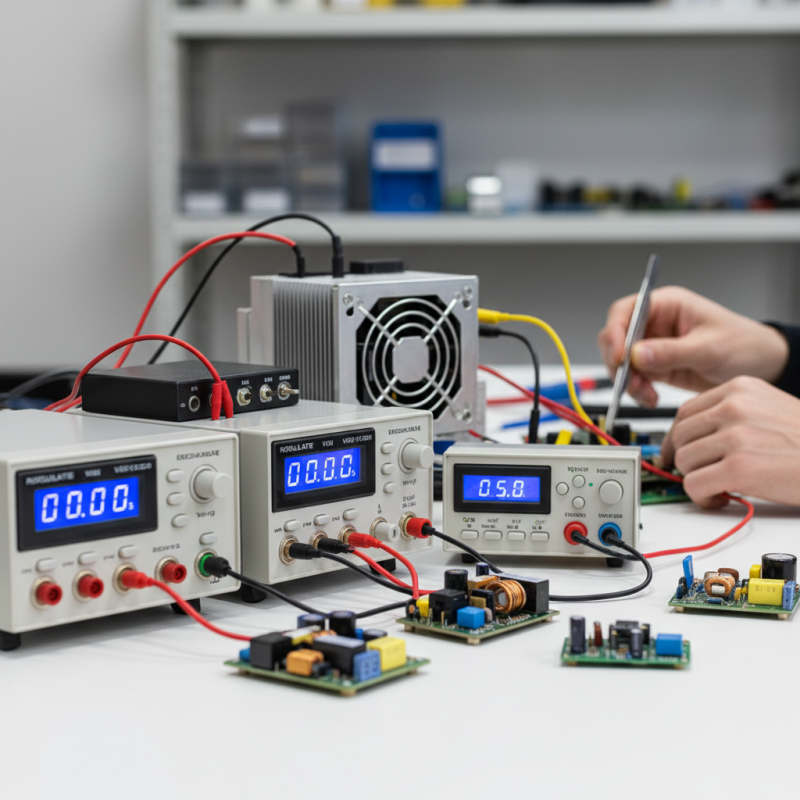
Understanding the Basics of Regulated Power Supplies
When selecting a regulated power supply, understanding the basics is crucial. A regulated power supply maintains a constant output voltage, despite variations in input voltage or load conditions. According to industry reports, having a stable power supply can enhance the reliability of electronic devices. Fluctuations in voltage can damage sensitive components.
Power supplies can be linear or switching. Linear regulators are simpler but less efficient. They generate more heat, which may require additional cooling. In contrast, switching regulators are more efficient and compact. They can adapt to different output levels, making them versatile for various applications.
Testing is essential, as not every design meets claimed specifications. Data shows that around 30% of power supplies fail to deliver consistent output in real-world scenarios.
Choosing the right power supply also involves considering load requirements. It is crucial to have sufficient current ratings. Underestimating these could lead to performance issues. Many users neglect to account for inrush current when devices initially power on. Additionally, noise levels can affect sensitive electronics. Reports indicate that high noise levels can disrupt performance. Understanding these details helps ensure the right power supply is selected for your needs.
Key Specifications to Consider When Selecting a Power Supply
When selecting a regulated power supply, several key specifications demand careful consideration. Voltage output is paramount. A stable output will ensure devices receive necessary power without fluctuations. According to a recent industry report, 45% of power supply failures stem from inadequate voltage regulation. Therefore, understanding your voltage requirements is crucial.
Current capacity также важна. A power supply must handle peak loads without overheating. An assessment reveals that supplies rated for at least 20% above the required current are more reliable. This buffer prevents stress on the system.
Additionally, efficiency ratings should not be overlooked. The Energy Star program notes that an efficient supply can save up to 30% in energy costs.
Thermal management is another essential factor. Poor heat dissipation can lead to reduced lifespan and efficiency. Notably, devices with built-in cooling mechanisms perform better under heavy loads. However, finding the right balance can be challenging, as excessive cooling might introduce noise or additional complexity.
Lastly, input voltage range must align with your local supply standards to avoid compatibility issues.
Identifying Your Power Requirements and Load Type
When choosing a regulated power supply, it’s crucial to identify your power requirements. Start by determining the voltage and current your devices require. List the specifications from your equipment manuals. Be clear about the load type as well. Different devices have unique power needs. For example, motors usually need more current at startup. Sensitive electronics may require stable voltages.
Next, consider the total power that will be used. Sometimes, power ratings can be misleading. It’s easy to underestimate the power a load may draw. Be honest about your estimates; this can save you from incorrect purchases. It may also be helpful to calculate peak and average power consumption. Having precise values will guide you in choosing a supply that meets your demands.
Don’t overlook potential future needs. If you plan to add devices, factor in those requirements. Flexibility is key in a rapidly changing environment. Power supplies can become obsolete quickly if not chosen wisely. Evaluate your choices carefully. Test them before making a final decision. You might discover you need more than you initially thought.
Power Supply Voltage Requirements
This bar chart illustrates the distribution of voltage requirements for various devices, showcasing how many devices need each voltage level. Understanding these requirements is essential for selecting the right regulated power supply.
Evaluating Safety and Compliance Standards for Power Supplies
When selecting a regulated power supply, safety is paramount. Ensure the device meets safety standards. Look for certifications indicating compliance with safety regulations. These may include UL, CE, or RoHS markings. A power supply that fails safety tests can lead to equipment damage or hazards.
Understand the importance of thermal management. Some power supplies run hot, potentially causing failures. Check for built-in cooling features. Consider the environment where the supply will be used. If it’s in a d dusty area, dust filters may be necessary.
Take note of the required output specifications. Match these to your load requirements. Using a power supply with inadequate capacity could result in erratic performance. Additionally, consider the electrical noise produced. High noise levels can affect sensitive equipment. Evaluate these elements critically to make a better-informed choice.
Comparing Different Types of Regulated Power Supplies Available
When selecting a regulated power supply, understanding the types available is crucial. There are linear and switching power supplies, each with distinct advantages and disadvantages. Linear supplies provide stable voltage with low noise but can be inefficient, especially at higher output levels. In contrast, switching supplies are compact and more efficient but may introduce noise into sensitive circuits. According to a 2023 report by the International Electrotechnical Commission, switching power supplies accounted for over 70% of the market due to their efficiency.
Choosing between these options requires careful consideration. Think about the application. For sensitive equipment, low noise is vital. Conversely, if size and efficiency are priorities, switching supplies might be the answer. A mistake here can lead to performance issues or equipment damage.
Tips: Always check the load requirements. Oversizing can waste energy, while undersizing may cause failure. Look for supplies with a wide input voltage range for flexibility. Additionally, consider thermal management; heat can reduce the lifespan of power supplies. Proper ventilation and cooling are essential for long-term reliability.