Smart Heating Solutions

How to Choose the Best Shipping Tarp for Your Cargo in 2026?

Choosing a Shipping Tarp is not a minor purchasing decision. It can affect cargo condition, loading time, and the number of roadside adjustments a driver must make. A loose corner, worn seam, or undersized cover can leave a pallet exposed to rain and road spray. Small details matter.

The American Trucking Associations’ American Trucking Trends 2024 report says trucks moved 11.18 billion tons of freight in the United States in 2022, representing 72.7% of domestic freight tonnage. That figure describes trucking’s scale, not tarp failure rates. Still, it highlights how many loads depend on reliable protection during transport. A tarp needs to match the cargo, route, and weather—not just the truck bed.

This guide explains how to compare tarp material, weight, dimensions, coatings, seams, and attachment points. A coated polyester tarp may suit frequent handling, while heavier canvas can be useful for particular loads and working conditions. Neither is right for every job. Check how water sheds across the load, whether tie-downs can hold without excessive strain, and whether sharp edges need padding. A tarp alone does not secure cargo; use suitable restraint methods and follow applicable cargo-securement requirements. The best choice is practical, durable, and easy to inspect. And sometimes, the “heavy-duty” label tells you less than the construction details.
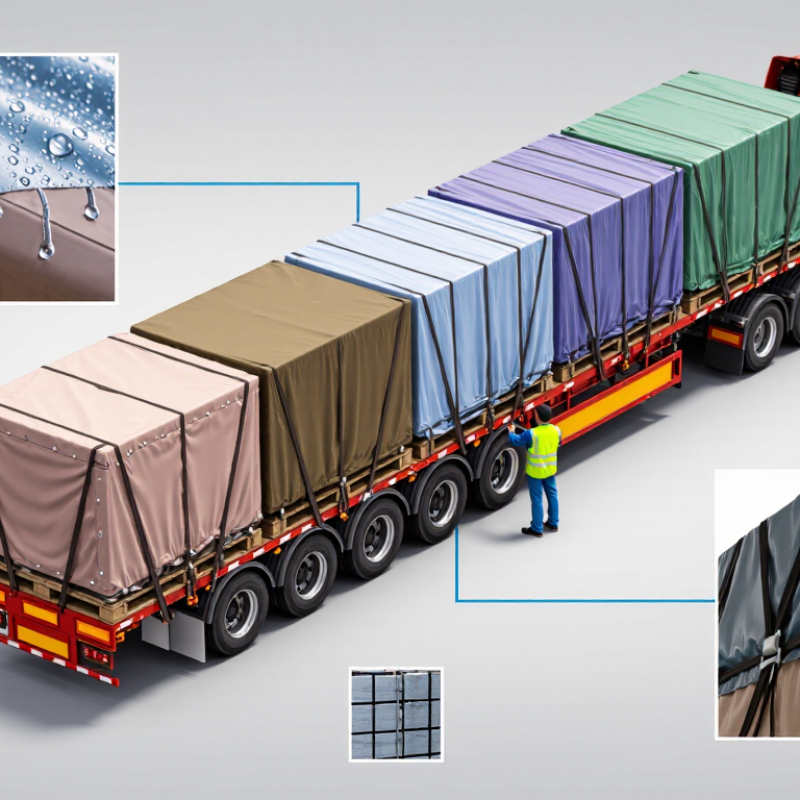
How to Choose the Best Shipping Tarp for Your Cargo in 2026?

Identify Cargo Type, Load Shape, and Route Conditions

Choose a tarp by the cargo’s weakest point, not just its total weight. Bagged materials need broad coverage and sealed edges; rough lumber may need abrasion-resistant fabric and reinforced corners. Machinery with exposed controls benefits from a close-fitting cover that sheds water without trapping condensation. Check the actual load before ordering. A product description cannot reveal every sharp edge.

Load shape matters. A tall, narrow stack catches wind differently from a low, wide pallet, while protruding corners can strain the tarp during travel. Measure the load at its widest and highest points, then allow enough material for secure coverage without loose flapping panels. The tarp is not a substitute for tiedowns. FMCSA cargo-securement rules generally require tiedowns’ aggregate working load limit to equal at least half the cargo’s weight. Edges matter.

Route conditions can change the choice. A shipment crossing wet mountain passes needs dependable water shedding; a long, sunny desert route adds heat and UV exposure. NOAA’s 2023 U.S. Billion-Dollar Weather and Climate Disasters report recorded 28 events, with estimated losses of $92.9 billion. That national figure does not predict conditions on one route, but it is a reminder to check forecasts and expected stops. One detail is easy to miss: a tarp that fits perfectly at pickup may loosen after the load settles, so inspect it again during the journey.

Compare Tarp Materials, Coatings, and Construction

How to Choose the Best Shipping Tarp for Your Cargo in 2026?

A tarp’s material and coating determine how it handles rain, sun, and abrasion. Woven polyethylene is light and practical for general outdoor coverage, but sharp corners can wear through it. Vinyl-coated polyester is heavier and often resists tearing and water well. Treated canvas can breathe better, which may help reduce trapped moisture, though its water resistance depends on the treatment. No material is perfect.

Construction matters just as much. Check that seams are securely joined, hems are reinforced, and grommets are spaced to spread tension rather than concentrate it at one point. For a pallet with exposed metal edges, add padding where the tarp touches the load. Match the tarp’s size to the cargo, too; excess fabric can flap in wind and abrade against itself. A heavier tarp may seem safer, but it can be awkward to handle and still fail if poorly secured. That trade-off is easy to underestimate.

Tips: Check coating details, seam quality, and edge reinforcement before buying. After a wet trip, dry the tarp fully before storing it. Inspect worn corners regularly. Even a good choice needs attention.

Select the Right Size, Coverage, and Tie-Down System

Choosing a shipping tarp starts with the load, not the truck bed. Measure the cargo’s length, width, and highest point, then allow enough material to cover the top and descend securely over the sides. Include extra fabric for awkward corners, but avoid a loose skirt that can catch wind. Measure twice. A tarp stretched tightly across sharp edges may tear, so use edge protection where metal or pallet corners press against it.

Match coverage to the cargo and route. Water-resistant fabric can protect boxed goods from rain, while sensitive loads may need more complete enclosure. Check seams, reinforced hems, and grommets before loading. A small tear can widen quickly when air pushes beneath the tarp. It happens.

Tie-down strength matters as much as tarp size. The U.S. Federal Motor Carrier Safety Administration’s cargo-securement standard, 49 CFR §393.106(d), sets the aggregate working load limit of tie-downs at no less than half the cargo’s weight. Choose straps and anchor points accordingly, and spread tension evenly rather than pulling hard on one corner. Inspect the setup after the first short stretch; settling cargo can loosen straps, even when the initial fit looked perfect. This check is easy to skip—and worth reconsidering.

How to Choose the Best Shipping Tarp for Your Cargo in 2026

Compare nominal tarp area as a starting point for choosing coverage. Tarp area is calculated from the listed dimensions; it does not include the extra material needed to cover cargo height or secure the load.

How to use this chart: Measure the load, including its height, then choose a tarp with enough material to cover the top and sides and leave room for tie-downs. The example sizes show nominal area only: 10 × 12 ft = 120 sq ft, 12 × 16 ft = 192 sq ft, and 16 × 20 ft = 320 sq ft. For securement, use compatible reinforced attachment points and suitable tie-downs; follow the tarp manufacturer’s instructions and applicable transport requirements.

Check Weather Resistance, Safety, and Transport Requirements

Choose a shipping tarp for the route, cargo, and forecast—not just its advertised material. Check whether its coating, seams, and hems resist rain, UV exposure, and abrasion. A “waterproof” label alone tells you little about seam performance. NOAA’s 2024 Billion-Dollar Weather and Climate Disasters report counted 27 U.S. weather events causing at least $1 billion each, with estimated losses of $182.7 billion. That scale is a reminder to consider sudden heavy rain and wind, even on familiar routes. Small details matter. Check that the tarp fully covers exposed edges without dragging or blocking lights.

Transport safety matters just as much. In the United States, FMCSA cargo-securement rules require tiedowns’ aggregate working load limit to equal at least half the cargo’s weight. A tarp is not a substitute for securing the load. Confirm that tie-down points, tarp dimensions, and fastening hardware suit the cargo shape and vehicle. On a test fit, look for loose corners that could catch wind, and inspect grommets for sharp tears. I would not trust a neat fit in the yard alone; vibration can loosen fastenings. Recheck the cover after the first safe stop, especially after rain or a change in road conditions. That extra check is easy to skip. Don’t.

How to Choose the Best Shipping Tarp for Your Cargo in 2026? — Check Weather Resistance, Safety, and Transport Requirements

Tarp type Typical construction Weather resistance Best suited cargo and transport needs Safety and selection checks
Coated polyester (vinyl/PVC-coated) Woven polyester fabric with a protective coating; available in different weights and thicknesses. Generally strong resistance to rain and wind-driven moisture when the coating, seams, and repairs are intact. UV and cold-weather performance vary by specification. General flatbed freight, machinery, and loads needing a durable, relatively water-resistant cover. Check tarp dimensions, edge reinforcement, tie-down points, and the manufacturer’s temperature and load-use limits. Secure it so loose material cannot flap or obstruct visibility.
Polyethylene (PE) tarp Lightweight woven plastic fabric, commonly laminated or coated; edge and grommet strength vary by grade. Often sheds rain when intact, but seams, punctures, worn coatings, and poor fit can let water in. Wind and abrasion can damage lighter-duty versions. Shorter trips, lighter loads, or situations where a low-weight, economical cover is appropriate. Inspect for tears and pulled grommets before each trip. Avoid using a light-duty tarp where heavy wind, sharp edges, or repeated abrasion are expected.
Canvas tarp Heavy woven fabric, usually cotton or a cotton blend; some versions have water-repellent treatment. Untreated canvas absorbs moisture and is breathable. Treated canvas can resist water, but performance depends on treatment, condition, and seam construction. Cargo that benefits from some breathability, or loads for which a canvas cover is specified. Confirm whether the tarp is treated for the intended exposure. Wet canvas can become heavier, and trapped moisture may affect cargo; dry and inspect it after use.
Mesh tarp Open-weave synthetic mesh designed to allow airflow; mesh openness and edge construction differ by product. Allows air and water to pass through; it is not a waterproof cover and provides limited protection from rain and fine dust. Loads such as landscape materials or debris when airflow and containment are needed and the cargo can tolerate exposure. Use only when the cargo and applicable rules permit an open-weave cover. Check mesh integrity and secure all edges to prevent material from escaping.
Lumber tarp Typically a heavy-duty coated fabric tarp with extended end flaps intended to cover the ends of a load. Coated versions can provide good rain protection when correctly positioned and in sound condition; seams and exposed edges remain potential leak points. Lumber and other long, stacked loads where end flaps help cover exposed ends. Choose a size that covers the load without dragging or creating excessive loose fabric. Secure flaps and edges, and recheck them after the load settles.
Steel or coil tarp Heavy-duty tarp configuration designed for steel or coil loads; may include shaped panels or flaps, depending on the design. Weather protection depends on the fabric, seams, fit, and condition; the tarp does not prevent cargo movement. Steel, coils, and other dense loads when the tarp shape and dimensions match the cargo and loading arrangement. Use appropriate padding or edge protection where needed to reduce abrasion. Apply the required cargo securement independently of the tarp and follow the carrier’s loading procedures.

Important: A tarp is a cover, not a substitute for cargo securement. Select it to match the cargo, trailer, route, and forecast; inspect it for damage; and follow applicable cargo-securement regulations and carrier procedures.

Assess Durability, Care Needs, and Total Cost of Ownership

Choosing the best shipping tarp starts with the cargo and the route. A tarp exposed to highway spray, sharp corners, and repeated loading needs stronger reinforcement than one used for short, sheltered trips. Check the fabric weight, coating, seams, and grommet spacing. Then match them to the load’s shape and likely weather. A thick tarp can still fail if straps rub against an unprotected edge. Small details matter.

Tips: Inspect the tarp after each trip. Look for pinholes, frayed hems, loose grommets, and worn patches near tie-down points. Let it dry before storage to reduce mildew risk, and use a soft brush for dirt. Avoid dragging it across gravel. No tarp lasts forever.

Compare total cost of ownership, not just the purchase price. A lower-cost tarp may need frequent patching or replacement, while a durable option may save labor and downtime over several seasons. Include cleaning, storage, repair materials, and the time needed to handle the tarp. Keep a simple maintenance log; it may reveal a wear pattern you missed. Still, estimates are imperfect: actual lifespan depends on handling, exposure, and cargo edges. Choose a tarp with practical repair options, and reassess when your routes or loads change.

Article Source: