How to Choose a Sheet Metal Top Cover Supplier?
Choosing a Sheet Metal Top Cover supplier is not just a price comparison. The cover may protect electronics, machinery, or control equipment from dust, impact, and everyday handling. Its fit can also affect assembly time. A few millimeters matter when screw holes meet a painted enclosure.
W. Edwards Deming, a manufacturing quality expert, is often quoted as saying, “Quality is everyone’s responsibility.” That principle applies to supplier selection: reliable covers depend on design review, material control, forming, finishing, and inspection working together. Ask how the supplier checks dimensions, manages surface defects, and handles changes to drawings. Request sample parts, inspection records, and clear answers about tolerances. Look closely at bends, edges, and coating consistency.
Not just the quote.
A capable supplier should explain what it can produce, what needs clarification, and where risks remain. Compare material options, tooling requirements, lead times, and communication practices—not just unit costs. A polished sample is useful, but it cannot prove consistent production by itself. That is easy to forget. Visit the factory when practical, or request process evidence and a small pilot run before committing to larger volumes. Also confirm who owns drawing revisions and how defects are reported.
This guide explores the checks that help buyers assess a Sheet Metal Top Cover supplier with care. No checklist removes every uncertainty. The sensible choice is a partner whose evidence, process, and limits are visible before production begins.
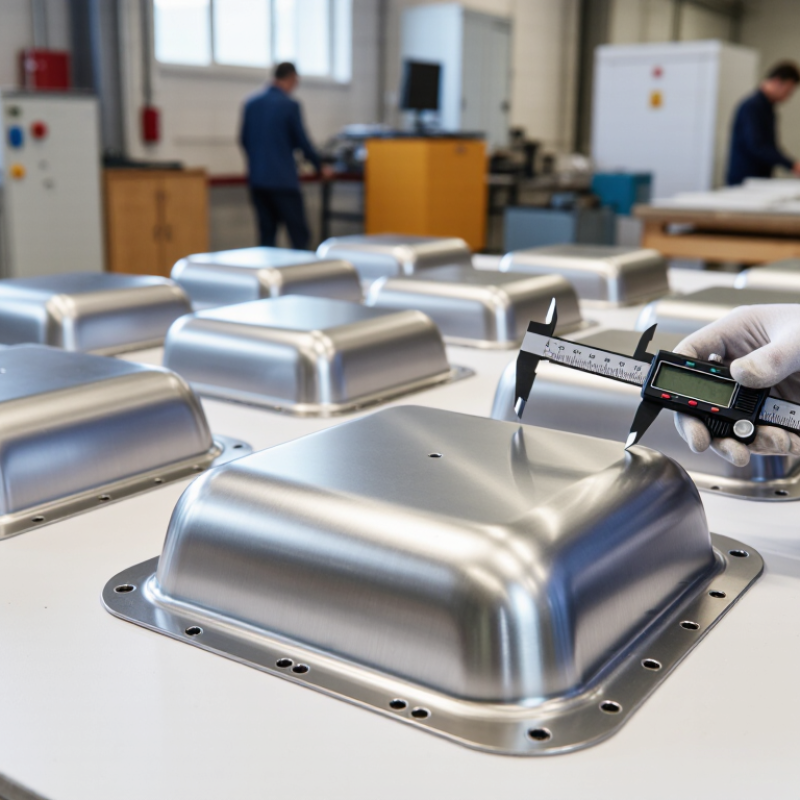
Understanding Sheet Metal Top Covers and Their Applications
A sheet metal top cover is more than a flat lid. It shields electrical assemblies, machinery, and control panels from dust, accidental contact, and physical impact. Depending on the installation, it may also need ventilation slots, cable openings, hinges, or a gasketed edge. Fit matters. A cover that sits unevenly can leave gaps, complicate maintenance, or interfere with nearby components.
Material choice shapes weight, corrosion resistance, and fabrication needs. Steel suits many robust indoor enclosures; aluminum can reduce weight where handling or heat transfer matters. The World Steel Association’s World Steel in Figures 2024 reports 1,888.2 million tonnes of crude steel production worldwide in 2023. The International Aluminium Institute reports 70.6 million tonnes of primary aluminum production that year. These figures show the scale of the material industries, not the availability of a particular sheet grade or thickness. Ask suppliers to confirm stock, tolerances, coating, and forming capability.
Application details guide a useful specification. A cover near a hot motor may need clearance or ventilation; an outdoor cabinet may require a tested sealing arrangement. Small details count. Share drawings, expected loads, operating temperatures, and access requirements before comparing quotations. A supplier’s sample can reveal burrs, sharp corners, inconsistent bends, or holes that do not align. Still, one sample cannot prove repeatable production, so ask how dimensions are checked across a batch. That sounds obvious, yet it is often missed.
Identifying Your Top Cover Requirements and Specifications
Before contacting a sheet metal top cover supplier, define what the cover must do. Record its length, width, height, bend angles, and mounting-hole positions. Measure the mating frame, not just an old cover; worn parts can hide the original dimensions. Measure twice.
Specify the material and thickness, then describe the working environment. A cover used indoors may need different corrosion resistance from one exposed to moisture, dust, or frequent cleaning. Note expected loads, heat, vibration, and access needs. Should the cover include ventilation slots, cable openings, or a removable panel? Mark these features clearly on a drawing. Add tolerances for critical holes and mating edges, but avoid demanding tight tolerances everywhere. That can raise cost without improving fit. That detail matters.
Also state the required surface finish, edge condition, and assembly method, such as screws, studs, or clips. Share the expected order quantity and any packaging needs to help the supplier assess production options. A clear drawing is useful, but it may still miss a practical issue. Ask for a first-article sample and check its fit against the actual frame before approving a larger run. Note any changes in writing. Small omissions, like an unmarked grounding point, are easy to overlook and awkward to correct later.
Evaluating Supplier Capabilities and Manufacturing Processes
How to Choose a Sheet Metal Top Cover Supplier?
Evaluating Supplier Capabilities and Manufacturing Processes
A dependable top cover starts with controlled processes, not a polished sample. Check whether the supplier can explain material selection, cutting, forming, joining, and inspection. The World Steel Association’s World Steel in Figures 2024 reports 1,892.2 million tonnes of crude steel production in 2023. That scale shows how broad material supply is, but it does not guarantee consistent sheet quality. Ask how incoming metal is checked and how thickness, flatness, and finish are recorded.
Tips: Request a sample made from the same material and process planned for production. Ask for dimensional inspection results, not just a pass/fail statement. Check how the supplier manages drawing changes and repeat orders. Small details matter.
Review equipment and process limits against your cover’s geometry. A supplier should describe bend-radius control, hole-to-edge accuracy, and protection against scratches during handling. Ask about first-piece approval, in-process checks, and final inspection records. If welding is involved, discuss distortion control and visible seam quality. Compare quoted lead times with actual production capacity, and request evidence such as delivery and defect trends. A checklist helps, though it cannot replace a careful technical conversation. A perfect prototype can still hide weak process control.
Checking Quality Standards, Certifications, and Supplier Reliability
A reliable sheet metal top cover supplier should provide clear evidence of consistent quality, not just a polished certificate. Ask for a current quality-management certificate, such as ISO 9001, and check its scope, validity dates, and issuing body. Does it cover the facility making your parts? That detail matters. Request inspection records for dimensions, coating thickness, and material grades. For a formed cover, even a small bend variation can affect fit around mounting holes.
Certifications show that systems are in place, but they do not guarantee every shipment will be perfect. Review how the supplier controls revisions, identifies materials, and handles nonconforming parts. Ask for a first-article inspection report and a sample made from the intended material. Compare its edges, finish, and hole locations with your drawing. No checklist catches every problem. A factory visit or remote process review can reveal gaps that paperwork misses.
Tips: Confirm lead times in writing, including sample approval and production stages. Ask how delays are communicated and whether capacity changes seasonally. Check references for similar part sizes and finishes. A low quote can be tempting, but clarify packaging and inspection costs before comparing offers. Small omissions cause real friction.
Comparing Quotes, Lead Times, and After-Sales Support
When comparing sheet metal top cover quotes, check what each price actually includes. A low figure may exclude deburring, surface finishing, protective film, or export packaging. Ask suppliers to state material grade, thickness, dimensional tolerances, and inspection steps in writing. Then compare like with like. A quote that looks cheaper may not stay that way after revisions.
Lead times need the same close reading. Separate sample approval, tooling, production, and shipping estimates. Ask what could delay each stage, such as a busy press brake or late drawing approval. Request a realistic schedule, not only the fastest possible date. A supplier promising an unusually short turnaround might still be worth considering, but I would want evidence from a comparable order. Plans change.
After-sales support matters when covers arrive with scratches, bent flanges, or holes that do not align. Before ordering, clarify how to report a defect, what photos or measurements are needed, and how quickly the supplier will respond. Ask whether replacement parts or rework are possible, and who covers the related costs. Keep the agreed specifications and inspection records accessible. One detail is easy to miss: define acceptable cosmetic marks before production, especially for visible surfaces. That conversation can feel fussy, but it prevents disagreement later.
How to Choose a Sheet Metal Top Cover Supplier? — Comparing Quotes, Lead Times, and After-Sales Support
Example comparison for a hypothetical RFQ: 500 sheet metal top covers, 1.5 mm galvanized steel, powder-coated finish, and one approved drawing. Supplier labels are anonymized.
| Evaluation Dimension | Supplier A | Supplier B | Supplier C |
| Quoted unit price | US$18.40 | US$16.90 | US$20.10 |
| Quote coverage | Material, cutting, bending, coating, and standard packaging included | Material, cutting, bending, and coating included; packaging specified separately | Material, fabrication, coating, packaging, and inspection included |
| Quoted tooling or setup charge | US$250 one-time setup charge | No separate charge stated; confirm whether setup is included | US$180 one-time fixture charge |
| Sample lead time | 10 business days after drawing approval | 8 business days after drawing approval | 12 business days after drawing approval |
| Production lead time | 25 business days after sample approval and deposit | 30 business days after drawing approval and deposit | 22 business days after sample approval and deposit |
| Quality documentation | Dimensional inspection report available on request | First-article inspection included; report format to be confirmed | First-article and final inspection reports included |
| Packaging and shipping terms | Export carton packaging; freight quoted separately | Standard carton packaging; palletization and freight quoted separately | Protective packaging included; delivery terms to be confirmed |
| After-sales response commitment | Replies to quality claims within 2 business days; remedy subject to review | Response target not stated in quote; request written confirmation | Replies within 1 business day; replacement or rework assessed by documented claim |
| Key clarification before ordering | Confirm coating thickness, color tolerance, and packaging details | Confirm setup costs, inspection scope, and claim-response process | Confirm freight terms, coating specifications, and fixture ownership |
| Best fit based on this example | Balanced quote coverage and moderate lead time | Lowest unit price, but several quote details need clarification | Shortest stated production lead time and more complete inspection support |