How to Choose the Right Commercial Heater for Your Business?
Choosing the right commercial heater can be a daunting task. Various factors come into play. You must consider your business type and space size. A suitable heater creates a comfortable environment for employees and customers.
Different commercial heaters exist, each with pros and cons. Electric heaters may work well for smaller spaces. However, gas heaters can provide more heat for larger areas. Think about operational costs, heating efficiency, and installation needs.
Some business owners rush this decision. This can lead to inefficiencies or unexpected expenses later. Reflecting on your specific requirements is crucial. Researching different models pays off in the long run. Don't overlook maintenance needs either. Investing in the right commercial heater ultimately supports your business’s growth and success.
Understanding the Different Types of Commercial Heaters Available
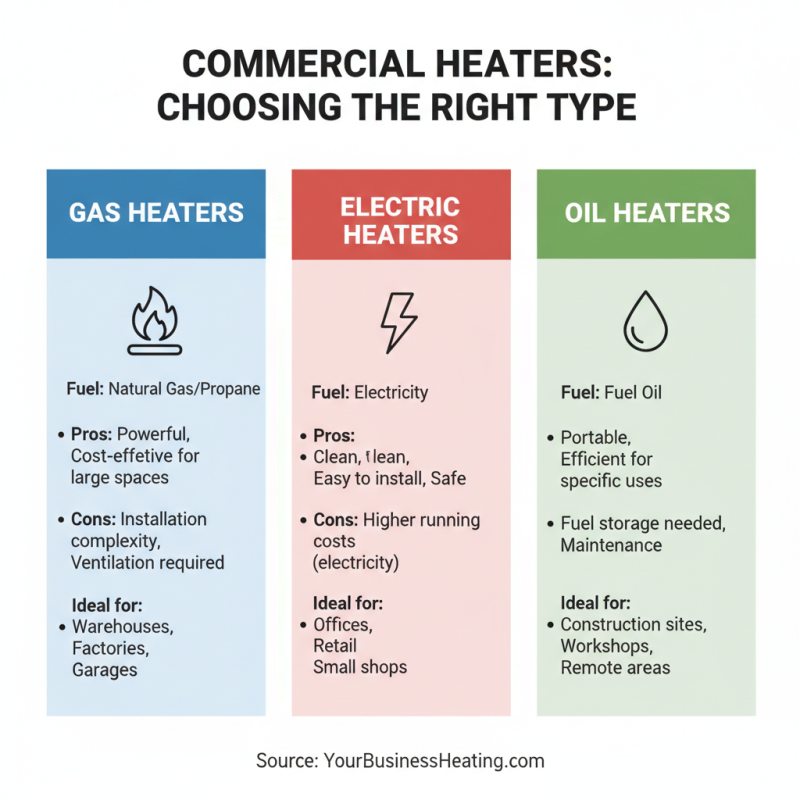
When selecting the right commercial heater for your business, understanding the different types available is essential. The market offers various heating solutions, including gas, electric, and oil heaters. Each type has distinct advantages depending on your needs.
Gas heaters are popular for their efficient heating capabilities. They can provide warmth quickly and are often more cost-effective in large spaces. However, installation can be complex. Electric heaters, while easier to install, may increase your energy bill significantly. They are best suited for smaller areas or supplementary heat. Oil heaters can deliver consistent warmth, yet they require regular maintenance and fuel replenishment.
Tips: Consider your space. Measure the area to determine the heating output needed. A well-insulated space might need less heat than an open one.
Reports suggest that 30% of businesses underestimate their heating needs. This can lead to inefficient heating. It's crucial to evaluate your heating load accurately. Additionally, think about future growth. Choosing a unit that can scale with your business can prevent costly replacements later.
Evaluating Heating Requirements Based on Business Size and Structure
Evaluating heating requirements is crucial when choosing a commercial heater. Business size and structure play significant roles in determining these needs. According to a report from the U.S. Department of Energy, commercial spaces face unique challenges. For instance, larger facilities often have higher heating demands due to their expansive areas.
A small retail store may require a heater with 30,000 BTUs. In contrast, a warehouse might need one with over 200,000 BTUs. The design and insulation of the building also matter. A poorly insulated structure can lose heat quickly. This may lead to unnecessary costs. Using the wrong heater can waste energy and increase operational expenses.
Moreover, businesses in regions with colder climates should consider their specific circumstances. Seasonal fluctuations can affect heating efficiency. This can create challenges in maintaining a consistent temperature. Monitoring those changes is essential. Investing in the right heater requires careful analysis of all these factors. Ultimately, it is about finding the right balance for your unique needs.
Calculating Heating Efficiency: BTUs and Energy Consumption Metrics
When selecting a commercial heater, understanding BTUs and energy consumption metrics is crucial.
British Thermal Units (BTUs) measure the heat output of a heater. Higher BTU ratings indicate greater heating capacity. To effectively determine your heating needs, calculate the square footage of your space. Generally, 50 BTUs are needed for each square foot. For example, a 1,000-square-foot area will require about 50,000 BTUs.
Energy efficiency is another key aspect. Look for heaters with a high AFUE (Annual Fuel Utilization Efficiency) rating. Devices rated above 90% AFUE convert most fuel into heat. This not only reduces energy costs but also minimizes environmental impact. In 2021, the US Department of Energy noted that businesses waste up to 30% of energy due to inefficient heating systems. Assessing your current heating system's performance can reveal areas needing improvement.
Monitoring energy consumption metrics provides insight into ongoing costs. Regular audits can highlight inefficiencies. Upgrading to a more efficient system might require upfront investment, but the long-term savings can be significant. It's essential to reflect on both current and future energy demands as your business evolves. Energy-efficient options can adapt to growing needs while protecting the environment.
Assessing Fuel Type Options: Gas, Electric, and Oil Heaters Compared
When choosing a commercial heater, understanding fuel type options is crucial.
Gas heaters are popular for their efficiency and speed. They heat large spaces quickly.
However, they require proper ventilation and gas supply, which can complicate installation.
Electric heaters are easier to set up. They can be used in tight areas. Yet, they might not provide the same heating capacity for larger spaces.
Oil heaters can serve as a reliable alternative too.
They tend to produce consistent heat over long periods. But, oil storage can be a hassle. If not monitored, it can lead to environmental concerns.
Tip: Assess your space before selecting. Measure the area to understand your heating needs.
Think about accessibility to fuel sources.
Another consideration is efficiency ratings. Some heaters may seem cheaper upfront but can become costly in the long run.
It’s key to weigh initial costs against energy bills.
Tip: Look for models that offer energy-saving features.
They can reduce operating costs significantly.
Finding the right fuel type can be challenging. Each option has pros and cons. Keep an open mind and evaluate based on your specific needs.
Exploring Installation and Maintenance Considerations for Commercial Heaters
When choosing a commercial heater, installation is crucial. The location should be strategically chosen for optimal heat distribution. Consider factors like ceiling height and floor layout. A poorly placed heater can create cold spots. This not only affects comfort but also increases energy costs.
Tips: Assess your space before installation. Engage professionals for exact measurements. They can help identify the best spot for the heater.
Maintenance is often overlooked. Regular check-ups can extend the life of your heating system. Clogged filters and dirty components reduce efficiency. Schedule routine inspections to catch potential issues early.
Tips: Keep a maintenance log. This can help track what needs immediate attention. Look out for unusual sounds or smells; they might indicate deeper issues. Automation can assist, but a human touch is essential. Aim for awareness and proactive care.