How to Choose the Right Frequency Converter for Your Needs?
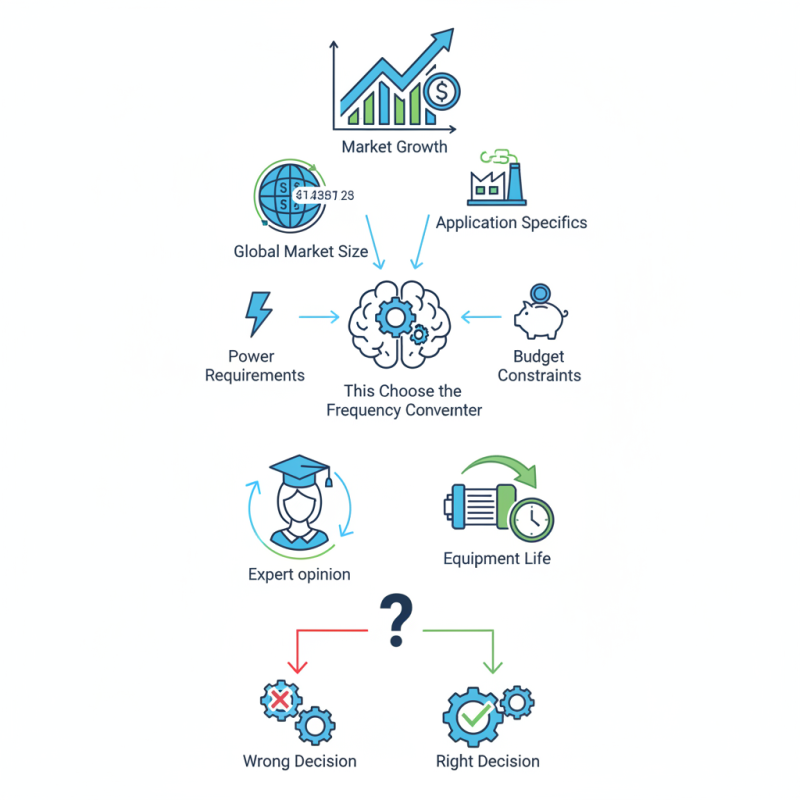
Choosing the right Frequency Converter can significantly impact system performance. According to a report by MarketsandMarkets, the global frequency converter market is projected to reach $7.38 billion by 2026, growing at a CAGR of 5.4%. This indicates a rising demand for these devices across various industries.
Dr. Ellen Carter, a recognized expert in power electronics, emphasizes the importance of selecting the appropriate frequency converter, stating, “The right converter not only improves efficiency but also prolongs equipment life.” This statement underlines the critical role frequency converters play in modern industrial applications.
When considering your options, various factors must be taken into account. These include power requirements, application specifics, and budget constraints. It can be overwhelming to navigate the numerous available choices. Understanding your needs is essential, as the wrong decision can lead to performance issues and increased costs. Evaluate what is best for your specific situation.
Understanding the Basics of Frequency Converters
Frequency converters play a crucial role in industry, allowing machinery to operate efficiently across various power settings. Understanding their basic components will help you make informed decisions. At their core, frequency converters change the frequency of electrical power, transforming it to match equipment needs. This conversion impacts speed and torque, making it essential for applications like motors and pumps.
Choosing the right frequency converter may seem daunting. Factors to consider include input and output power ratings, control methods, and environmental conditions. Ensure the converter can handle fluctuations typical in your operations. Sometimes, sizing errors occur. Overestimating requirements can lead to inefficiencies and increased costs.
Compatibility is key. Not all converters suit every application. Factors like load characteristics and application type matter. You may need to re-evaluate your choices multiple times. Testing various models under real operating conditions can yield insights. This trial-and-error approach is vital for finding the best fit for your specific needs.
Identifying Your Application Requirements
When selecting a frequency converter, understanding your application requirements is crucial. Start by identifying the specific needs of your equipment. Consider the motor type, the load characteristics, and the operational environment. For instance, an industrial application may require a high-performance converter with advanced features, while a simple home appliance may need basic functionality.
Next, assess the required output frequency and voltage. Different applications might need varying levels of precision and stability. This can influence the type of converter you choose. Remember, the goal is to match the converter’s specifications with your operational requirements. Take note of how fluctuations in power could impact your system.
Reflect on potential challenges in your selection process. Sometimes, manufacturers may provide misleading specifications. Be wary of overly optimistic claims. Users should also consider the ease of installation and maintenance. If the converter cannot be integrated smoothly, it may lead to future problems. Addressing these considerations early can prevent costly setbacks down the line.
Frequency Converter Power Rating Comparison
Evaluating Input and Output Specifications
When choosing a frequency converter, evaluating input and output specifications is essential. The input voltage range, for example, must match your electrical supply. A mismatch can damage equipment or lead to inefficiencies. Reports show that 30% of frequency converter failures stem from incorrect voltage applications. This statistic highlights the importance of precise input alignment.
Consider the output frequency specifications, too. These specifications dictate the motor speed and operation. According to industry research, converters with variable frequency output improve energy efficiency by up to 25%. However, not all systems require the same output. Some applications, like HVAC systems, need smooth frequency adjustments for optimal performance.
During the selection process, think about the environmental factors as well. Ratings for temperature and humidity are critical. Many frequency converters operate poorly outside specified conditions. In fact, equipment runs at a reduced lifespan when subjected to extreme temperatures. Balancing all these factors will lead to better decision-making. Remember, a well-suited frequency converter enhances both performance and longevity.
Comparing Different Types of Frequency Converters
Choosing the right frequency converter involves understanding the various types available. The most common types include voltage source inverters (VSIs), current source inverters (CSIs), and matrix converters. VSIs are widely used for applications that require variable speed and torque control. They are efficient and reliable, making them a popular choice in industrial sectors.
When comparing different types of converters, it's essential to consider specific factors. For instance, VSIs can typically handle higher power applications. A recent industry report indicates that over 40% of industrial applications prefer VSIs due to their adaptability. On the other hand, CSIs are suited for applications that demand a constant current. Matrix converters, while less common, allow direct AC-to-AC conversion, offering a compact solution.
Tips: When selecting a frequency converter, assess your application’s power requirements carefully. It's crucial to evaluate the efficiency ratings as well. Sometimes, less efficient converters may seem cost-effective but can lead to higher operational costs over time. Understand your system's specific needs to make an informed decision.
Assessing Budget Constraints and Energy Efficiency
When assessing budget constraints in choosing a frequency converter, it's crucial to account for both upfront and long-term costs. The initial purchase price is often tempting. However, you also need to consider operational expenses. A cheaper model may consume more energy. Frequent maintenance could add to its overall cost, negating the savings.
Energy efficiency is increasingly important. A highly efficient frequency converter may cost more initially but can lead to significant savings over time. Check the energy efficiency ratings in the specifications. It's essential to understand how energy usage affects your bills. Performance and savings often go hand in hand.
Another aspect to reflect on is the compatibility with existing systems. Investing in a converter that fits seamlessly with your current setup is key. An ill-suited choice may lead to intermediate costs or a need for further adjustments. Balancing budget with efficiency requires careful thought but pays off in the long run.