Smart Heating Solutions

How to Choose Sintered Stone Slabs for Your Project?

Choosing Sintered Stone Slabs is not just a color decision. A slab must suit the room, the fabrication plan, and the way people use the surface every day. Houzz’s 2024 U.S. Houzz & Home Study reported that median spending on major kitchen remodels reached $24,000 in 2023, a 22% increase from the prior year. That figure covers whole remodels, not countertops alone, but it shows why material decisions deserve careful checking. Small details matter.

Market reports also need context. Grand View Research valued the global ceramic tile market at $207.1 billion in 2023; that broad category is not a measure of sintered-stone sales. Still, it signals the scale of competition among hard-surface materials. For a specific project, compare verified product data rather than relying on broad claims. Ask suppliers for technical sheets, test results under applicable standards, warranty terms, and care instructions. Then check slab thickness, finish, dimensions, edge options, and compatibility with the intended cabinetry or wall system.

A polished sample can look convincing under showroom lights. It may feel different beside a sunny window or under warm kitchen lighting. So bring samples to the actual space, and discuss cutouts, seams, transport, and installation with the fabricator before ordering. The best choice is not always the most dramatic one. It is the slab whose documented performance, appearance, and practical limits fit the project—and whose limitations you understand before work begins.
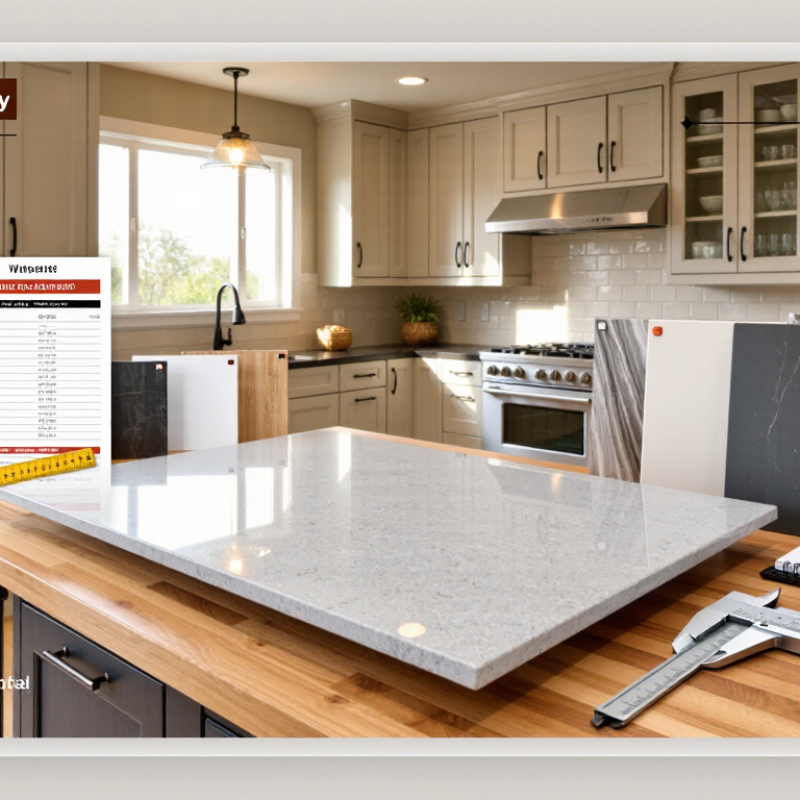
How to Choose Sintered Stone Slabs for Your Project?

Define Your Project Requirements and Intended Use

Start by defining where the sintered stone will go and what it must withstand. A kitchen worktop faces hot cookware, spills, chopping, and frequent wiping. A bathroom vanity has different demands, including cosmetics, standing water, and daily cleaning. Flooring also needs attention to slip resistance and foot traffic. Small details matter.

The 2024 Houzz U.S. Kitchen Trends Study reports that 76% of renovating homeowners replaced their countertops. That figure shows how central the surface is to a kitchen project, but it does not identify the right slab for yours. List the likely loads, cleaning products, heat exposure, and edge details. A sample under showroom lighting may look quite different beside your window. I would not choose from color alone.

Check the slab’s technical sheet against the installation conditions. Ask about thickness, finish, supported span, cutouts, and the installer’s handling requirements. For a shower, confirm that the proposed finish suits wet floors; for a large island, review support and seam placement. Request test information for properties relevant to the use, such as stain resistance or flexural strength. A beautiful specification can still miss one practical constraint. Tie each choice to the room’s actual use.

Compare Sintered Stone Properties and Performance

How to Choose Sintered Stone Slabs for Your Project?
Compare Sintered Stone Properties and Performance

Compare slabs by more than color. Check the technical sheet for water absorption, flexural strength, surface finish, and recommended uses. Low porosity can make cleaning easier, but it does not make every slab immune to staining or damage. A polished surface may show marks differently from a matte one. Touch samples under bright and warm lighting; the difference can be surprising.

Heat and scratch resistance matter near cooktops, yet edges and corners may still chip after a hard impact. Thickness, substrate support, and installation quality also affect performance. For outdoor areas, confirm the specific slab is rated for UV exposure and local temperature changes. Specifications vary, so avoid assuming one sample represents every batch. That detail is easy to overlook.

Tips: Ask your fabricator to review the planned cutouts and edge profile before ordering. Bring a cabinet or flooring sample for comparison. Check full slabs when possible; small samples can hide pattern shifts. And leave room for doubt—some finishes look beautiful in a showroom but need more frequent wiping at home.

How to Choose Sintered Stone Slabs for Your Project? - Compare Sintered Stone Properties and Performance

Selection factor Typical data or performance Project implications What to verify before buying
6 mm slab Approx. 14.4–15.6 kg/m², using an indicative density of 2,400–2,600 kg/m³. Lower weight can suit wall cladding and some renovation overlays. It generally needs a suitable, continuous support system and careful handling. Approved installation method, substrate condition, panel size, edge details, and handling requirements.
12 mm slab Approx. 28.8–31.2 kg/m², using the same indicative density range. A common choice for countertops and interior surfaces when the design and support system are suitable. Cutouts and unsupported spans still need careful planning. Fabricator guidance for overhangs, sink and cooktop cutouts, edge profiles, and reinforcement.
20 mm slab Approx. 48–52 kg/m², using the same indicative density range. The added thickness gives a more substantial appearance and may suit countertop designs, but increases handling and support demands. Cabinet capacity, transport and lifting arrangements, cutout design, and the supplier’s installation recommendations.
Water absorption Dense sintered surfaces typically have very low water absorption; the declared result varies by product and test method. Porcelain tile classification BIa under ISO 13006 specifies water absorption of no more than 0.5%. Low absorption can help limit liquid uptake, but does not make seams, edges, backing, or installation details waterproof. The product’s published test result and the applicable standard; confirm whether the stated value applies to the slab itself.
Heat and thermal shock The mineral-based surface is generally heat resistant, but performance depends on the product, thickness, support, and temperature change. Suitable for many kitchen and interior uses when installed correctly. Sudden temperature changes or concentrated loads can still cause damage. Published heat or thermal-shock test data, and the supplier’s guidance on hot cookware and appliance clearances.
UV and color stability Many sintered surfaces have good resistance to UV-related color change; results depend on the specific product and finish. Can be considered for areas exposed to daylight or outdoor conditions when the product is rated for that use. Exterior-use suitability, UV test data, temperature limits, and any warranty conditions.
Scratch, abrasion, and finish Resistance varies with composition and surface finish. Polished, matte, and textured finishes may behave differently and show wear differently. Choose a finish suited to expected traffic and cleaning. No surface should be assumed scratch-proof; use cutting boards and appropriate cleaning tools. Finish-specific test data, cleaning instructions, and a sample viewed under the project’s lighting.
Stain and chemical resistance The dense surface is generally easy to clean, but resistance to particular stains and chemicals is product-specific; joints and exposed edges may need separate care. A practical option for many kitchens and bathrooms when spills are cleaned promptly and the recommended cleaners are used. Chemical-resistance data, approved cleaners, and instructions for removing persistent stains.
Fabrication and installation Large-format slabs require suitable cutting equipment, trained fabricators, planned seams, and appropriate support. Cutouts and edges are potential stress points. A suitable slab can still fail if handling, cutting, support, or installation is inadequate. Include fabrication constraints in the design stage. Slab dimensions, tolerances, approved adhesives and supports, fabricator experience, and written installation instructions.

Note: Weight figures are estimates calculated from an indicative density of 2,400–2,600 kg/m³. Performance varies by product, thickness, finish, test method, and installation; consult the relevant technical data sheet for project specifications.

Select Slab Size, Thickness, Color, and Finish

Choosing sintered stone starts with the room, not the sample board. Measure the finished surfaces, then account for seams, cutouts, and edge details. Measure twice. Large slabs can create a calmer, more continuous look, but narrow doorways and stair turns may complicate delivery. Confirm access with the fabricator before ordering, and ask how the planned layout will use each slab.

Thickness affects appearance, weight, and installation requirements. A thinner slab may suit wall cladding or cabinetry, while a thicker option can feel substantial on a countertop. Check the supplier’s technical data and confirm that the substrate and support system are appropriate. Don’t assume a thicker slab is automatically better; it can add weight without solving an installation problem. I’d leave that decision to the actual design and site conditions.

Color should work with both fixed elements and changing light. View samples near cabinets, flooring, and windows, because a warm gray can look cooler under bright daylight. Finish matters just as much. Polished surfaces reflect light and may show fingerprints, while matte finishes give a softer appearance and can make water marks less obvious. Small samples lie. Request a larger piece when possible, and inspect its pattern and texture from several angles before approving the final selection.

Plan Fabrication, Installation, and Maintenance

How to Choose Sintered Stone Slabs for Your Project?
Plan Fabrication, Installation, and Maintenance

Plan fabrication before choosing a slab. Check its thickness, finish, dimensions, and intended edge profile with your fabricator. NIOSH’s 2014 Health Hazard Evaluation on engineered-stone countertop fabrication documented respirable silica exposure concerns during cutting and grinding. For U.S. workplaces, OSHA sets an eight-hour permissible exposure limit of 50 micrograms per cubic meter. Ask whether the shop uses wet cutting, local exhaust, and HEPA-filtered cleanup. Details matter.

Before installation, confirm cabinet support, substrate flatness, sink openings, and access routes. A narrow stair turn or uneven cabinet can complicate handling and fitting. Dry-lay pieces when possible, and agree on seam locations before adhesive is applied. For care, follow the slab supplier’s instructions; many sintered surfaces need no sealer. Wipe spills promptly and avoid abrasive pads unless the care guide permits them. I’d still test unfamiliar cleaners on a discreet spot.

Tips: Photograph the slab and mark vein direction before cutting. Keep a spare offcut for future repairs. It may feel overly cautious, but matching a replacement later can be difficult.

How to Choose Sintered Stone Slabs for Your Project

Plan fabrication, installation, and maintenance around the slab format and the requirements of your specific project.

Common formats include 6, 12, and 20 mm, though availability varies by product. Thinner slabs are often used for wall cladding, while 12 mm and 20 mm slabs are commonly specified for countertops. Confirm load support, edge details, cut-outs, handling, and installation requirements with the product technical guide and fabricator. For maintenance, follow the manufacturer’s cleaning instructions and use a suitable non-abrasive cleaner.

Evaluate Suppliers, Samples, and Project Costs

Choosing sintered stone starts with a supplier who can document what is being sold. Ask for the slab’s thickness, finished dimensions, surface finish, and batch number in writing. Then compare quotes line by line: material, templating, edge profiles, sink cutouts, delivery, installation, and breakage responsibility. A low slab price can hide expensive fabrication. Small details matter.

Request a full-size sample when possible, not just a small chip. Check its color beside your cabinet door and floor under both daylight and evening lighting. Ask to inspect the actual slab before cutting; veining and shade can vary between batches. Houzz’s 2024 U.S. Kitchen Trends Study reported median spending of $55,000 for major kitchen remodels in 2023, compared with $18,000 for minor remodels. Those figures cover whole projects, not countertops, but they show why slab costs should be judged within the full budget. Include a contingency for transport damage or extra cuts. I would not assume every supplier includes these items; confirm them. A spreadsheet helps, though it cannot show how a polished surface will look beside warm wood.