How to Choose the Best Aluminum Porch Railing?
Choosing an Aluminum Porch Railing is about more than matching the color of your front door. The right system should fit the porch, feel steady under a hand, and suit the weather it will face. A railing that looks slim in a product photo may feel different beside broad steps or a deep porch. Details matter.
Start by measuring the full run, post locations, stair angles, and the surface where each post will attach. Then compare rail height, baluster spacing, post strength, and installation requirements with the manufacturer’s specifications and applicable local building requirements. These details affect safety and fit, not just appearance. If the porch has uneven boards, masonry, or older framing, confirm that the mounting method suits the structure before ordering. A small measuring error can mean costly adjustments.
Consider finish and upkeep, too. Aluminum resists rust, but coatings can still scratch, fade, or wear over time. For a sunny, wet, or coastal setting, ask the supplier about finish options, care instructions, and warranty coverage. Powder-coated finishes may offer useful color choices, but quality and performance vary by product. Look closely at sample pieces in natural light. It helps. Think about who uses the porch: children, older adults, pets, and anyone carrying groceries may benefit from a design that feels secure and easy to grip. Low maintenance does not mean no maintenance.
There is no single best railing for every home. Compare verified product details, installation support, and total project cost—not just the lowest price. Be willing to reconsider a style you liked online. The best choice is the one that fits your porch, your needs, and the conditions outside your door.
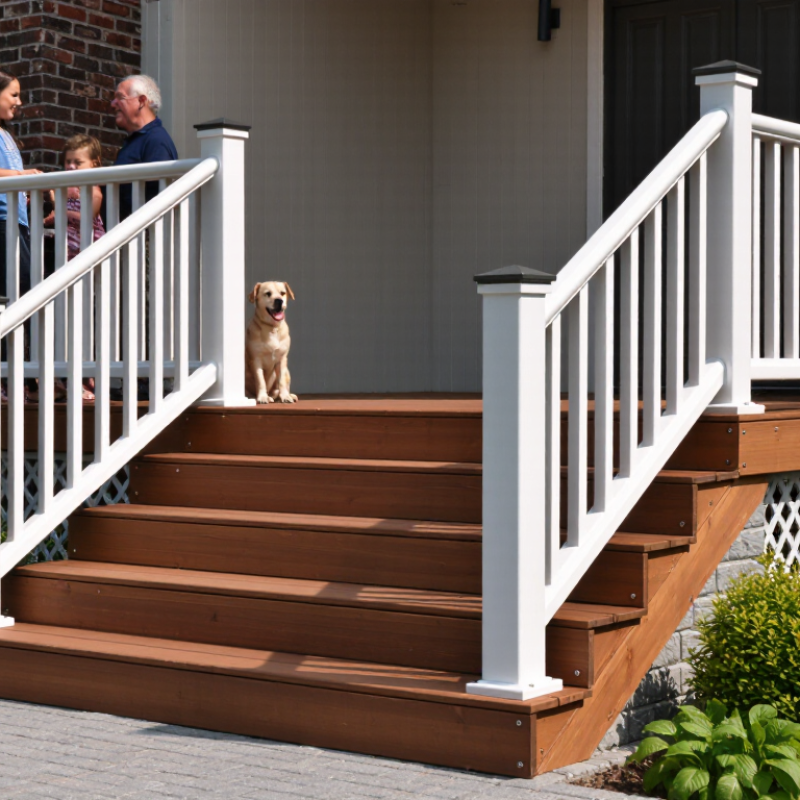
Define Your Porch’s Railing Needs and Site Conditions
Define how the porch will be used before comparing railing styles. Measure the deck edge, stair openings, and available space beside doors. Note who uses the porch, including children, older adults, or anyone who needs a steadier handhold. Start here. A railing that looks suitable in a photo may feel awkward beside a narrow step or frequently used doorway.
Then assess the site. Record direct sun, standing water, prevailing wind, and distance from the coast. NOAA’s 2023 U.S. Billion-Dollar Weather and Climate Disasters report counted 28 events, with estimated losses of $92.9 billion; it is a reminder to consider local storm exposure, not a railing-load specification. For wind conditions, consult ASCE’s site-specific hazard data and have a qualified professional assess the project. Small details matter. Near salt air, ask for documented finish-performance data: AAMA 2605 includes a 4,000-hour salt-spray test, but that laboratory benchmark cannot predict service life at your home. Check how posts attach to the porch structure, too. A sturdy-looking surface may conceal weak or deteriorated framing. I would not assume the railing alone can correct it.
Compare Aluminum Grades, Finishes, and Weather Resistance
Aluminum porch railing should suit both the structure and its exposure. Common railing extrusions use 6063 aluminum, which forms clean shapes and takes finishes well. Some designs use 6061 for added strength, but the alloy alone does not determine safety. Check the manufacturer’s load data, post spacing, and connection details. A sturdy rail can still feel loose if its anchors are poorly chosen.
Tips: For salty air, look for a durable powder-coated or anodized finish and corrosion-resistant, compatible fasteners. Ask how edges and cut ends are protected. Small gaps matter.
Finish quality affects how the railing ages. Powder coating offers a broad range of colors, while anodizing creates a hard, metallic-looking surface. Neither makes aluminum maintenance-free. Rinse off salt and grime with fresh water, especially around joints and horizontal surfaces where moisture lingers. A detail that is easy to overlook is contact with other metals; trapped water can encourage corrosion near those connections. I would not choose by appearance alone. Request finish specifications and care guidance, then compare them with your climate. Even a good finish can scratch during installation, so inspect corners and fasteners after the work is done.
Choose a Railing Style, Height, and Baluster Spacing
For an aluminum porch railing, choose a style that suits both the house and the view. Slim vertical balusters feel traditional and keep the porch visually open; broad top rails give hands a steadier grip. Bring a finish sample outside: a dark coating can look much warmer in afternoon sun than it does indoors. Check the joints, too. Wobbly connections are hard to ignore once you lean on the rail.
Set the height and spacing from measured conditions, not appearance alone. The 2021 International Residential Code (IRC), Section R312, generally calls for guards where a walking surface is over 30 inches above the ground below, and specifies a 36-inch minimum guard height for many dwelling settings. Its opening rule generally prevents a 4-inch sphere from passing through guard openings. Local requirements and porch layouts can differ, so confirm the rules that apply before ordering panels. Measure twice. Then check post locations, stair transitions, and the space between balusters; a small measurement error can leave an awkward gap or force a costly adjustment. These IRC figures are useful technical benchmarks, not a substitute for local review.
How to Choose Aluminum Porch Railing: Height & Baluster Spacing
Use these 2021 International Residential Code (IRC) measurements as a reference when planning a residential porch railing.
The guard-height benchmark is a minimum; the opening measurements are maximum sphere sizes that must not pass through the listed spaces. The stair-triangle rule applies to the opening formed by a stair tread, riser, and guard. Local codes may differ or add requirements, so confirm the rules for your location before installation.
Check Building Codes, Safety Features, and Warranty Coverage
Before choosing an aluminum porch railing, check the rules that apply to your home’s location. Local requirements may specify railing height, opening size, graspable handrails, and resistance to expected loads. Ask the building department or a qualified installer for current details; requirements can vary by project. Measure the porch edge and stair runs, then compare them with approved plans. A tape measure helps, but it does not replace an inspection.
Look closely at safety features, not just the powder-coated color. Posts should feel firm, connections should sit flush, and panels should leave no unsafe gaps. On stairs, confirm that the handrail offers a continuous, comfortable grip. Check how the system anchors to wood, concrete, or masonry, since each surface needs suitable fasteners. Small details matter. Fit matters. A loose cap or sharp cut edge can become annoying—and potentially unsafe—after daily use.
Read the warranty before ordering. Confirm how long structural components and finishes are covered, and whether fading, corrosion, installation labor, or coastal exposure are excluded. Keep the product documents, receipts, and installation records together. Ask who handles a claim and what evidence is needed. I would not assume “limited lifetime” means every part is protected; the wording can be narrower than it sounds. That deserves a second look.
Plan Installation, Inspection, and Ongoing Care
Before choosing an aluminum porch railing, measure the deck edge, stair openings, and post locations. Small measurement errors can leave awkward gaps or require extra cutting. Check the railing’s installation instructions and local building requirements before ordering. Stair sections often need different angles and hardware. Plan for those details.
Install posts on a sound, stable surface, using fasteners suited to the porch structure. Do not assume existing boards can support the railing without inspection. Keep posts plumb, and check spacing as you work. A level helps. Tighten connections evenly, but avoid forcing parts into alignment; that can hide a fit problem. If the mounting surface is damaged or unclear, pause and seek qualified advice.
Inspect the railing after installation, then check it periodically for movement, loose fasteners, sharp edges, and coating damage. Pay close attention to corners and stair connections. A quick shake test is useful, though it does not replace a proper inspection. Wash the aluminum with mild soap and water, then rinse away grit that could scratch the finish. Avoid abrasive pads. After storms or heavy use, look again; small issues are easier to address before they spread. I sometimes forget the underside of the top rail, where dust collects, so include it in your routine.