Smart Heating Solutions

How to Choose the Best Floating Pump Aerator from China?

Choosing the best Floating Pump Aerator from China requires more than comparing motor prices. The right unit must match pond depth, water volume, stocking density, and local power conditions. A shiny housing proves very little.

FAO’s The State of World Fisheries and Aquaculture 2024 reported 185.4 million tonnes of global aquatic animal production in 2022. Aquaculture supplied 94.4 million tonnes, slightly exceeding capture fisheries. This growth increases pressure on reliable oxygen management. Aquaculture specialist Dr. Claude E. Boyd states, “Dissolved oxygen is the most important water quality variable in aquaculture.” His observation remains practical beside any pond at dawn, when oxygen levels can fall sharply.

A dependable Chinese supplier should provide oxygen-transfer data, flow performance, motor efficiency, insulation ratings, and corrosion details. Ask whether tests were completed in freshwater, brackish water, or both. Request videos, factory records, and spare-parts lists. Look closely at the impeller, float structure, cable sealing, and emergency shutoff. These small details often decide whether equipment survives one season or five.

Specifications can mislead.

A high horsepower figure does not guarantee efficient aeration. Buyers should compare oxygen transfer rate, energy use, noise, maintenance access, and warranty response. Supplier audits, independent inspections, and clear export documentation strengthen purchasing confidence. Yet no checklist is perfect. Pond shape, weather, and biomass can change results unexpectedly. That uncertainty deserves honest planning, not optimistic promises. This guide examines how to evaluate Chinese manufacturers, verify technical claims, and select a Floating Pump Aerator that performs consistently in real operating conditions.
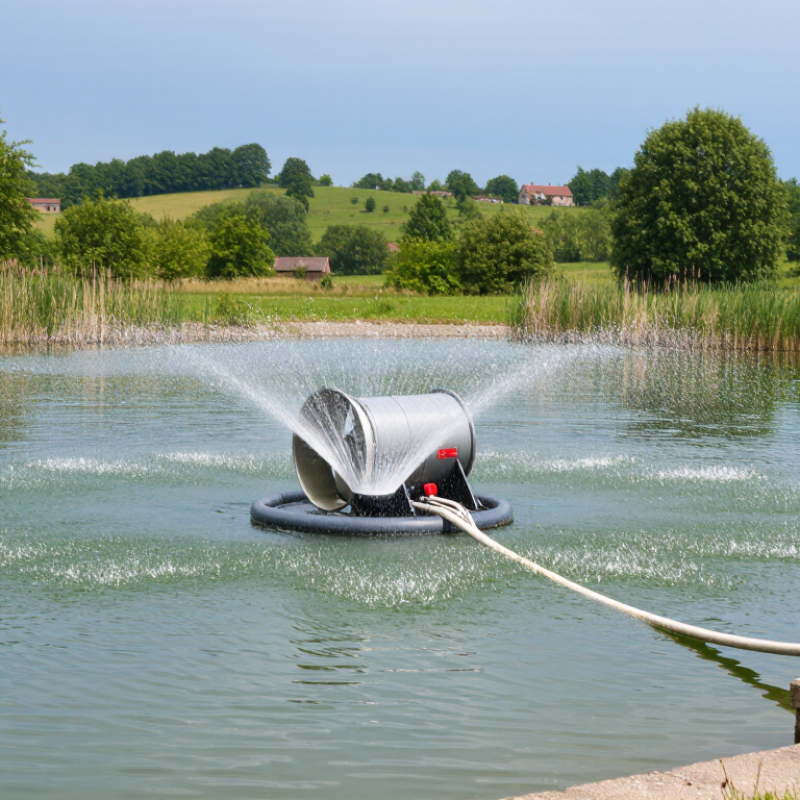
How to Choose the Best Floating Pump Aerator from China?

Define Your Floating Aerator’s Water Treatment Requirements

Before choosing a floating pump aerator from China, define the water treatment problem clearly. Measure the pond’s surface area, average depth, water volume, and seasonal temperature. Record dissolved oxygen levels at dawn, when oxygen is often lowest. Check biological oxygen demand, algae growth, sludge, odor, and fish stocking density. These details determine whether you need oxygenation, circulation, or both. A small decorative pond requires a different solution from a deep aquaculture basin.

Set practical performance targets. For example, specify the desired dissolved oxygen range, daily operating hours, mixing depth, and required water movement. Ask suppliers for tested oxygen transfer rates, power consumption, pump flow, and operating conditions. Laboratory figures may not match a muddy pond with heavy organic loading. Request performance data under comparable water temperatures and depths. Check the float design, cable protection, corrosion resistance, and access for routine cleaning.

Avoid selecting equipment by motor power alone. Higher power can create excessive turbulence, disturb sediment, or waste electricity. Weather also matters. Strong wind, waves, and floating debris can expose weaknesses in the anchoring system. A common mistake is estimating treatment needs from pond size only. Actual oxygen demand can change quickly after heavy rain, feeding, or algae decay. Recheck the calculations with an independent technician when possible. The first specification may be wrong. That is useful information, not failure. A clear treatment profile helps you compare technical proposals, installation methods, maintenance needs, and long-term operating costs more reliably.

Compare Pump Types, Aeration Methods, and Performance Ratings

Choosing the best floating pump aerator from China requires more than comparing motor power. Pump design matters. Axial-flow pumps move large water volumes with modest lift. Centrifugal pumps create stronger pressure but may consume more energy. Propeller-driven units can produce vigorous surface movement in wider ponds.

Aeration method changes the result. Splash aerators expose water to air through droplets. Venturi systems draw air into the water stream. Aspirating models mix air below the surface, often reducing visible spray. I check dissolved oxygen readings at dawn, when oxygen levels are usually lowest. That detail matters.

Do not trust performance ratings alone. Compare oxygen transfer rate, oxygen transfer efficiency, water flow, power input, and operating depth. Ask for test conditions, including water temperature, salinity, and measurement method. A rating from clean laboratory water may not match a muddy farm pond. The difference can be large.

I once focused too heavily on horsepower and overlooked cable length and floating stability. That was a costly lesson. Check float material, corrosion resistance, motor protection, and spare-part availability. Request factory test records, wiring diagrams, and videos of the unit working under load. Small details reveal reliability. Still, no rating replaces a site trial. Water conditions change, and every pond behaves differently.

Evaluate Chinese Manufacturers, Certifications, and Product Quality

Choosing a floating pump aerator from China requires more than comparing prices and motor power. Assess the manufacturer’s production experience, engineering staff, and export history. Ask for factory photos, quality procedures, and recent test records. A reliable supplier should explain oxygen transfer performance, flow rate, energy use, and suitable pond conditions clearly.

Certification documents need careful checking. ISO 9001 may indicate controlled processes, but it does not prove aerator performance. Request certificates matching the exact model and production site. For electrical equipment, review applicable safety, electromagnetic compatibility, and material requirements for your destination market. Confirm the IP rating, cable protection, grounding design, and float durability. Certificate numbers should be verifiable through the issuing organization.

Test the product before placing a large order. Run a sample in water with similar depth and temperature. Observe vibration, noise, spray pattern, current draw, and starting performance. Inspect stainless steel parts, seals, fasteners, and cable connections after continuous operation. Small details matter. Ask how failed components are traced and replaced. A clear warranty and spare-parts plan also reveal manufacturing discipline.

Do not trust polished paperwork alone. A perfect sample can hide inconsistent assembly during mass production. That risk is easy to underestimate. Request a pre-shipment inspection, production photos, and batch test results. I would also leave room for doubt: laboratory figures may not match a muddy pond, changing water levels, or harsh sunlight. Practical field evidence should influence the final decision.

How to Choose the Best Floating Pump Aerator from China? - Evaluate Chinese Manufacturers, Certifications, and Product Quality

Evaluation Dimension Recommended Verification Point Reliable Evidence or Benchmark Why It Matters Suggested Weight Assessment
Manufacturer experience Review the manufacturer’s production history, export experience, application references, and after-sales process. A verifiable factory address, documented quality procedures, traceable customer references, and stable technical support. Aerator performance depends on correct selection, installation, water conditions, and maintenance support. 15% High priority
Quality management system Check whether the quality management certificate is valid and covers the relevant manufacturing scope. ISO 9001 certification issued by an accredited certification body, with certificate number, scope, and validity period available for verification. ISO 9001 indicates a documented management system, but it does not by itself prove aerator performance. 10% Required evidence
Electrical and market compliance Confirm the destination-market requirements before ordering. For European shipments, request a valid EU Declaration of Conformity and applicable CE technical documentation. Confirm whether EMC, Low Voltage, Machinery, or RoHS requirements apply. For domestic Chinese sales, verify whether CCC applies to the specific electrical components. Compliance obligations vary according to product design, voltage, destination, and intended use. 15% Verify per market
Motor enclosure and safety Check the motor protection rating, insulation class, overload protection, grounding, and cable sealing. Submersible motor assemblies commonly require an IP68 rating when designed for continuous immersion; verify the manufacturer’s test conditions and applicable IEC 60529 test report. Class F insulation is a common industrial reference, but the declared rating must match the design. Water ingress, overheating, and inadequate electrical protection are major causes of premature failure. 15% Critical
Materials and corrosion resistance Inspect the float, impeller, shaft, fasteners, protective screens, and cable glands. UV-stabilized HDPE or equivalent float material; stainless steel 304 is common for general freshwater use, while stainless steel 316 is more suitable for higher chloride or corrosive environments when properly specified. Material selection affects buoyancy, service life, resistance to chemicals, and maintenance frequency. 10% Application-specific
Oxygen-transfer performance Compare oxygen transfer rate, standard oxygen transfer efficiency, power input, and operating depth under comparable test conditions. Request a test report that states water temperature, dissolved oxygen conditions, test tank, water quality, power measurement method, and test standard. Do not compare an advertised oxygen-transfer value without these conditions. Aeration output changes with water temperature, salinity, organic load, depth, fouling, and installation layout. 15% Do not rely on nameplate only
Energy efficiency Evaluate oxygen transfer per kilowatt-hour rather than motor power alone. Use measured kW input, current, voltage, power factor, and oxygen-transfer results from the same test conditions. A higher motor rating does not automatically mean better aeration efficiency. Electricity is often a significant part of the total operating cost over the equipment’s service life. 10% Compare measured data
Mechanical durability Check bearing design, shaft alignment, impeller balance, vibration, seal construction, and continuous-duty capability. Request factory inspection records, vibration test results, run-in test duration, seal specifications, and replacement-part availability. Continuous operation in wastewater or aquaculture environments places sustained loads on bearings, seals, and rotating components. 10% Factory test needed
Factory acceptance testing Define inspection points before production and before shipment. Recommended checks include insulation resistance, grounding continuity, running current, power input, leakage inspection, vibration, noise, float stability, and visual workmanship. A documented acceptance procedure reduces the risk of receiving units that meet appearance requirements but fail in operation. 5% Recommended
Installation and operating conditions Confirm water depth, pond geometry, anchoring, flow pattern, ambient temperature, water chemistry, and electrical supply. The quotation should state rated voltage, frequency, phase, cable length, allowable water temperature, minimum operating depth, anchoring method, and recommended service interval. A correctly manufactured aerator can still underperform if it is incorrectly positioned, anchored, or electrically supplied. 5% Essential before purchase
Warranty and spare parts Review warranty exclusions, response time, spare-part pricing, and repair instructions. Obtain written warranty terms covering motor, seals, float assembly, and control components, together with a recommended spare-parts list. Access to seals, bearings, impellers, fasteners, and control parts can reduce downtime and total ownership cost. 5% Long-term value
Commercial and logistics capability Evaluate packaging, export documents, lead time, spare-part shipment, and payment terms. Request a pro forma invoice, packing list, electrical documentation, installation manual, shipping dimensions, and clearly defined Incoterms. Complete documentation and protected packaging help prevent delays, damage, and installation errors. 5% Confirm before order
Selection rule: Give priority to independently verifiable performance data, applicable destination-market compliance documents, immersion and electrical safety evidence, material specifications, and after-sales support. Compare all oxygen-transfer and power-consumption figures under equivalent test conditions.

Check Materials, Customization Options, and Installation Features

How to Choose the Best Floating Pump Aerator from China?

Material selection should match water chemistry, sunlight, and handling conditions. For brackish ponds, 316 stainless steel usually offers better corrosion resistance than ordinary steel. HDPE floats should be UV-stabilized and thick enough to resist impact during transport. A shiny housing proves little. Ask for material certificates, weld inspection records, and salt-spray test results. The FAO’s State of World Fisheries and Aquaculture 2024 reported 130.9 million tonnes of global aquaculture production in 2022. That scale increases pressure on equipment reliability and oxygen management. I would also request a clean-water oxygen transfer test based on ASCE/EWRI 2-06. Results should show oxygen transfer rate, power use, and test conditions, not only horsepower.

Customization matters when pond layouts differ. Specify voltage, cable length, float dimensions, impeller design, lifting points, and control-panel protection. An IP65 panel may suit exposed installations, but local electrical requirements still need checking. Some suppliers can add dissolved-oxygen sensors, timers, remote alarms, or low-water protection. These features reduce manual checks, though they also create more failure points. Keep the control logic simple. Installation should include quick-connect couplings, balanced floats, anti-vibration mounts, and clear anchoring instructions. Leave enough cable slack for water-level changes, but not enough to enter the impeller. A pilot unit is sensible. It may reveal noise, drift, or weak flotation before a full order. The FAO data supports the market’s growth, but it does not guarantee every customized design will perform well. Consider that carefully.

Review Pricing, Shipping Terms, Warranty, and After-Sales Support

Choosing a floating pump aerator from China requires more than comparing catalog prices. FAO’s The State of World Fisheries and Aquaculture 2024 reports that aquaculture produced 94.4 million tonnes of aquatic animals in 2022. Demand is substantial.

Request itemized quotations. Check motor power, oxygen-transfer capacity, float material, cable length, control box, and spare parts. Compare EXW, FOB, and CIF prices carefully. A low price may exclude export packaging, testing, or destination charges. Ask for production photos and a factory test video. Not every video proves performance.

Shipping terms can change the real cost. The World Bank’s 2023 Logistics Performance Index ranked China 19th among 139 economies, with a score of 3.7. Still, port delays happen. Confirm the Incoterms 2020 rule, shipment port, estimated lead time, insurance responsibility, and customs documents. A written delivery schedule matters. It is easy to overlook.

Warranty language needs equal attention. Request the coverage period, usually stated in months, and identify exclusions for corrosion, dry running, voltage problems, and improper installation. Ask who pays return freight and how quickly technical support responds. After-sales support should include wiring diagrams, troubleshooting steps, seal kits, impellers, and local service guidance. Keep these promises in the purchase contract. My checklist is not flawless; water temperature and salinity can affect results. A small pre-shipment test under realistic conditions may reveal more than a polished specification sheet.

The chart presents a practical procurement-weighting model for comparing floating pump aerators from China. Pricing and after-sales support receive the highest weighting, while shipping terms and warranty conditions remain essential for evaluating total purchase risk. Adjust the percentages to match your project requirements.