Smart Heating Solutions
Choosing a Prefabricated Substation in China means looking beyond its footprint and quoted price. A compact unit beside a factory gate may need to handle dust, humidity, temperature swings, and changing production loads. Its transformer capacity, switchgear configuration, protection system, enclosure rating, and cable access should match the site—not just a catalogue description.
This guide outlines practical checks for comparing suppliers, technical specifications, customization options, testing records, installation support, and lifecycle costs. Ask for drawings that show the actual layout. Confirm how equipment will be transported and connected. A polished brochure is not a test report.
One important limitation: no source or verified expert quotation was provided, so I cannot responsibly attribute a statement to a named industry specialist. Inventing one would undermine the reliability this topic requires. A verified quotation can be added once the speaker and original source are confirmed.
The right choice is rarely the smallest unit or the lowest bid. It is the design that fits the load profile, site conditions, and maintenance plan—with evidence to support each claim. Some details still deserve a second look. In particular, buyers should question vague promises about delivery, protection, and future expansion before signing.
How to Choose the Best Prefabricated Substation in China?
Define the Project Requirements and Operating Conditions
Start with the load, not the enclosure. Record present demand, expected growth, voltage levels, fault current, and required backup capacity. The IEA’s Electricity 2024 report projects global electricity demand growth averaging 3.4% annually from 2024 to 2026. That wider trend makes future expansion worth checking, even for a modest project. Small details matter. Specify whether extra feeder bays or transformer capacity may be needed later.
Describe the actual site conditions. Note ambient temperature, altitude, humidity, dust, salt exposure, flooding risk, and available installation space. Also check cable entry directions, ventilation, lifting access, and whether maintenance crews can open doors safely. A requirement sheet can still miss an awkward detail: the delivery vehicle may not reach the chosen pad. It is easy to overlook. The IEA’s Electricity Grids and Secure Energy Transitions report says annual grid investment must more than double to exceed USD 600 billion by 2030. This does not dictate one substation design, but it underlines the value of equipment suited to long service and changing network needs. Confirm protection settings and interface requirements with the utility engineer; a neat drawing alone is not enough.
This chart shows the estimated low-voltage full-load current for common transformer ratings at 400 V, three-phase. Values are calculated using I = S / (√3 × V) and rounded to the nearest ampere. Use them as a preliminary reference when defining load and switchgear requirements; final selection should also account for load profile, ambient temperature, altitude, fault level, enclosure protection, and applicable utility requirements.
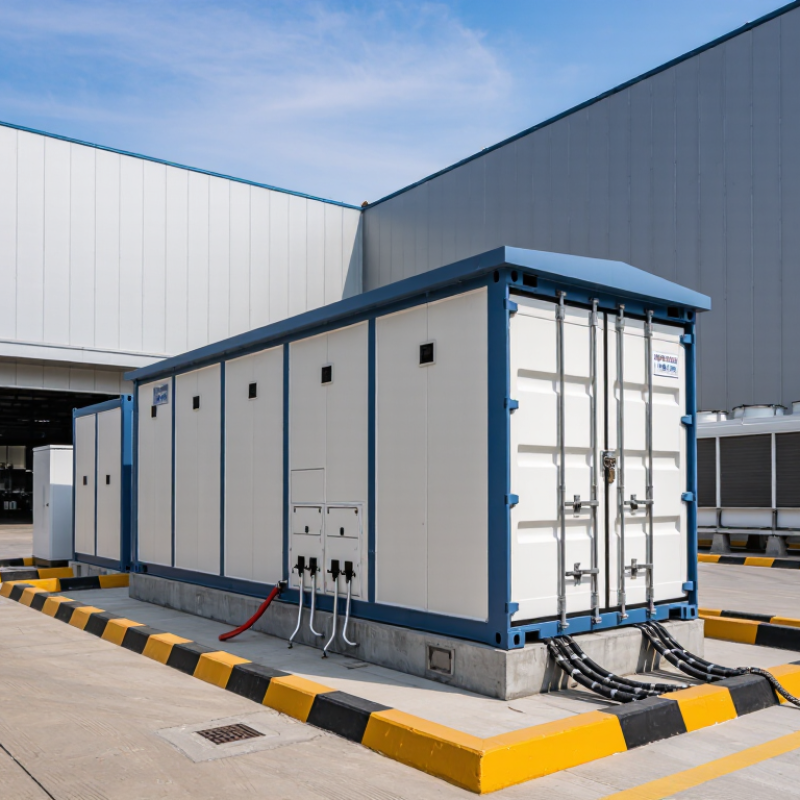
A compact package substation combines high-voltage switching, a transformer, and low-voltage distribution equipment in one enclosure. It suits urban sites where space is tight. Modular or containerized substations offer more room for equipment and easier expansion, but need a suitable transport route and a prepared foundation. Indoor units can help protect equipment from dust and weather; outdoor designs reduce building requirements but need careful attention to drainage, ventilation, and corrosion protection. The best choice depends on the site, load, and maintenance plan—not just the footprint.
Tips: Compare the electrical layout, not only the enclosure. Check rated voltage, transformer capacity, switching arrangement, and cable entry direction. For example, a factory with motor loads may need different low-voltage feeders than a commercial building. Ask how technicians can safely reach components. Small access panels can become a daily frustration.
Transformer choice matters too. Oil-immersed units often suit higher capacities, while dry-type transformers may be preferred indoors where fire considerations are important. Neither option is universally better. Check ambient temperature, humidity, altitude, and expected load changes against the equipment specifications. A drawing may look complete, yet omit clearances for future maintenance. That deserves a second look. Request verified test records and confirm that the proposed configuration matches the project’s operating conditions.
Start by matching the substation’s rated voltage, frequency, and transformer capacity to the actual network. Calculate peak demand and likely load growth; a kVA rating alone can hide overload risk. Check the specified short-circuit withstand current against the site’s fault level. Also confirm insulation requirements, ambient temperature range, and altitude. IEC 62271-202 provides requirements for high-voltage/low-voltage prefabricated substations, but confirm the applicable edition and Chinese national standards for the project.
The IEA’s 2023 report, Electricity Grids and Secure Energy Transitions, says annual grid investment must rise above USD 600 billion by 2030 to support climate goals. That expansion makes dependable protection increasingly important. Review relay settings, circuit-breaker capacity, and coordination with upstream and downstream devices. Ask for test records, not just a product schedule. Test evidence matters. Check that alarms identify faults clearly and that interlocks prevent unsafe switching sequences.
Inspect grounding connections, enclosure ingress protection, ventilation, and access clearances. For oil-filled equipment, verify containment and fire-safety provisions against site requirements. Ask how the enclosure manages internal arc pressure and whether temperature-rise tests reflect expected operating conditions. Small details matter. A cable gland that admits water can undermine otherwise sound protection. No checklist catches every site condition, so have a qualified engineer verify ratings and protection settings against the actual installation.
How to Choose the Best Prefabricated Substation in China?
Verify Manufacturer Capabilities and Applicable Standards
A polished brochure proves little. Check whether the manufacturer can show project records, documented quality controls, and trained staff for assembly and testing. Ask to see production procedures and inspection records for the enclosure, busbars, protection devices, and cable connections. China Electricity Council’s 2023 statistical report recorded 527.5 billion yuan in power-grid investment. That figure signals a large upgrade market, but it does not prove any supplier’s quality.
Match the product to the site and the applicable standards. GB/T 17467-2020 covers high-voltage/low-voltage prefabricated substations in China; IEC 62271-202 addresses prefabricated substations rated up to 52 kV. Confirm the editions, ratings, and test scope required by the project. Request complete type-test reports from competent laboratories, then check that tested configurations match the offered design. A small change in ventilation, compartment layout, or protection settings can matter. Paperwork can look complete. It may still leave gaps.
Tips: Visit the factory if practical. Watch a routine inspection, trace a component serial number, and ask how test failures are handled. Compare delivery schedules with documented capacity, not sales promises. If answers stay vague, pause and investigate.
| Evaluation dimension | What to verify | Useful evidence or reference | Selection guidance |
|---|---|---|---|
| Applicable product standard | Confirm the proposed unit’s voltage, frequency, configuration, and intended use fall within the scope of the standards stated in the offer. | GB/T 17467-2020, High-voltage/low-voltage prefabricated substation; IEC 62271-202:2022, where specified by the project or contract. | Require the supplier to identify the applicable edition and explain any deviations. Do not treat standards as interchangeable without confirming project requirements. |
| High-voltage switchgear | Check rated voltage, rated current, short-circuit ratings, insulation level, switching arrangement, interlocks, and the operating environment. | For applicable metal-enclosed AC switchgear, review GB 3906-2020 and the relevant product documentation and test reports. | Match ratings to the utility connection and calculated fault level. Verify that test evidence corresponds to the offered switchgear design. |
| Low-voltage assembly | Review rated operational voltage and current, assembly short-circuit performance, busbar arrangement, protection, metering, and outgoing feeder capacity. | GB/T 7251.1, together with the applicable parts of the GB/T 7251 series and the project specification. | Ask for design-verification evidence and drawings for the actual assembly arrangement, not only certificates for individual components. |
| Transformer selection and efficiency | Check rated capacity, voltage ratio, vector group, impedance, cooling method, temperature-rise limits, losses, and suitability for the load profile. | Review the transformer nameplate, guaranteed loss data, routine test reports, and applicable requirements of GB 20052-2020 where its scope applies. | Compare guaranteed losses on the same rating and test basis. Confirm the selected capacity against load growth and operating conditions. |
| Type tests and routine tests | Check which tests are required for the complete substation and for each major assembly, and confirm the test configuration represents the offered design. | Request reports from qualified laboratories where required, plus routine test records, inspection plans, and traceability to equipment serial numbers. | Review test scope, ratings, design family, report date, and any design changes since testing. A component certificate alone does not establish compliance of the complete package. |
| Enclosure and ingress protection | Specify protection separately for relevant compartments, considering rain, dust, condensation, ventilation openings, cable entries, and maintenance access. | Review enclosure drawings, sealing details, ventilation design, and any declared IP rating against IEC 60529 or the applicable national adoption. | Choose protection according to the installation environment; an IP rating should be supported by evidence and should not compromise required cooling. |
| Site and environmental conditions | Confirm ambient temperature range, altitude, humidity, pollution, corrosion exposure, wind, seismic conditions, and indoor or outdoor installation. | Compare the project’s site data with equipment ratings, insulation coordination, material specifications, and any declared derating requirements. | Require written confirmation of performance at the actual site conditions, including any limits on capacity or operating duty. |
| Safety and protection coordination | Review earthing and bonding, electrical clearances, interlocking, protection settings, arc and pressure-relief arrangements where applicable, and safe access for operation. | Request single-line diagrams, protection coordination studies, earthing drawings, operating procedures, and applicable safety test documentation. | Confirm interfaces and protection settings with the project designer and relevant grid or site authority before manufacture. |
| Factory capability and quality control | Assess whether the factory can assemble, inspect, test, package, and document the complete configuration, including control wiring and interfaces. | Review quality procedures, inspection and test plans, calibration records, material traceability, production records, and the proposed factory acceptance test procedure. | Use a project-specific audit or witnessed factory acceptance test when required; confirm responsibilities for purchased components and final integration. |
| Certificates and regulatory applicability | Check that certificates identify the relevant product, ratings, issuing body, and validity, and determine whether mandatory certification applies to each supplied product. | Request certificates and test reports for the offered equipment. Verify CCC applicability against the current official catalogue and product category rather than assuming the complete package is covered. | Resolve certification responsibilities and documentation requirements before contract award and shipment. |
| Installation, commissioning, and support | Confirm transport dimensions and weight, foundation and cable-entry requirements, commissioning scope, spare parts, maintenance instructions, and service response arrangements. | Review general arrangement and foundation drawings, interface schedules, installation manuals, commissioning checklists, and warranty terms. | Confirm site access and lifting constraints early; clearly allocate installation, testing, and handover responsibilities in the contract. |
Note: Final ratings, standard editions, certification obligations, and acceptance criteria should be confirmed against the project specification, site conditions, and current applicable Chinese regulations before procurement.
Compare total cost, delivery, installation, and maintenance—not just the quoted equipment price. Ask for an itemized offer covering the transformer, switchgear, enclosure, protection, testing, packing, and transport. Check what is excluded. A low factory price can rise after crane rental, foundation work, cable connections, and site testing are added. Request the assumptions behind each estimate, including the required voltage, capacity, and environmental conditions.
Delivery depends on more than manufacturing time. Confirm when drawings must be approved, which components have longer lead times, and whether factory acceptance testing is included. Allow time for shipping and customs clearance, since schedules can shift. Installation plans should specify who prepares the foundation, unloads the units, terminates cables, and commissions protection systems. Clear responsibilities prevent costly delays, though written plans cannot account for every site constraint.
Maintenance matters over the substation’s working life. Check whether routine inspection points are accessible and whether common replacement parts are available locally. Ask for operating manuals, recommended inspection intervals, warranty conditions, and realistic service-response times. A detailed maintenance plan is useful. Still, comparing suppliers is not perfectly tidy: climate, site access, and local labor rates can change the real cost substantially. State these assumptions before comparing offers.