Smart Heating Solutions

How to Choose the Best PVC Marble Sheet for Your Project?

Choosing a PVC Marble Sheet is not just a color decision. It affects installation, maintenance, and how a finished wall looks under real lighting. The broader PVC market offers useful context. Grand View Research’s Polyvinyl Chloride Market Size, Share & Trends Analysis Report estimated the global market at USD 60.2 billion in 2022 and projected growth through 2030. That figure covers PVC across many uses; it does not measure marble-look sheets alone. The distinction matters. A large market does not guarantee that a particular sheet will suit your project.

A sound comparison starts with the room and the product details. Check sheet thickness, surface finish, dimensions, backing, and the manufacturer’s installation guidance. Consider moisture exposure, cleaning routines, substrate condition, and how joints will appear beside corners or fixtures. Ask for technical documents and samples when available. A sample can reveal texture and color shifts that a screen hides. Small detail. Also compare warranties carefully; their coverage and exclusions may differ. Industry market reports help explain material demand, but they cannot replace product-level testing or project-specific advice. That assumption deserves a second look. This guide will help you weigh appearance against practical requirements, identify questions to ask suppliers, and choose with clearer expectations. No single finish is best for every room. The right choice is the one whose documented properties match the conditions it will face.
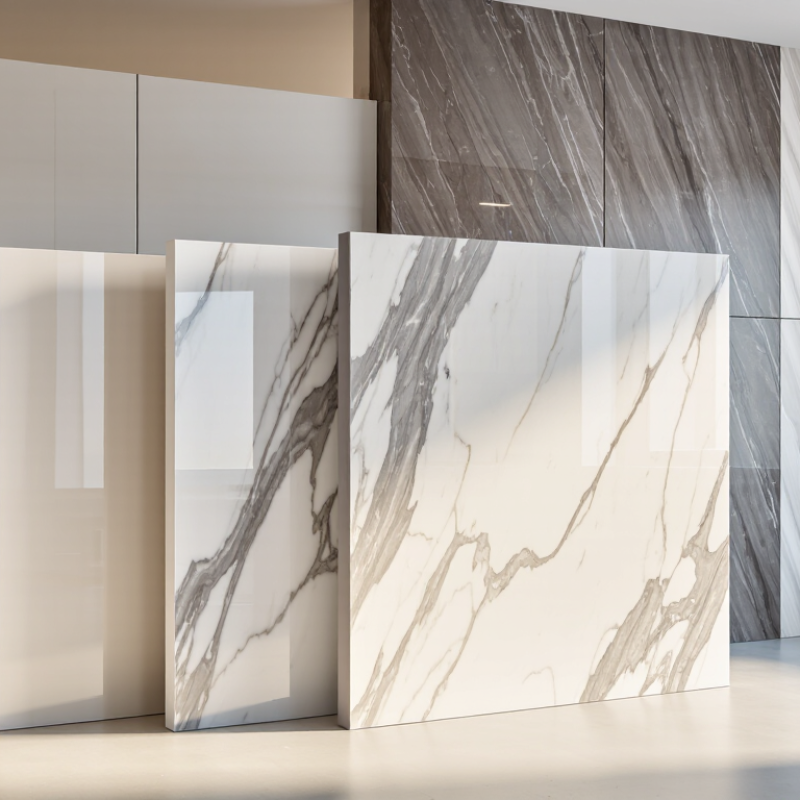
How to Choose the Best PVC Marble Sheet for Your Project?

Define Your Project’s Functional and Environmental Requirements

Define the project’s functional and environmental requirements before comparing PVC marble sheets. In a shower room, check water resistance, sealed edges, and compatibility with the specified adhesive. In a sunlit reception area, ask for UV-resistance test results. For corridors, confirm impact resistance and cleaning instructions. Looks matter. Fit matters more. A polished sample can mislead if the installed panel scratches easily or its backing does not suit the wall.

Consider the room’s temperature, moisture, ventilation, and fire-safety requirements. Request test reports for the exact product, not just general claims about PVC. Check indoor-emissions documentation and confirm that the installer can follow the specified method. The 2023 Global Status Report for Buildings and Construction, published by UNEP and GlobalABC, reports that buildings accounted for 34% of global energy demand and 37% of energy- and process-related carbon emissions in 2022. These figures describe the building sector, not PVC sheets alone, but they underline why durability and replacement frequency matter. A low purchase price may not mean a lower-impact choice.

Tip: Before ordering, compare samples under the project’s actual lighting and cleaning routine. Ask about repair, replacement, and end-of-life options. Recycling access varies by location, so verify it locally rather than assuming the sheet will be recycled.

Compare PVC Marble Sheet Thickness, Size, and Core Construction

Choosing a PVC marble sheet means balancing appearance with the demands of the installation. Compare the product’s stated thickness, sheet dimensions, and core construction rather than judging it by surface pattern alone. Check the technical data sheet, and confirm measurements on a sample when possible. Small details matter.

Thickness affects rigidity, weight, and how easily a sheet sits against a wall. Thinner panels can suit flat, well-supported surfaces, while thicker options may provide more stability around corners or uneven areas. They also add weight, so check that the substrate and fixing method can support the panel. A thicker sheet is not automatically the better choice. Measure the installation area, including edges and cutouts, before selecting a standard sheet size. Measure twice.

Core construction influences handling and performance. A uniform core can make cutting more predictable, while differences in density or internal structure may affect stiffness and screw holding. Ask suppliers for core details and installation guidance; appearance alone cannot confirm these properties. Inspect cut edges for gaps, uneven layers, or damage, and test a sample with the intended tools. It may feel overly cautious, but one small test can reveal a troublesome fit before several full sheets are cut.

Evaluate Surface Designs, Finishes, and Color Options

Choosing a PVC marble sheet starts with the room’s scale and viewing distance. A bold, high-contrast vein can look convincing on a large wall but crowded beside a narrow vanity. Fine, quiet veining usually suits small areas and compact backsplashes. Compare the printed pattern with nearby tile, cabinetry, and hardware, not just a screen image. Screens shift color.

Check how the pattern repeats across several sheets. A repeated dark vein may create an obvious grid, especially under bright lighting. Request a sample and view it beside a window and under the room’s evening lights. Small test, big difference. Finish matters too: glossy surfaces reflect windows and can make colors appear sharper, while matte finishes soften glare and hide minor fingerprints. Matte textures may collect dust in shallow grooves, so consider how you will clean them. Warm white can turn yellowish beside cool gray stone; charcoal may feel heavier than expected in a dim room. One sample cannot show every batch variation, and this is an easy detail to underestimate. Choose the color and finish together, then check the full-size layout before installation.

Check Installation Methods, Maintenance Needs, and Durability

How to Choose the Best PVC Marble Sheet for Your Project?

Start by checking the surface and installation method. PVC marble sheets usually need a clean, dry, level backing for reliable adhesion. Remove dust, grease, and loose paint before applying adhesive. On uneven walls, small gaps can show through the sheet, so correct the surface first. Measure carefully, but allow for trimming around outlets and corners. Even careful measurements can miss an awkward pipe.

Consider maintenance and durability in the room where the sheet will be used. A damp cloth and mild soap are generally enough for routine cleaning. Avoid abrasive pads and harsh solvents, which may dull or damage the decorative surface. In kitchens or bathrooms, pay close attention to joints and edges. Sealing them properly helps limit water entry, but the sheet itself should not be treated as a substitute for sound waterproofing. Heat and sharp objects can also leave marks.

Tips: Check the manufacturer’s guidance for adhesive compatibility and temperature limits. Test your cleaner on a hidden area. Keep an extra offcut for future repairs; matching the pattern later may be difficult. A little more preparation often saves time, though it can feel tedious.

Assess Safety Certifications, Supplier Reliability, and Total Cost

A PVC marble sheet can look convincing under showroom lights, yet its documents deserve equal attention. Ask for current safety certificates and confirm the tested product matches the sheet’s thickness, finish, and intended use. Check whether reports cover relevant concerns, such as fire performance or indoor emissions. Requirements vary by project and location, so verify them with your designer or building professional. Paperwork alone is not proof of consistent quality.

Supplier reliability becomes clearer through specific questions. Request a physical sample and compare its surface, color, and edge quality with the quotation. Ask how sheets are packed, what lead times are realistic, and how damaged pieces are handled. A supplier who gives clear, consistent answers is easier to assess. Still, one smooth sample cannot guarantee every batch will match. I have seen small shade differences become obvious across a large wall.

Compare total installed cost, not just the price per sheet. Include delivery, cutting waste, adhesives, trims, substrate preparation, and skilled installation. For example, a low-cost sheet may require extra backing work if the wall is uneven. Ask for a written estimate with quantities and exclusions. Maintenance matters too: confirm which cleaners are suitable before choosing a glossy finish. The cheapest quote may not stay cheap.