Smart Heating Solutions

How to Choose the Best Water Sprinkler in 2026?

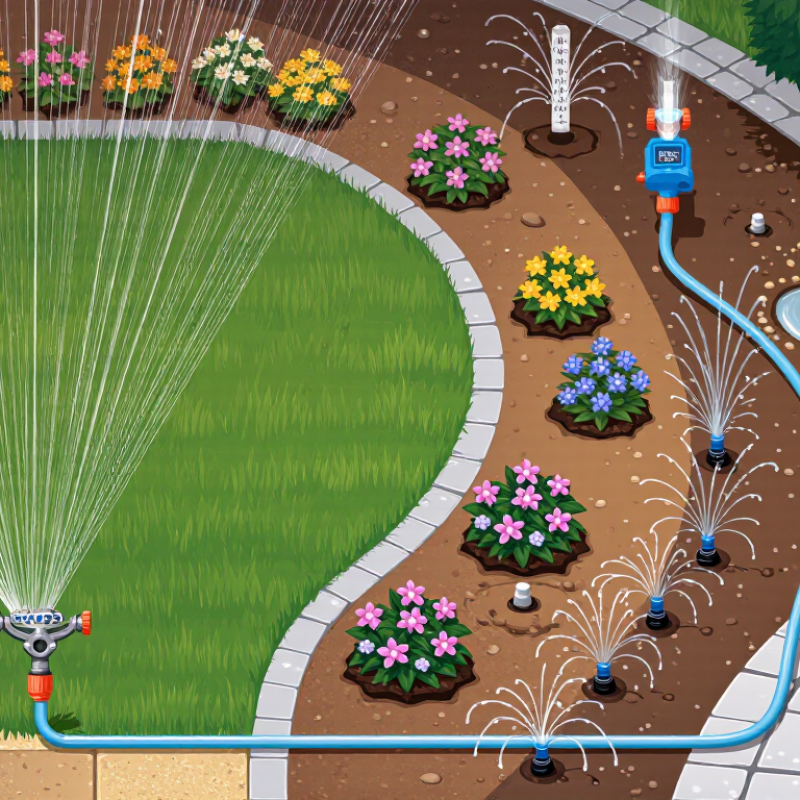
Choosing the best Water Sprinkler in 2026 requires more than comparing spray patterns or attractive prices. A reliable choice begins with the yard itself. Measure its size, shape, soil type, and available water pressure. A narrow lawn may need an oscillating model, while flower beds often benefit from adjustable rotary heads. Uneven ground creates dry patches, even with an expensive sprinkler. That detail is easy to miss.

Real-world testing also matters. Check whether the sprinkler remains stable on wet grass, connects securely, and distributes water evenly near its edges. Look for durable materials, clear adjustment controls, replacement parts, and trustworthy manufacturer information. Independent reviews can help, but product specifications should remain the main reference. A water meter or simple rain gauge can reveal whether the ground receives enough moisture. Guessing is less reliable.

Personal experience can expose problems that packaging never mentions. Some models look powerful but waste water through misting on windy afternoons. Others work well until a small filter becomes blocked. I once favored maximum coverage, then noticed runoff collecting beside a paved path. That changed my priorities. Coverage is useful, but controlled delivery matters more.

This guide compares sprinkler types, performance, water efficiency, installation effort, and long-term value. It also considers gardens with low pressure and families seeking simpler controls. No single model suits every property. Conditions change. Careful observation still beats marketing claims. By examining practical evidence and common limitations, homeowners can choose with greater confidence and avoid an expensive mismatch.
How to Choose the Best Water Sprinkler in 2026?

Classify Sprinkler Types by Coverage: Spray 5–15 ft, Rotors 20–50 ft

How to Choose the Best Water Sprinkler in 2026?

Classify sprinkler types by coverage: spray heads usually reach 5–15 feet, while rotors cover about 20–50 feet. This distance changes the entire irrigation layout. A small lawn with narrow planting beds often suits spray heads. Their short streams create dense, visible coverage around shrubs, paths, and corners. However, they can waste water when placed too far apart.

Rotors rotate slowly and throw larger droplets across wider areas. They work better on open lawns, especially when head-to-head coverage is possible. Measure the actual distance with a tape, not just your eye. Wind can bend a 15-foot spray, while slopes may push water toward sidewalks. Check operating pressure too. Weak pressure can reduce a rotor’s reach and create dry patches.

I once chose rotors for a narrow side yard. It looked efficient on paper. In practice, water reached the fence before the grass near the wall. That mistake taught me to match coverage with shape, not area alone. Use spray heads for compact zones and rotors for broad spaces. Overlap patterns carefully, but avoid watering pavement. Watch one complete cycle before adjusting spacing, because the first setup is rarely perfect.

How to Choose the Best Water Sprinkler in 2026? - Classify Sprinkler Types by Coverage: Spray 5–15 ft, Rotors 20–50 ft

Sprinkler Type Typical Coverage Spray Pattern Typical Flow Rate Best For Main Advantages Key Limitations
Fixed Spray 5–15 ft radius Fixed fan or partial-circle spray, commonly 90°, 180°, or 360° Approximately 0.5–2.0 gal/min at around 30 psi Small lawns, narrow planting beds, borders, and corners Simple design, low cost, easy nozzle selection, and uniform coverage when correctly spaced Higher application rate can cause runoff; wind may distort the spray pattern
Rotary Nozzle 15–30 ft radius Multiple rotating streams or fingers of water Approximately 0.4–1.5 gal/min, depending on radius and pressure Medium-size lawns and areas where water conservation is important Lower flow and slower application than many fixed sprays; improved resistance to light wind Requires clean water and adequate pressure; rotating paths may be affected by dirt or damage
Gear-Drive Rotor 20–50 ft radius Rotating stream with adjustable arc, commonly 40°–360° Approximately 0.5–8.0 gal/min, depending on nozzle, radius, and pressure Large lawns, open turf, sports areas, and broad landscape zones Long range, adjustable arc, and relatively low precipitation rate for larger areas Needs sufficient operating pressure and correct head spacing; unsuitable for very small or narrow areas
Impact Rotor 25–50 ft radius Pulsed rotating stream with adjustable arc or full-circle coverage Approximately 1.5–8.0 gal/min, depending on nozzle and pressure Large open lawns, gardens, pasture edges, and areas with variable water quality Long throw, durable mechanism, and generally more tolerant of debris than small gear mechanisms Visible clicking noise, more exposed moving parts, and possible overspray in windy conditions
Oscillating Hose-End Sprinkler Approximately 10–70 ft long × 10–50 ft wide Back-and-forth fan pattern from multiple nozzles Approximately 2–5 gal/min, depending on water pressure and nozzle design Rectangular lawns and temporary residential watering Covers rectangular areas evenly and is easy to reposition without permanent installation Coverage depends strongly on hose pressure; edges may receive uneven water if positioning is incorrect
Traveling Sprinkler Approximately 10–30 ft total width along a moving path Two rotating arms or wheels distribute water while the unit moves Approximately 2–6 gal/min, depending on water pressure and model design Large temporary watering zones without an installed irrigation system Can cover long areas with limited manual repositioning Requires a suitable hose path and relatively smooth ground; can leave dry areas if the route is poorly planned
Selection rule: Use fixed sprays for compact areas of 5–15 ft, rotary nozzles for medium areas of approximately 15–30 ft, and rotors or impact sprinklers for larger areas of 20–50 ft. Actual coverage and flow depend on water pressure, nozzle size, spacing, wind, and elevation. For installed irrigation, use head-to-head spacing so each sprinkler reaches the next sprinkler.

Match Flow and Pressure: Compare GPM and PSI with Manufacturer Specs

Choosing a water sprinkler in 2026 starts with two numbers: gallons per minute (GPM) and pounds per square inch (PSI). GPM measures water volume, while PSI measures driving pressure. They are related, but not interchangeable. A sprinkler rated at 2.5 GPM and 40 PSI may perform poorly if your outdoor tap delivers only 25 PSI under flow. Measure it. A pressure gauge at the faucet provides a useful baseline, although inexpensive gauges can be imperfect.

Read the manufacturer’s performance table, not just the package headline. Look for spray radius, pattern, GPM, and operating PSI at the same test point. A rotating sprinkler might cover 35 feet at 45 PSI, but only 26 feet at 30 PSI.

More pressure is not automatically better. Excess pressure can create mist, uneven coverage, and wasted water. Check your hose length and diameter too. Narrow hoses and restrictive connectors reduce flow before water reaches the sprinkler.

I once selected a sprinkler by its advertised coverage and ignored its flow requirement. My far corner stayed dry. The mistake was mine. Static faucet pressure looked adequate, but pressure fell sharply through the hose. For a dependable match, test the faucet while water runs, then compare that reading with the manufacturer’s recommended PSI range. Leave roughly 5 PSI of margin for filters, bends, and elevation. Recheck coverage with small catch cups across the lawn. Real yards are rarely level or windless.

Check Distribution Uniformity: Target at Least 70% DU (Irrigation Association)

How to Choose the Best Water Sprinkler in 2026?

Distribution uniformity, or DU, shows how evenly a sprinkler applies water across its coverage area. The Irrigation Association recommends targeting at least 70% DU for practical irrigation performance. A higher result usually means fewer dry patches and less unnecessary watering.

Test the sprinkler with identical catch cans. Place them in a grid across the lawn, then run the system for a fixed time. Measure each container with a ruler or graduated cylinder. Compare the lowest quarter of readings with the overall average. If the result falls below 70%, inspect nozzle spacing, water pressure, spray overlap, and clogged openings.

Wind can distort the pattern quickly. So can uneven ground. Test during calm weather, preferably early in the morning. Real yards are rarely perfect. That matters. A sprinkler may perform well on a product sheet but poorly beside a wall, driveway, or tall grass. I would also repeat the test after seasonal adjustments, because pressure and plant growth can change coverage.

Choose a model that provides a stable pattern at your available pressure. Look for adjustable flow only when it supports precise coverage, not endless tinkering. A simple sprinkler with consistent overlap can outperform a more complicated option. Record the catch-can readings before buying several units; one test often reveals more than attractive packaging.

Control Runoff: Keep Application Rates Below Soil Intake (USDA NRCS)

How to Choose the Best Water Sprinkler in 2026?

The best sprinkler is not the fastest one. It is the one that matches your soil’s intake rate. USDA NRCS guidance states that sprinkler application rates should remain below the soil’s infiltration capacity. Otherwise, water becomes runoff instead of root-zone moisture. Sandy soil usually accepts water quickly. Compacted clay may produce puddles within minutes. Slope makes the problem worse.

Check the sprinkler’s precipitation rate before buying. Compare that figure with local soil conditions, not only the advertised coverage area. The USDA NRCS National Engineering Handbook, Part 652, recommends evaluating soil texture, slope, compaction, and application rate together. A practical test uses empty cans across the lawn. Run the system briefly, then measure the collected depth. Uneven depths reveal poor distribution. It is simple, but often overlooked.

Use shorter cycles with pauses when runoff appears. For example, divide a 20-minute session into four five-minute cycles. Let water soak between cycles. EPA WaterSense reports that outdoor use can represent more than 30% of household water consumption, making small inefficiencies expensive over time. Wind also changes performance, so test during calm conditions. I still find manufacturer coverage claims too optimistic on uneven lawns. Real soil is rarely perfect. Adjusting the timer after observing puddles is more reliable than trusting a label.

Choose Smart Controllers: Use EPA WaterSense Weather-Based Standards

A smart sprinkler should respond to weather, not operate by habit. Choose a controller certified under EPA WaterSense weather-based standards. These controllers use local rainfall, temperature, wind, and plant water-demand data to adjust irrigation schedules. EPA WaterSense reports that a properly installed labeled controller can save an average home nearly 7,600 gallons of water annually.

That saving becomes visible at the yard edge. After a cool night, zones should run shorter. After measurable rain, the system should pause instead of wetting already damp soil. Look for automatic rain or freeze shutoff, seasonal adjustment, multiple-zone control, and clear manual settings. EPA’s Residential End Uses of Water Study found outdoor use represents about 30% of household water consumption, so small scheduling errors can become expensive.

Installation still matters. A controller cannot correct clogged nozzles, broken pipes, or poor sprinkler coverage. I would check soil moisture near the root zone before trusting the automatic schedule. My first setting might also be too cautious. That is acceptable; review the system after one week, then adjust slowly. Choose a model with transparent weather data and an accessible history log. Convenience helps, but measurable performance matters more.

How to Choose the Best Water Sprinkler in 2026?

Choose Smart Controllers: Use EPA WaterSense Weather-Based Standards

Weather-based irrigation controllers adjust watering schedules using local weather and landscape conditions. When choosing a sprinkler system, prioritize automatic weather adjustment, rain shutoff, seasonal scheduling, and efficient zone control.

EPA WaterSense reports that outdoor residential water use is approximately 30% of household water consumption, inefficient irrigation can waste up to 50% of irrigation water, and a WaterSense-labeled irrigation controller can save an average home nearly 8,800 gallons of water annually. These figures use different reference bases and are not additive.