Smart Heating Solutions

How to Choose Parchment Paper for Your Business?

Choosing Parchment Paper for a business is more complex than picking the cheapest roll. The right product must match your equipment, recipes, packaging process, and customer expectations. A bakery may need strong, non-stick sheets for croissants. A meal-preparation company may require food-safe liners that resist oil, moisture, and repeated handling. Small details matter, especially when paper tears beside a busy oven.

Chef Thomas Keller, known for precision in professional kitchens, has described parchment as “a baker’s best friend.” That idea remains useful, but it is not the whole decision. Businesses should examine silicone coating, heat resistance, sheet size, roll performance, and grease release. Unbleached Parchment Paper may appeal to sustainability-minded customers, although its color can vary between suppliers. Some products look similar but behave differently under high heat. Testing is essential.

Start with a real production trial. Bake cookies on two brands. Compare browning, sticking, curling, and cleanup. Then test the paper inside your actual trays, cutters, and packing workflow. Ask whether employees can tear it quickly without waste. Review supplier documentation, food-contact compliance, and batch consistency. Certifications and technical data deserve attention, not blind trust.

There is no universal best option. A premium sheet may reduce labor, yet its higher price can challenge low-margin products. A cheaper roll may seem efficient, but frequent tearing creates hidden costs. I would also reconsider glossy marketing claims. Performance should win. Select Parchment Paper that protects the product, supports reliable output, and makes sense financially. Your first choice may not be perfect. That is why measured testing matters.
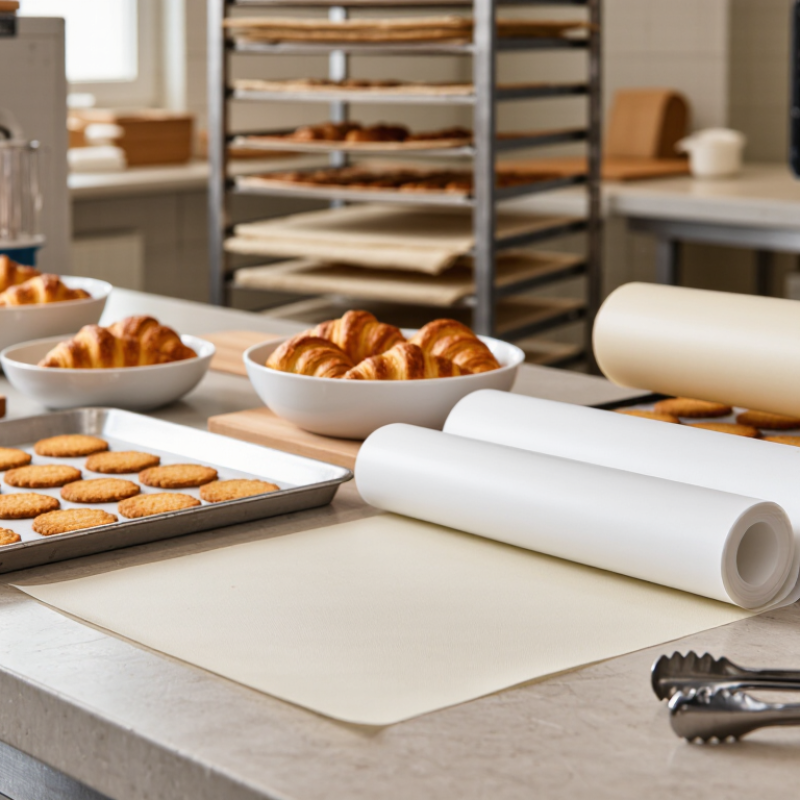
How to Choose Parchment Paper for Your Business?

What Is Parchment Paper and How Is It Used in Business?

Parchment paper is a cellulose-based sheet with a smooth, heat-resistant coating, often made from silicone. It helps prevent dough, sugar, and oily foods from sticking to trays and work surfaces. Unlike wax paper, it is designed for controlled oven use. In business kitchens, this reduces scraping, broken pastries, and cleaning time. That small detail matters during busy production hours.

A bakery may use parchment for cookies, bread rolls, cakes, and roasted ingredients. A pastry kitchen can fold it into piping cones or place it between delicate layers. Food manufacturers may use it as a separator for frozen dough, candies, or prepared portions. Caterers often line serving trays to improve hygiene and presentation. For chilled products, parchment can reduce surface contact and protect fragile textures. Still, parchment is not fireproof. Never use it over an open flame. Heat limits vary, so staff should check the supplier’s technical instructions.

Choosing parchment requires more than checking sheet size. Look for consistent thickness, reliable grease resistance, and clean cutting edges. The coating should remain stable without peeling or leaving residue. Test a sample during actual production. A sheet that performs well with cookies may tear under wet dough. One practical caution: some operations buy oversized rolls to reduce restocking. That can create more trimming waste. Review the workflow, tray dimensions, storage conditions, and expected oven temperature before ordering. Small tests reveal problems that a product description may hide.

Which Parchment Paper Features Match Your Business Needs?

Choosing parchment paper depends on the job, not only the price. A bakery handling buttery croissants needs strong grease resistance and reliable release. A catering kitchen may value sheets that stay flat on crowded trays. For high-volume production, consistent sizing reduces waste and loading time. Test the paper with your actual dough, oil level, oven temperature, and storage conditions.

Barrier performance deserves careful attention. A 2024 Smithers sustainable-packaging report identifies material efficiency and end-of-life performance as major purchasing priorities. This supports thinner, responsibly sourced paper when it still protects food properly. However, “eco-friendly” claims need evidence. Ask for fiber origin, food-contact documentation, compostability conditions, and coating details. Some papers perform well in an oven but become difficult to recycle because of added layers. Small details matter.

Size and temperature ratings must match your workflow. Commercial parchment commonly supports baking temperatures around 425°F to 450°F, but specifications vary. Check the supplier’s tested limit rather than relying on general advice. A 2023 Grand View Research report valued the global food packaging market at hundreds of billions of dollars, showing how much packaging choices influence modern food operations. Yet broad market figures cannot choose your paper. Your own trial can. Run a short test across several batches, record sticking, tearing, browning, and disposal volume. Perfect performance on paper may still disappoint during a rushed morning shift.

How to Choose Parchment Paper for Your Business? - Which Parchment Paper Features Match Your Business Needs?

Business Need Recommended Parchment Type Key Features to Check Typical Format Temperature Guidance Best Operational Benefit Important Checks
High-volume cookie and pastry production Bleached, silicone-coated parchment Even release, reliable grease resistance, consistent thickness, flat surface Pre-cut full-sheet or half-sheet liners; roll stock for custom sizes Select a product rated for the actual oven temperature; many baking grades are rated around 425°F–450°F (220°C–232°C) Fast pan loading and reduced sticking without routine pan greasing Confirm sheet dimensions, case count, dispensing speed, and food-contact documentation
Artisan bread and high-hydration dough Heavy-duty, silicone-coated parchment Higher tear resistance, strong wet strength, dependable dough release Large sheets or wide rolls sized for trays and baking stones Verify the supplier’s maximum temperature, especially for stone or deck ovens Helps transfer sticky dough while minimizing tearing during loading Check basis weight, tear strength, curl, and compatibility with steam or high-moisture dough
Roasting vegetables, meat, and fish Grease-resistant, silicone-coated parchment Oil resistance, heat stability, adequate sheet strength, clean release Pre-cut tray liners or rolls for gastronorm and sheet pans Use only within the stated rating; keep paper away from direct flame, heating elements, and broilers unless specifically approved Simplifies food release and reduces baked-on residue on trays Evaluate performance with oily foods, marinades, sharp bones, and heavy food loads
Commercial food wrapping and bakery display Food-grade parchment sheets or wrapping paper Grease resistance, foldability, printability where applicable, clean appearance Interfolded sheets, flat sheets, or custom-cut pieces Choose a grade intended for the expected hot-food contact temperature Provides a neat serving layer and helps reduce grease transfer to packaging Confirm food-contact compliance, migration limits, sizing, and disposal requirements
Steam cooking and en papillote preparation Moisture-resistant, food-grade parchment Wet strength, foldability, resistance to tearing, neutral odor and taste Sheets or rolls that can be folded and sealed Check suitability for steaming, oven use, and the recipe’s maximum temperature Supports parcel folding while helping retain moisture and juices Test seams, folds, steam exposure time, and resistance to liquid leakage
Foodservice operations requiring speed Pre-cut, interfolded parchment sheets Consistent dimensions, easy dispensing, stackability, low handling time Standard tray, basket, or serving-sheet sizes Select a heat rating suitable for the equipment and serving application Reduces cutting, measuring, and workstation waste Compare sheet count per case, dispenser compatibility, storage footprint, and labor savings
Businesses prioritizing reduced material waste Correctly sized sheets or responsibly sourced parchment Right-size availability, efficient nesting, recyclable or compostable options where locally accepted Custom-cut sheets or rolls matched to pan dimensions Follow the selected product’s technical rating and disposal guidance Can reduce offcuts and unnecessary paper use Disposal depends on local facilities; food or grease contamination may affect recyclability or compostability
Multi-temperature production lines One versatile parchment grade validated for all applications Broad operating range, consistent release, tear resistance, and stable performance across recipes Combination of rolls and pre-cut sheets based on equipment Base the specification on the lowest applicable safety margin and the supplier’s published limit Simplifies inventory and reduces the number of paper types in storage Run tests with each recipe; do not assume one grade is suitable for direct flame, broiling, or repeated use
Selection note: Temperature limits, basis weight, coating performance, food-contact compliance, and disposal claims vary by product. Always verify the supplier’s technical specification and test the parchment under your actual equipment, recipe, loading weight, and exposure time.

How to Compare Parchment Paper Materials, Sizes, and Thicknesses

Choosing parchment paper for a business requires more than checking the lowest price. The base material, coating, size, and thickness all affect production results. Bleached paper offers a clean, bright appearance, while unbleached paper looks more natural and may suit rustic packaging. Silicone-coated parchment usually releases baked goods smoothly and resists grease. However, coating quality matters more than appearance. Ask suppliers for food-contact documentation, temperature limits, and batch consistency records.

Size should match your equipment and workflow. A bakery using standard trays may save labor with pre-cut sheets. A restaurant with changing pan sizes may prefer rolls. Measure the pan length, width, and rim before ordering. A sheet that curls over the edge can touch heating elements, creating a safety concern. Small details matter. Check the cutting tolerance, storage space, and packaging waste too.

Thickness is often listed by paper weight or microns. Heavier parchment feels stronger and handles wet dough better, but it may cost more and fold less easily. Thin paper can work well for cookies, liners, and short baking cycles. It may tear when lifting heavy roasted foods. I would not assume thicker means better. In practice, coating uniformity, flatness, and heat performance can matter more. Test samples with your actual trays, recipes, temperatures, and handling steps before placing a large order. A perfect specification on paper can still disappoint on the production floor.

What Food Safety and Compliance Standards Should You Check?

Choosing parchment paper for a business starts with its intended food contact. Ask the supplier for a current declaration of compliance. It should identify the paper composition, coatings, temperature limits, contact time, and food types. Baking paper is not automatically suitable for oily, acidic, or frozen foods. Check the food-contact requirements in every market where the product will be sold. Requirements may differ between regions. Do not accept vague claims such as “food safe” without supporting documents.

Request migration test results when appropriate, including overall migration and specific substances of concern. For coated parchment, ask about silicone composition, additives, heavy metals, and PFAS-related restrictions. The supplier should also demonstrate good manufacturing practices and provide batch traceability. A lot number, production date, and retention sample can make an investigation far easier. Certificates matter. They are not the whole answer.

Inspect the paper in real conditions. Test it with hot oil, acidic fillings, steam, and repeated freezer handling if those uses apply. Watch for tearing, odor transfer, sticking, or coating separation. Store samples away from moisture, dust, and strong odors before testing. A practical mistake is trusting a clean-looking certificate while ignoring warehouse conditions. I would also question documents with missing test methods or unclear dates. No checklist catches every failure. Keep written trial records, review them with your food-safety team, and reassess compliance when the supplier changes materials.

How to Choose Parchment Paper for Your Business?

Before purchasing parchment paper, check the applicable food-contact rules for your market. Confirm the paper and any coating are suitable for the intended food type, contact time, temperature, and grease conditions. Request supplier documentation covering composition, migration testing, good manufacturing practice, traceability, and stated use limits.

The chart shows the publication or adoption year of widely used food-contact and food-safety references. These references are not interchangeable, and the year is not a compliance deadline. Always verify the current legal text and product-specific evidence.

How to Evaluate Suppliers, Costs, and Environmental Impact

How to Choose Parchment Paper for Your Business?

Choosing parchment paper starts with the supplier, not the product catalogue. Request samples from the same production lot. Test them on your ovens, trays, and packing lines. Check release performance, tear resistance, roll tension, and sheet consistency. Ask for food-contact declarations, fiber traceability, coating details, and recent quality records. A dependable supplier should explain tolerances clearly. Vague answers deserve caution. Ask for evidence. Verify lead times and minimum order quantities before approving a contract.

One late shipment can cost more than a small price difference.

Compare total cost, not only the quoted price per sheet. Include freight, storage, cutting losses, rejected pieces, and labor. A slightly heavier sheet may reduce tearing and waste. However, it may also increase material costs. Measure both outcomes during a controlled trial. Keep the figures visible. They can change quickly.

Test it carefully.

Environmental claims need careful questioning. Ask whether the paper uses responsibly sourced fiber, recycled content, or certified production systems. Request data on energy, water, emissions, and coating composition. “Compostable” is not automatically meaningful. Conditions differ between home and industrial systems. Check the relevant requirements for your market.

I have seen teams choose greener packaging, then discover higher waste from poor sizing. That is an uncomfortable lesson.

Environmental performance should include the full life cycle, not just the label. Reassess suppliers annually, because documentation and production practices can change.