How to Choose a Rotary Pouch Packing Machine?
Choosing a rotary pouch packing machine is not simply a matter of comparing speeds. It is a production decision involving product behavior, pouch material, filling accuracy, labor, maintenance, and future demand. A machine may look impressive in a showroom, yet struggle with sticky powder or irregular granules on a busy factory floor.
PMMI market-development expert Jorge Izquierdo has emphasized, “The most important thing is to understand the process and the product.” That principle remains practical. Before reviewing machine models, manufacturers should test the product’s flow, density, moisture, and particle size. They should also examine pouch width, seal structure, filling range, and target output. Small details matter. A weak seal can waste an entire production shift.
A reliable rotary pouch packing machine should offer stable indexing, accurate dosing, accessible changeover parts, and clear operator controls. Hygienic design also deserves close attention, especially around product-contact areas and dust collection points. Experienced teams should request sample runs using their own materials, not only factory demonstrations. Ask for measured results, including seal strength, giveaway, downtime, and rejected pouch rates.
No checklist is perfect. A machine that suits one plant may disappoint another. Budget pressure can also hide long-term costs. Energy use, spare parts, training, and service response should be considered honestly. This guide explains how to compare these factors, identify avoidable risks, and select equipment that supports dependable production rather than impressive promises.
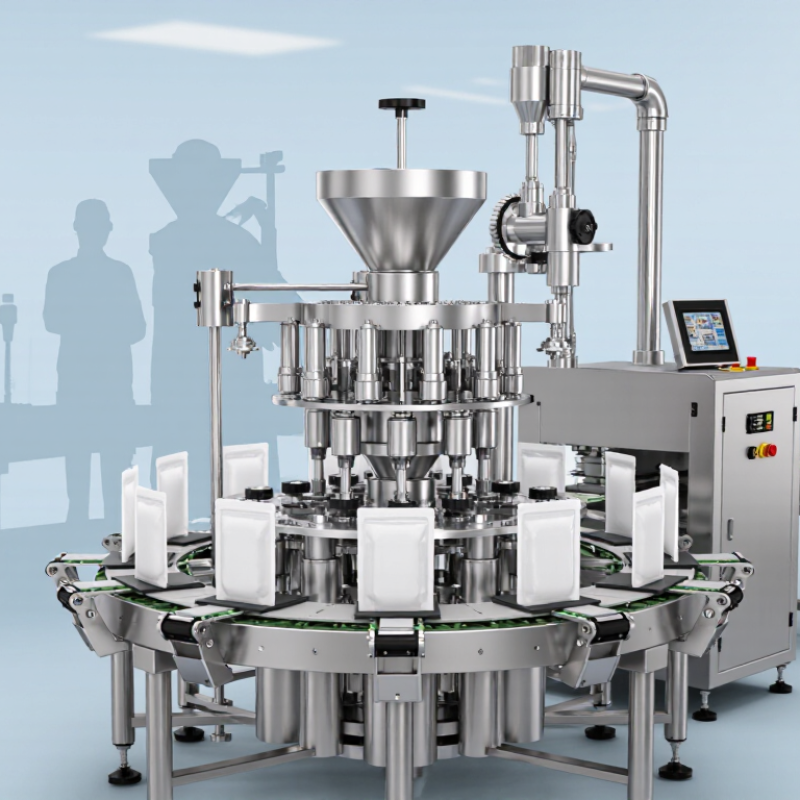
Define Your Product and Packaging Requirements
How to Choose a Rotary Pouch Packing Machine?
Define Your Product and Packaging Requirements
Your product should determine the machine, not the other way around. Start with its shape, density, moisture, temperature, and flow behavior. Powdered ingredients may bridge inside the hopper, while oily snacks can contaminate sealing jaws. Granules may require a multihead weigher for stable dosing.
Measure the target fill weight and acceptable variation. Then define pouch width, height, zipper needs, seal style, and film structure. A 2024 report from the Flexible Packaging Association valued the U.S. flexible packaging market at approximately $40 billion in 2023. This scale reflects strong demand, but every product still needs individual testing. Flexible film is not automatically suitable for every barrier requirement.
Consider oxygen, moisture, light, and aroma protection. A food product may need high-barrier laminate, while a dry household product may need a simpler structure. Review the sealing temperature range and friction of the film. Small differences can create wrinkles, weak seals, or leaking corners.
Ask for trials using your actual product and film. Watch the feed path closely. Does powder settle on the seal? Do irregular pieces damage the pouch? These observations matter more than a brochure’s maximum speed. PMMI’s 2024 State of the Industry report recorded U.S. packaging machinery shipments of about $10.2 billion in 2023, showing a mature equipment market. Yet advertised speed can mislead. Real output falls during film changes, cleaning, and adjustments. Build your specification around dependable production, not perfect test conditions.
Compare Rotary Pouch Machine Types and Operating Features
Choosing a rotary pouch packing machine requires more than comparing speed figures. The pouch material, product texture, and required seal quality matter equally. A practical evaluation should begin with daily production volume and pouch dimensions.
Intermittent-motion rotary machines suit products needing accurate dosing and careful sealing. They pause during filling and sealing, which can improve control for powders, granules, and irregular pieces. Continuous-motion models run faster and reduce stopping time. However, they may require more precise product flow and timing. Check whether the machine supports premade pouches, zipper pouches, spouted pouches, or flat sachets. Flexibility sounds useful, but unused options can increase maintenance work.
Operating features deserve close attention. Servo-driven dosing improves repeatability, while load cells can verify fill weight during production. Adjustable sealing temperature and pressure help protect delicate films. A clear touchscreen, recipe storage, and fault history can shorten operator training. Automatic film tracking is valuable when film edges shift slightly. It still needs regular inspection. Sensors should detect empty pouches, open seals, and product trapped in the sealing area. Washdown design, tool-free access, and stainless-steel contact parts support cleaner changeovers. In production reviews, changeover time is often underestimated. Measure the full process, including cleaning, adjustment, and test packs. A faster machine may become less productive when operators struggle with access or frequent adjustments. Reliability also depends on spare-part availability, service response, and documented operating procedures.
How to Choose a Rotary Pouch Packing Machine?
Compare typical throughput and operating features of common rotary pouch machine configurations.
Intermittent-Motion Rotary A flexible choice for standard premade pouches, powders, granules, and irregular products. It generally offers easier changeovers and moderate speed.
Continuous-Motion Rotary Designed for higher output with reduced stopping between stations. It is suitable for stable products and production lines that prioritize speed.
Vacuum Rotary Removes air before sealing and is commonly selected for meat, seafood, cheese, and other products where reduced oxygen exposure is important.
MAP / Gas-Flushing Rotary Replaces pouch air with a controlled gas mixture before sealing. It supports products that require a modified atmosphere and careful seal integrity.
The chart shows representative midpoints of common industry operating ranges: approximately 30–60, 60–100, 20–50, and 20–40 pouches per minute respectively. Actual output depends on pouch size, filling volume, product characteristics, sealing time, and the number of machine stations.
Check Materials, Automation, Sanitation, and Safety Standards
Choosing a rotary pouch packing machine begins with the material, not the advertised speed. Film thickness, sealability, pouch size, powder flow, and product moisture all affect performance. A machine that handles dry granules may struggle with sticky products. Test your actual material before purchase. Small trials reveal problems that brochures often hide.
Automation should match your operators and production volume. Servo-driven filling, automatic film tracking, weight feedback, and recipe storage can improve consistency. Sensors should detect empty pockets, sealing faults, and film misalignment. I once underestimated changeover time; cleaning and format adjustments reduced daily output more than expected. Simple controls may be better than excessive automation.
Sanitation requires practical access. Choose smooth stainless-steel surfaces, removable contact parts, protected wiring, and designs that prevent product buildup. Check whether tools are needed for routine cleaning. Shorter cleaning routes matter. Safety cannot be treated as an optional feature. Confirm guarding, door interlocks, emergency stops, overload protection, and clear lockout procedures. Ask for risk-assessment documents and evidence of conformity with applicable local and industry standards. Do not accept vague claims. Review manuals, inspection records, and operator training requirements. A machine may meet a standard on paper, yet still create awkward cleaning or maintenance risks on the factory floor.