Why Choose CNC Lathe Machining for Your Manufacturing Needs?
CNC Lathe Machining has transformed the manufacturing landscape. According to a recent report by Markets and Markets, the CNC machining market is expected to reach USD 100 billion by 2026, growing at a CAGR of 7.4%. This surge indicates a significant shift towards precision and efficiency in production processes.
Manufacturers are increasingly opting for CNC Lathe Machining due to its superior accuracy and repeatability. In sectors like aerospace and automotive, where precision is critical, these machines excel. A study by Grand View Research highlights that the demand for precision-engineered components is at an all-time high. Yet, despite the advantages, some companies hesitate due to initial cost and complexity.
Investing in CNC Lathe Machining can yield substantial long-term benefits. The technology reduces waste and enhances productivity. However, it requires skilled operators and ongoing maintenance, which some businesses may overlook. Balancing investment and expertise is essential for a successful transition to CNC Lathe Machining.
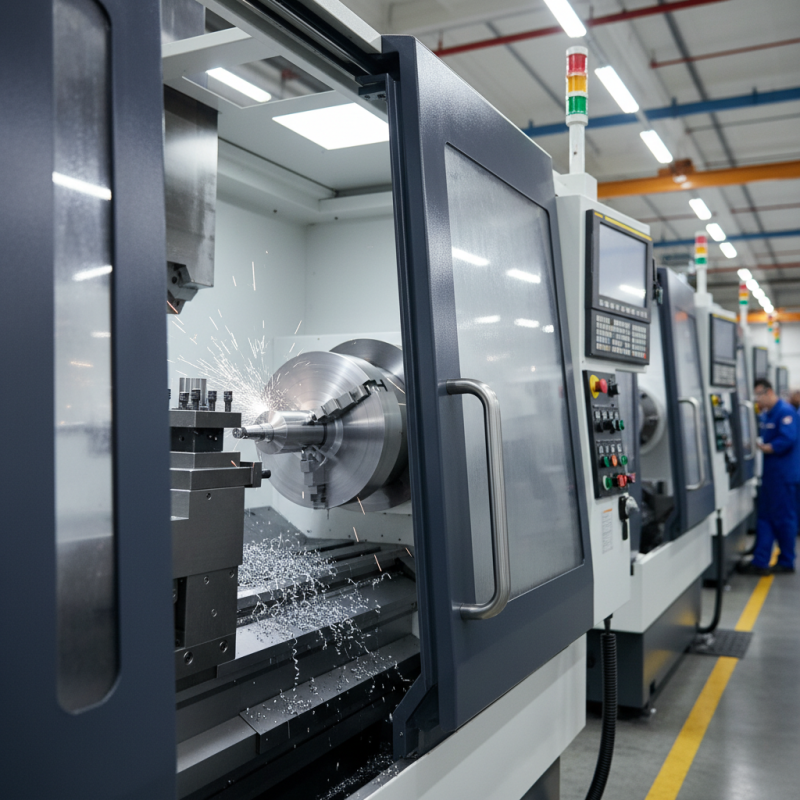
Advantages of CNC Lathe Machining Over Traditional Methods
CNC lathe machining offers distinct advantages over traditional methods. One major benefit is precision. CNC machines operate with extreme accuracy, producing parts that meet tight tolerances. For complex designs, this technology provides reliability that manual methods often struggle to achieve.
Another aspect is efficiency. CNC lathe machines can run continuously, yielding high volumes in shorter timeframes. While traditional approaches require more manual intervention, CNC automation reduces production times significantly. This enables manufacturers to respond quickly to market demands.
However, CNC machining is not without its challenges. Initial setup costs can be high, and skilled operators must be available to program and monitor the machines. Transitioning to CNC also requires a shift in mindset for teams used to traditional practices. Yet, the long-term benefits often outweigh these initial hurdles.
Advantages of CNC Lathe Machining Over Traditional Methods
This chart illustrates the various advantages of CNC lathe machining compared to traditional machining methods. The scores represent a qualitative assessment of each advantage, with higher scores indicating greater benefits in that category.
Precision and Accuracy in CNC Lathe Manufacturing
CNC lathe machining offers exceptional precision and accuracy, making it ideal for modern manufacturing needs. The process involves computer-controlled lathes that shape materials with high precision. This technology minimizes human error and enhances consistency across production runs. Each piece can be crafted to exact specifications, ensuring a reliable final product.
Details matter in CNC lathe manufacturing. A carefully calibrated machine can operate within microns of the desired measurement. This level of accuracy is crucial in industries like aerospace and medical device manufacturing. However, it is essential to regularly maintain machines to avoid drift over time. Even minor misalignments can lead to significant issues in the final product.
Despite its advantages, CNC lathe machining is not without challenges. Operators must be skilled in both programming and machine operation. Miscommunication in design specifications can lead to costly mistakes. Continuous training and feedback loops are vital to ensure quality. Manufacturers need to reflect on processes and remain adaptable to improve overall outcomes.
Versatility of CNC Lathes in Various Industries
CNC lathes are essential tools in modern manufacturing. Their adaptability to multiple industries is remarkable. According to a report by MarketsandMarkets, the CNC machine tools market is projected to reach $100 billion by 2026. This growth underscores the demand for precision engineering across various sectors.
In the automotive industry, for example, CNC lathes create components with high accuracy. They are vital in producing intricate parts like crankshafts and gears. These machines enhance efficiency, reducing production time significantly. A study from Deloitte states that 70% of manufacturers expect automation to boost their production capability.
Another notable application is in aerospace. CNC lathes manage complex geometries required in aircraft parts. They ensure parts meet strict safety standards while maintaining optimal performance. The challenges of machining lightweight materials, like titanium, often require advanced CNC techniques. This necessitates a deep understanding of material properties and machining processes.
Despite their advantages, CNC lathes require skilled operators for effective use. Transitioning to CNC technology can be daunting for small manufacturers. They may struggle with initial costs and training. It’s a nuanced balance of investing in technology while potentially facing operational hurdles.
Cost-Effectiveness and Efficiency of CNC Machining
CNC machining has gained significant traction in the manufacturing sector due to its cost-effectiveness and efficiency. According to a report by the Committee on Data for Science and Technology, CNC machining reduces labor costs by over 30%. This reduction is vital, especially for small to medium-sized enterprises aiming to maximize profit margins. Without investing heavily in manual labor, businesses can allocate resources to innovation and product development.
Additionally, CNC lathes offer consistent precision. A study from the National Institute of Standards and Technology reveals that CNC machines maintain tolerances of ±0.005 inches. This level of accuracy not only helps meet stringent industry standards but also reduces material waste. The enhanced efficiency also leads to shorter production cycles, allowing manufacturers to respond quickly to market demands.
Despite these advantages, some challenges remain. Initial setup costs can be high, and programming requires skilled operators. However, the return on investment often outweighs these challenges. A report from Deloitte highlighted that companies investing in automation saw at least a 20% increase in productivity. While the transition to CNC machining may involve a learning curve, the long-term gains in efficiency and cost reduction prove worthwhile for many businesses.
Why Choose CNC Lathe Machining for Your Manufacturing Needs?
| Dimension | CNC Lathe Machining | Traditional Machining |
| Cost Per Unit | $5.00 | $7.50 |
| Production Time (hrs) | 1.5 | 3.0 |
| Setup Time (hrs) | 0.5 | 2.0 |
| Material Wastage (%) | 2% | 5% |
| Volume Capabilities (units/day) | 200 | 100 |
| Complexity Handling (Scale 1-10) | 9 | 6 |
The Role of CNC Lathe Machining in Modern Production Techniques
CNC lathe machining plays a crucial role in modern production techniques. It offers precision and efficiency that traditional methods often lack. With CNC systems, operators can create complex shapes and intricate designs with minimal manual effort. This technology allows manufacturers to produce parts that adhere closely to specifications. The result is high-quality components with consistent tolerances.
Despite its advantages, CNC lathe machining is not without challenges. Initial setup costs can be high. Training operators to use CNC systems requires time and investment. Additionally, not every job is suited for CNC. Simpler tasks may still benefit from manual machining. Evaluating the balance between efficiency and cost-effectiveness is essential. Manufacturers must consider these factors carefully.
CNC technology thrives on continuous improvement. As new software and tools develop, the sector evolves rapidly. Understanding these advancements requires ongoing research and expertise. While CNC lathe machining enhances production capabilities, staying informed is key. Embracing innovation can lead to better processes and remarkable results.