Smart Heating Solutions

What Is a Diaphragm Slitting Machine?

A Diaphragm Slitting Machine converts wide lithium-ion battery separator rolls into narrower rolls for downstream cell production. The separator is a thin, porous film placed between the anode and cathode. During slitting, knives cut the parent roll while controlled unwinding, web tension, and rewinding help maintain usable edges and consistent roll formation. The exact setup depends on film material, thickness, width, and the customer’s process. Small defects can matter. A rough edge or uneven tension may create problems later, though slitting alone cannot guarantee finished-cell quality.

The market context is significant. The International Energy Agency’s Batteries and Secure Energy Transitions report states that battery demand for electric vehicles reached 750 GWh in 2023, about 40% higher than in 2022. That scale matters. It makes reliable, repeatable separator processing an important part of battery manufacturing, not merely a cutting task. When evaluating a machine, buyers should examine achievable slit width, edge quality, tension control, changeover time, and compatibility with the intended film. Requesting trial results on representative material is sensible. Published machine specifications can be useful, but they do not replace testing under real production conditions. A careful comparison looks beyond maximum speed to stability, maintenance access, and measurable output quality. Those details deserve attention.
What Is a Diaphragm Slitting Machine?

What a Diaphragm Slitting Machine Does in Battery Separator Production

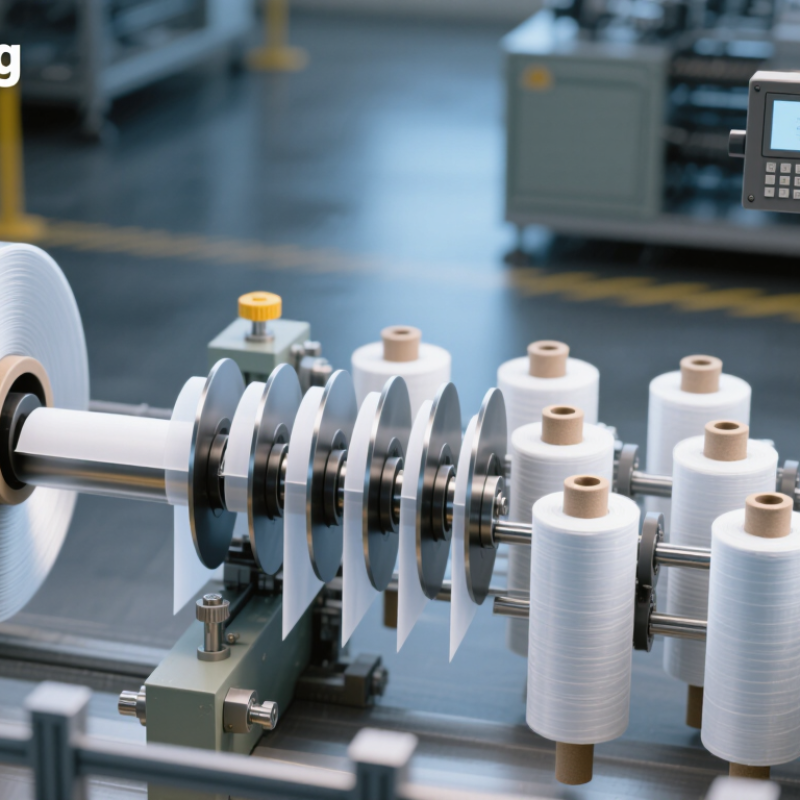
In battery separator production, a diaphragm slitting machine converts a wide parent roll of porous polymer film into narrower rolls for cell assembly. Here, “diaphragm” means the separator, not a machine component. Unwinders feed the film through tension and guiding sections; blades divide it, and rewinders form controlled rolls. The separator’s pores must remain open, and its edges must stay clean. Small details matter. Operators monitor web tracking, roll hardness, blade wear, and dust near the cutting zone. A wandering web can cause uneven widths or telescoped rolls. Excessive tension can stretch delicate film.

This step matters as battery volumes rise. The IEA’s Global EV Outlook 2024 estimated EV battery demand above 750 GWh in 2023. It was about 40% higher than in 2022. SNE Research reported 705.5 GWh of EV battery installations for 2023, using its own market coverage. The figures are not directly interchangeable, but both indicate production pressure. Slitting does not improve separator chemistry; it prepares consistent rolls for downstream stacking or winding. There is no universal setting. Film thickness, coating, blade geometry, and line speed all affect the result. Some edge defects are easy to miss until later inspection.

How Unwinding and Tension Control Handle Typical 5–25 μm Separator Films

What Is a Diaphragm Slitting Machine?
How Unwinding and Tension Control Handle Typical 5–25 μm Separator Films

A diaphragm slitting machine unwinds a wide separator roll, guides the moving web, and cuts it into narrower lanes. With films around 5–25 μm thick, even small changes in web tension can affect tracking and edge quality. Thin film can wrinkle, stretch, or break before a fault is obvious.

The unwind system supplies material at a controlled speed. A brake or servo adjusts the roll, while load cells can measure tension across the web. Operators often use lower tension for thinner films, then fine-tune it during a trial run. Too little tension may leave loose folds; too much can distort the film. It is a narrow window.

Taper tension can reduce stress as the unwind roll gets smaller, but settings alone cannot fix every defect. A poorly wound roll, uneven edges, or a splice may still cause wandering. This is easy to underestimate. Watch the web near the rollers, check slit edges under consistent lighting, and record settings with each material lot. Small adjustments matter, though the “right” value depends on the film and machine setup.

Rotary, Razor, and Shear Slitting: How Each Cutting Method Works

A diaphragm slitting machine cuts wide material into narrower strips using rotating blades. The right cutting method depends on thickness, stiffness, and edge requirements. A cut that looks clean on one material may leave burrs or distortion on another.

Rotary slitting often uses a circular blade pressed against an anvil. The blade rolls through the material, making this approach useful for steady production and consistent strip widths. It can work well with flexible diaphragm stock, but excess pressure may compress or mark soft layers. Check the cut edge under magnification, not just from arm’s length.

Razor slitting uses a fixed blade that slices through a moving web. It has a simple setup and suits thin, flexible materials, though blade wear and web tension can affect edge quality. Shear slitting uses two circular knives with a small overlap, like scissors. It can handle tougher stock and produce a controlled edge, but blade alignment matters greatly. A small adjustment can change the result. Test samples before a long run. I have found that operators sometimes judge only the first strip; later strips can reveal drift, dust, or uneven tension.

Key Process Measures: Slit Width, Line Speed, and Edge Quality

What Is a Diaphragm Slitting Machine?

A diaphragm slitting machine cuts wide rolls of thin material into narrower strips. Slit width, line speed, and edge quality interact, so operators should assess them together. Small errors matter. A strip that measures correctly at the machine may shift during winding if web tension is uneven.

Set the target width from the product specification, then verify it with a calibrated measuring tool. Check samples across the roll, not just at one point. A width variation can signal blade misalignment, web wandering, or tension changes. Line speed should match the material and setup. If speed rises too quickly, the web may flutter, stretch, or develop uneven edges. Faster is not always better.

Inspect cut edges under consistent lighting. Look for tears, roughness, burr-like projections, or waviness, and record where each defect appears. These details can help distinguish blade wear from handling or tension problems. A practical run log should include width readings, speed, tension settings, and inspection results. The exact acceptable limits depend on the material and application; there is no universal setting. Even with careful records, operators may need to adjust the setup after seeing the first samples.

How to Select a Machine by Film Thickness, Roll Width, and Output Rate

What Is a Diaphragm Slitting Machine?

How to Select a Machine by Film Thickness, Roll Width, and Output Rate

A diaphragm slitting machine unwinds a wide film web, cuts it into narrower lanes, and rewinds them into finished rolls. Selection starts with the actual material, not a catalogue speed. Measure film thickness across the roll; ASTM D6988 provides guidance for measuring plastic-film thickness.

A 20-micron film and a 100-micron laminate can behave very differently, even at the same width. Thin film may stretch or wrinkle under excess tension. Stiffer layers may need different blade settings and winding control. Test your own material. Small differences matter.

Next, match maximum web width and finished-roll dimensions to the production plan. A machine that accepts a wide master roll may still struggle with narrow lanes or heavy rewind rolls. Output rate should mean usable production, not just advertised line speed. Include setup changes, trim waste, roll changes, and rejected material in the estimate.

The Flexible Packaging Association’s 2024 State of the U.S. Flexible Packaging Industry report put 2023 sales at $42.9 billion, underscoring the scale of demand for consistent converting. But volume alone is a poor sizing guide. Ask suppliers to run representative film at your target width and roll diameter, then inspect edge quality and winding hardness. Leave room for uncertainty; real production rarely runs perfectly.