Smart Heating Solutions
What Is Pharmaceutical Grade Activated Carbon Used For?
Pharmaceutical Grade Activated Carbon is a highly purified adsorbent designed for controlled pharmaceutical processing. It contains an extensive network of microscopic pores. These pores capture selected organic impurities from liquids, gases, and process streams. The material may support decolorization, taste reduction, purification, and contaminant control. However, it is not a universal filter.
A useful scientific description comes from activated-carbon researcher Harry Marsh and co-author Francisco Rodríguez-Reinoso: “Activated carbons are carbonaceous materials with a high degree of porosity and an extended surface area.” This structure explains their practical value. A dark solution can become visibly clearer after treatment. Yet appearance alone proves very little. Pharmaceutical manufacturers must evaluate ash content, extractables, heavy metals, microbial quality, particle size, and adsorption performance.
In production, Pharmaceutical Grade Activated Carbon may treat active pharmaceutical ingredient solutions, excipients, or process water. Its selection depends on pore distribution, surface chemistry, contact time, temperature, and the target impurity. Operators also need validated procedures for filtration and carbon removal. Poorly selected carbon can adsorb valuable pharmaceutical compounds, reducing yield. That risk deserves attention.
The term “pharmaceutical grade” should never replace evidence. Certificates, supplier audits, batch testing, and documented compliance remain essential. Standards and specifications can differ between applications and regions. This makes professional evaluation necessary. The best choice balances purification strength with product recovery, process control, and patient safety. There is no shortcut here.
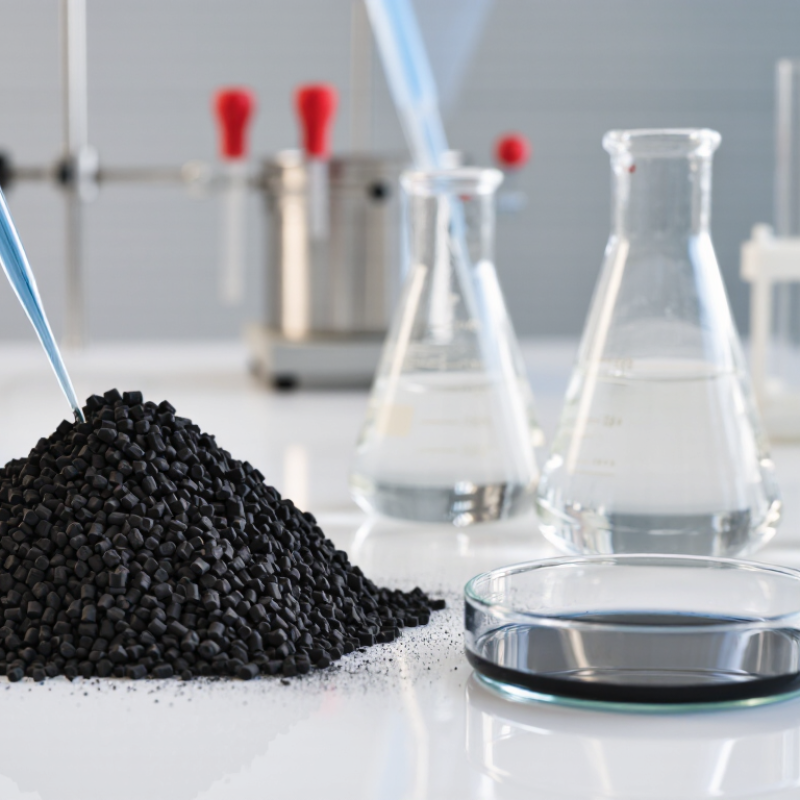
Definition and Key Properties of Pharmaceutical Grade Activated Carbon
What Is Pharmaceutical Grade Activated Carbon Used For?
Definition and Key Properties of Pharmaceutical Grade Activated Carbon
Pharmaceutical-grade activated carbon is a purified, porous adsorbent used in controlled manufacturing processes. Its microscopic pores trap color bodies, organic impurities, odors, and unwanted residues. Manufacturers may use it to clarify liquids, purify process streams, or treat selected pharmaceutical ingredients. It appears as a fine black powder or granule. Handling requires effective dust control.
The key properties are adsorption capacity, pore structure, purity, low ash, controlled moisture, and consistent particle size. ASTM D4607 measures iodine number in milligrams per gram. High-micropore grades often specify approximately 900–1,100 mg/g, according to technical industry data. This number is useful, but it cannot confirm pharmaceutical suitability alone. The USP-NF and European Pharmacopoeia monographs also emphasize identity, purity, and contaminant limits. These checks may include acid-soluble substances, heavy metals, and microbial quality.
In practice, pore size matters more than a single headline value. Micropores capture smaller molecules, while larger pores support transport through the carbon bed. A material with high iodine adsorption may still perform poorly with a larger color compound. That is an important limitation. Batch testing, supplier qualification, and process-specific trials remain necessary. The 2023 technical review literature in Carbon also links activation conditions with surface chemistry and adsorption selectivity. Small changes in heating or washing can alter performance.
What Is Pharmaceutical Grade Activated Carbon Used For? - Definition and Key Properties of Pharmaceutical Grade Activated Carbon
| Category | Definition or Typical Characteristic | Pharmaceutical Significance | Common Application |
|---|---|---|---|
| Material definition | A highly porous form of carbon processed and controlled for use in pharmaceutical, medical, or pharmaceutical-support applications. | Its quality must be suitable for the intended use, with controls for identity, purity, microbial quality, and potentially elemental impurities. | Processing aids, purification steps, oral medicinal products, and pharmaceutical water-treatment systems. |
| Primary function | Adsorption: dissolved molecules attach to the internal surface of the carbon through physical and chemical interactions. | Allows selected impurities, color bodies, odors, and organic contaminants to be removed from liquids or gases. | Decolorization and clarification of process liquids, extracts, and solutions. |
| Specific surface area | Often several hundred to more than 1,000 m²/g, depending on raw material, activation method, and test method. | A larger accessible surface generally provides greater adsorption capacity, although performance also depends on pore structure and the target molecule. | Removal of trace organic substances during pharmaceutical manufacturing and water purification. |
| Pore structure | Contains micropores, mesopores, and sometimes macropores; pore-size distribution varies by grade. | Pore size influences which molecules can enter the carbon and how quickly adsorption occurs. | Selection of a grade for small organic impurities, larger color molecules, or mixed contaminants. |
| Decolorization capacity | Activated carbon can adsorb many colored organic compounds from aqueous and solvent-based process streams. | Supports production of clearer pharmaceutical solutions without chemically changing the active ingredient when properly validated. | Purification of APIs, intermediates, botanical extracts, sugars, and other pharmaceutical ingredients. |
| Organic impurity removal | Adsorbs a broad range of hydrophobic or moderately polar organic compounds, depending on solution conditions. | Can reduce unwanted process impurities, residual color, taste, or odor during a controlled purification step. | Purification of active ingredients, excipients, solvents, and process water. |
| Chemical purity | Quality specifications may address ash, moisture, water-soluble substances, acid-soluble substances, and heavy or elemental impurities. | Limits the risk that the carbon introduces contaminants into a pharmaceutical product or process stream. | Selection and release testing of carbon used as a processing aid or formulation ingredient. |
| Ash content | The inorganic residue remaining after combustion; the acceptable limit depends on the applicable specification and intended use. | Lower and controlled ash helps reduce inorganic residues and possible metal contamination. | Used as a quality-control parameter for pharmaceutical-grade carbon. |
| Moisture content | Carbon may contain adsorbed water; the measured value depends on storage, particle size, and test conditions. | Affects net active content, weighing accuracy, handling, and adsorption performance. | Batch release, formulation calculations, and process-dose control. |
| Microbial quality | May be controlled through microbial limits, bioburden testing, and manufacturing or sterilization practices appropriate to the application. | Important when carbon contacts pharmaceutical preparations, purified water, or other controlled process materials. | Manufacturing-process purification and selected medicinal formulations. |
| Particle size and form | Available as powder, granular material, or other engineered forms; particle size affects contact area, filtration, pressure drop, and dust generation. | The form must match the process equipment and be removable from the treated product when required. | Powdered carbon for batch treatment and granular carbon for fixed-bed water or air systems. |
| Oral medicinal use | Activated charcoal can adsorb certain substances in the gastrointestinal tract because it remains largely unabsorbed. | Used in specific clinical situations under professional guidance; it is not effective for every poison or ingestion. | Selected emergency toxicology applications and some gastrointestinal products. |
| Process filtration | After adsorption, carbon is commonly removed by filtration, centrifugation, or another validated separation method. | Prevents carbon particles from remaining in the final pharmaceutical solution. | Batch purification of liquids and clarification before downstream processing. |
| Compatibility and selectivity | Adsorption is affected by pH, temperature, solvent, contact time, concentration, and the molecular properties of the target substance. | Process studies are needed to avoid unwanted loss of active ingredients, preservatives, or other valuable components. | Grade selection, dosage optimization, validation, and in-process control. |
| Regulatory and specification control | Requirements depend on the pharmacopoeia, jurisdiction, dosage form, and intended use; no single specification applies to every product. | Users should verify applicable monographs, certificates, analytical methods, and supplier qualification requirements. | Raw-material approval, vendor qualification, incoming inspection, and batch release. |
Note: Actual specifications and performance should be confirmed against the applicable pharmacopoeial monograph, regulatory requirements, and validated process conditions. Pharmaceutical grade does not automatically mean sterile, injectable, or suitable for every medicinal application.