Smart Heating Solutions
Top 10 Pop Up Canopy Types Buyers Need to Know?
A Pop Up Canopy can turn an exposed patch of pavement into shade in minutes, but the right model depends on where, how often, and by whom it will be used. The choice is not merely about color or price. A weekend market seller may need quick setup and a compact carry bag; a school team may value a wider footprint and a sturdier frame. Details matter.
The U.S. Bureau of Economic Analysis reported that outdoor recreation contributed about $1.2 trillion to the national economy in 2023, or 2.3 percent of GDP, in its Outdoor Recreation Satellite Account. That broad figure does not measure canopy sales or prove that one design is best. It does show how many activities happen outdoors, where shade, portability, and weather protection can matter. Not always in the same way.
This guide compares ten common canopy types, from lightweight instant shelters to commercial-grade models and specialized options. It considers frame construction, fabric, size, setup effort, portability, and intended use. Buyers should also check the maker’s stated wind and water guidance; product labels can leave important questions unanswered. A low price may look convincing until replacement parts are hard to find. The best choice is the one that fits the actual site, crew, and schedule—not just the product photo. Industry data offers context, but careful specification checks still matter.
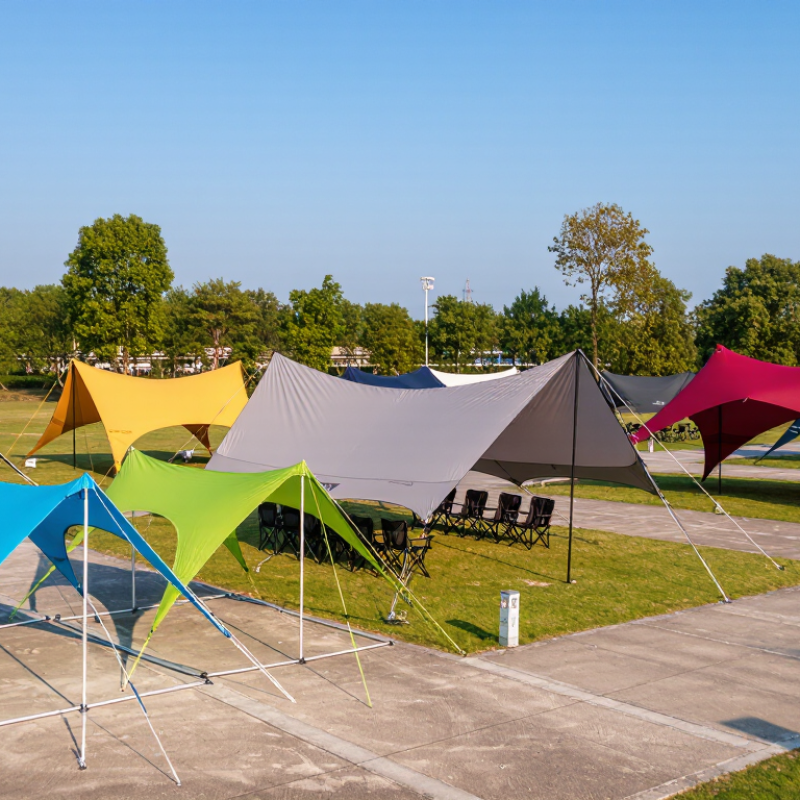
Pop-Up Canopies: Definition, Structure, and Main Components
A pop-up canopy is a portable shelter with a fabric roof and a folding frame. Its frame opens into a freestanding structure, usually without separate roof poles. People use these canopies for markets, outdoor gatherings, and temporary work areas. Setup can be quick. The exact process depends on the frame design and whether two people are available.
Most models use scissor-style trusses that connect the legs and support the roof. Telescoping legs adjust the canopy’s height, while locking pins or sliders hold parts in position. The roof fabric attaches to the frame at several points, often with hook-and-loop straps or pockets. Small parts matter. Loose connectors or fabric tension can affect stability, so check them before use.
Feet spread the load at ground level; some designs also include stakes, ropes, or weights. Sidewalls may reduce sun or light rain exposure, but they can catch wind and increase strain on the frame. A canopy is not a fixed shelter, and setup alone does not guarantee stability. On uneven ground, the legs may sit at different heights, a detail that is easy to miss. Inspect the frame, fasteners, and fabric regularly, and follow the care and anchoring instructions supplied with the canopy.
Top 10 Pop Up Canopy Types Buyers Need to Know? - Pop-Up Canopies: Definition, Structure, and Main Components
A pop-up canopy is a portable shelter with a folding frame and a fabric cover that can generally be set up without assembling each frame section individually. Common components include the frame, canopy top, sliding joints, corner connectors, feet, and securing accessories such as stakes, ropes, or weights. The types below are grouped by shape, frame material, or intended use, so some categories can overlap.
| Canopy Type | Typical Structure | Common Features | Suitable Uses | Buyer Considerations |
|---|---|---|---|---|
| 1. Straight-Leg Canopy | Four mostly vertical legs support a square or rectangular folding frame and fabric top. | Provides a broad, regular covered area; commonly available in several footprint sizes. | Markets, outdoor gatherings, trade events, and general shade. | Check the actual leg-to-leg dimensions, peak height, packed size, and anchoring requirements. |
| 2. Slant-Leg Canopy | Angled legs extend outward from a compact folding frame. | Often lighter and more compact than a comparable straight-leg model, with a smaller footprint under the top. | Casual backyard use, small gatherings, and situations where portability matters. | Compare usable shaded area rather than canopy-top dimensions alone; angled legs can reduce clear space underneath. |
| 3. Commercial-Grade Folding Canopy | A folding scissor-frame design with reinforced joints and frame members intended for frequent setup and use. | May offer replaceable parts, adjustable leg heights, and a heavier-duty frame than basic recreational models. | Regular markets, event work, and repeated outdoor setups. | “Commercial-grade” is not a universal performance standard. Review frame details, fabric specifications, warranty, and replacement-part availability. |
| 4. Steel-Frame Canopy | A folding frame made primarily from steel tubing, connectors, and cross braces. | Steel can provide a sturdy frame at a comparatively accessible price, but it is generally heavier than aluminum. | Occasional use, stationary setups, and buyers prioritizing cost over low carrying weight. | Check the coating and care instructions to help limit corrosion; consider the packed weight and transport distance. |
| 5. Aluminum-Frame Canopy | A folding frame made primarily from aluminum tubing and connectors. | Typically lighter to carry than a similar steel-frame design and naturally resistant to rust. | Frequent transport, mobile vendors, and users who often set up and take down the shelter. | Frame strength depends on design, tubing dimensions, joints, and construction—not material alone. Secure it appropriately outdoors. |
| 6. Hexagonal Canopy | A multi-sided top, commonly supported by a folding frame with several perimeter legs. | Offers a distinctive footprint that can suit circular seating or a central gathering area. | Garden parties, outdoor seating, and recreational shade. | Confirm the footprint, usable interior space, replacement-top availability, and whether the frame folds into a manageable package. |
| 7. Compact or Mini Canopy | A smaller folding frame and canopy top designed for limited coverage and easier transport. | Reduced footprint and packed size; may provide shade for a single station or a small group. | Small patios, compact stalls, and personal outdoor use. | Measure the intended space and check coverage at the height where people will sit or stand. |
| 8. Sidewall-Ready Canopy | A conventional folding canopy frame with attachment points or compatible panels for removable sidewalls. | Sidewalls can add privacy and help block some wind or low-angle sun; configurations may include one or more panels. | Vendor booths, event spaces, and changing weather conditions. | Check panel compatibility and ventilation. Sidewalls can increase wind loading, so use suitable anchoring and follow safety guidance. |
| 9. Gazebo-Style Pop-Up | A folding shelter with a gazebo-like profile, often featuring a decorative peak and a broad fabric roof. | Emphasizes an open, finished appearance while retaining a collapsible frame. | Backyards, garden events, and recreational gatherings. | Designs vary widely. Verify setup steps, packed dimensions, fabric care, and whether side panels are included or optional. |
| 10. Beach or Sand-Use Canopy | A portable shade structure designed for beach conditions; some models use a folding frame, while others use a different lightweight support system. | May include sand-friendly feet, anchors, or a compact carry bag; canopy coverage and support design vary by model. | Beach trips, shoreline picnics, and other sandy settings. | Use anchors suited to sand and local conditions. Check the setup method, shade coverage, and care instructions for salt and sand exposure. |
Safety note: Pop-up canopies are temporary shelters, not permanent structures. Wind and rain can create hazardous loads. Follow the product instructions, secure every leg with suitable stakes or weights, and take the canopy down when conditions exceed its stated limits.