7 Tips for Buying 304 Stainless Steel Strip Coil?
Buying 304 stainless steel strip coil looks straightforward until thickness, edge condition, and surface finish affect production results. A coil may look bright under warehouse lighting yet contain scratches, uneven slitting, or inconsistent hardness. This guide presents seven practical tips for evaluating Ss Strip Coil 304 Stainless Steel Coil before placing an order.
The discussion focuses on details experienced buyers verify, including chemical composition, mechanical properties, dimensional tolerance, coil weight, and packaging quality. Request mill test certificates, inspection records, and clear information about ASTM or EN compliance. Supplier experience matters, but documentation should support every important claim. Ask how the material was annealed, slit, stored, and protected during shipment. Small details matter.
A reliable supplier should explain whether the strip suits stamping, bending, welding, or general fabrication. Sample testing can reveal burrs, edge cracks, surface marks, and unexpected springback before a large purchase. No buying checklist is flawless. Even experienced purchasers can overlook a tolerance issue when delivery pressure rises. That weakness deserves attention. Compare at least two quotations, but never judge only by price. A cheaper coil may create more scrap, tooling adjustments, or production delays. Clear specifications prevent confusion between 304, 304L, and other stainless grades. The following tips help buyers ask better questions, examine evidence, and choose material with greater confidence. They also encourage a practical review of risks before money and production time are committed.
Define the Grade, Temper, and Dimensions You Need
7 Tips for Buying 304 Stainless Steel Strip Coil?
Define the Grade, Temper, and Dimensions You Need
A purchase order stating “304 stainless steel strip” is incomplete. Specify the applicable standard, such as ASTM A240 or ASTM A666, and confirm whether 304L is acceptable. Standard 304 typically contains about 18% chromium and 8% nickel, but chemistry ranges vary by specification. World Stainless reported global stainless steel production of approximately 58.4 million tonnes in 2023. Large production does not remove the need for traceable mill certificates.
Temper describes the material’s mechanical condition after rolling. Annealed strip is softer and easier to form, while quarter-hard, half-hard, or full-hard material offers higher strength but less flexibility. Ask for tensile strength, yield strength, elongation, and hardness values. In practical inspections, a caliper, hardness check, and positive material identification test can expose mismatches. Color alone is not proof.
Dimensions need equal precision. State thickness, width, coil inner diameter, outer diameter, maximum coil weight, edge condition, and thickness tolerances. A 0.05-millimeter thickness error can affect stamping force and final fit. The International Organization for Standardization’s ISO 9445 series addresses cold-rolled stainless strip tolerances, but buyers should confirm the exact edition and tolerance class. I have seen specifications fail because “standard width” was assumed. It is not. Surface finish, burr limits, and packaging direction also deserve written approval before production.
Verify Surface Finish, Edge Condition, and Coil Quality
When buying 304 stainless steel strip coil, inspect the surface under steady, white lighting. A polished appearance can hide shallow pits or fine roll marks. Check for scratches, stains, dents, and uneven color across several points on the coil. Confirm the requested finish, such as 2B, BA, or No. 4, against the purchase specification. Finish names alone may not describe the buyer’s actual expectations.
The edge condition deserves equal attention. Slit edges should feel clean and uniform, without sharp burrs, tearing, or heavy rollover. Measure the strip width at different positions, since a small variation can affect stamping or forming. Ask for thickness tolerances, edge type, and camber limits in writing. A neat edge is helpful, but it does not prove consistent material quality.
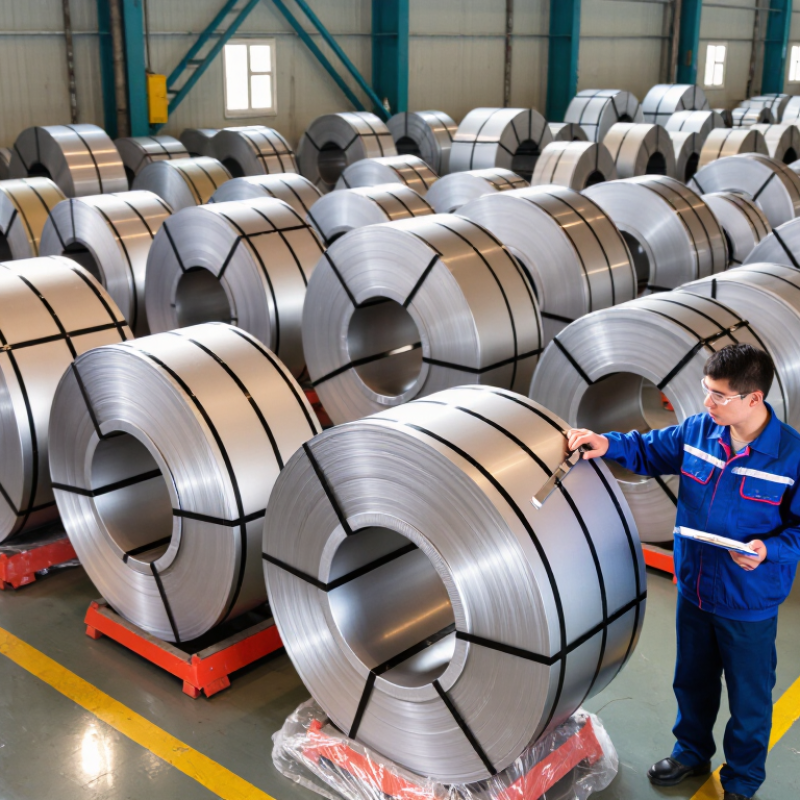
Examine the coil itself before accepting it. Look for telescoping layers, loose winding, crushed turns, broken edges, and signs of moisture under the packaging. Check the inner diameter, outer diameter, coil weight, and any welded joints. Request a material certificate showing the 304 grade, chemical composition, mechanical properties, and heat or lot number. Traceability matters.
Do not rely only on photographs. They often miss subtle defects. An inspection sample can also be misleading if it comes from the best section. I would check the outer, middle, and inner layers whenever possible. This takes extra time, but it may reveal inconsistent tension or surface damage that appears later during production.
7 Tips for Buying 304 Stainless Steel Strip Coil
Verify the surface finish, edge condition, and coil quality before placing an order. The chart shows typical arithmetic average roughness (Ra) ranges for common stainless steel finishes; final acceptance should follow the agreed specification and inspection method.
Buying checklist: Confirm the 304 grade and material certificate, match the finish to the required Ra range, inspect edges for burrs and cracks, check strip width and thickness, verify coil winding and telescoping, review surface defects under suitable lighting, and request traceable inspection records.
Check Supplier Certifications, Testing, and Traceability
Buying 304 stainless steel strip coil requires more than checking price and thickness. Supplier documentation can reveal how seriously a mill controls quality. Tip 1: Request a current ISO 9001 certificate and confirm its scope. Tip 2: Check that the certificate covers the actual manufacturing site. A valid-looking document may not cover your material.
Tip 3: Ask for a material test report for each heat number. It should show chemical composition, mechanical properties, dimensions, and applicable standards. Tip 4: Confirm testing methods and equipment calibration records. PMI testing can help verify chromium and nickel content, while hardness and tensile tests support mechanical claims. Do not accept vague statements like “fully tested.” Details matter.
Tip 5: Require clear heat-number marking on every coil or label. Tip 6: Check whether the supplier can trace the coil back to production records, inspection results, and raw materials. Tip 7: Request sample reports before placing a large order. Compare them with your required grade, finish, width, and tolerance. In purchasing work, a missing heat number has caused avoidable delays. I once focused too heavily on surface appearance. That was a mistake. Bright material can still have incomplete records. Keep certificates, photographs, packing lists, and inspection results together. Traceability is less visible than shine, but it protects decisions when questions appear later.