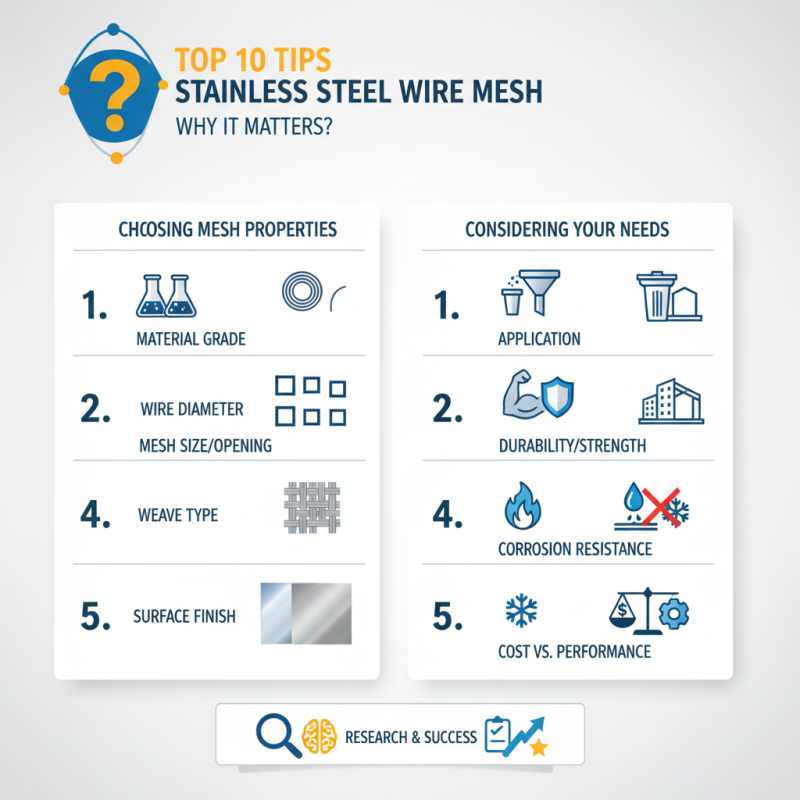
Top 10 Tips for Choosing Stainless Steel Wire Mesh Why Does It Matter?
Choosing the right stainless steel wire mesh can be challenging. With many options available, it’s easy to feel overwhelmed. The right choice matters. It impacts durability, performance, and cost.
Consider the mesh's properties. Not all stainless steel wire meshes are created equal. Some are better suited for specific applications than others. For instance, a finer mesh can filter smaller particles, while a coarser mesh offers sturdier support.
Think about your needs. Will you use it for filtration or construction? Understanding the purpose will guide your decision. Mistakes can be costly. Research is essential to avoid buying the wrong type. Explore different grades and sizes. When you find the perfect stainless steel wire mesh, you enhance your project’s success.
Understanding the Importance of Stainless Steel Wire Mesh Selection
Choosing the right stainless steel wire mesh is crucial for various applications. This material offers durability and resistance to corrosion. However, not all wire mesh options are created equal. Different grades and specifications can serve distinct purposes. Understanding these differences is essential for optimal performance.
When selecting stainless steel wire mesh, consider the environment. Will it face moisture, chemicals, or extreme temperatures? Each factor influences the choice of wire gauge and mesh size. For example, a finer mesh may offer greater filtration but less strength. Balancing these factors can be challenging, and failing to do so might lead to added costs or poor functionality. It’s about striking the right balance.
Don't overlook the importance of customization. Some applications may require specific dimensions or weave patterns. Often, there’s a tendency to go for standard options, but this could lead to inefficiencies. Reflect on your project's unique needs. Small differences can make a big impact on the overall success of your project. Take the time to evaluate these elements thoroughly.
Top 10 Tips for Choosing Stainless Steel Wire Mesh
Identifying Your Specific Applications for Wire Mesh Usage
Choosing the right stainless steel wire mesh requires understanding your specific applications. Different industries have unique needs. For instance, in food processing, hygiene is key. The mesh must resist corrosion and not affect food safety. A 2021 report indicated that 38% of food safety issues trace back to improper materials. This highlights the importance of selecting the right type of wire mesh.
When identifying your applications, consider the environment of use. Outdoor applications require durable options. Industrial settings may expose the mesh to harsh chemicals. Therefore, according to industry insights, selecting a mesh with the appropriate gauge is essential. A finer gauge can trap smaller particles, while a coarser gauge allows for better airflow.
Tip: Always check the compatibility of the wire mesh with your conditions. Ensure it meets industry standards. Some applications may require specific certifications for safety and quality assurance. Reflect on these aspects continuously. They can save time and resources in the long run. Remember, the right choice can significantly impact performance and efficiency in your projects.
Key Factors to Consider When Choosing Stainless Steel Grades
Choosing the right stainless steel wire mesh can be challenging. Stainless steel grades play a crucial role in its performance. Factors such as corrosion resistance, tensile strength, and application dictate the choice. For instance, 304 and 316 grades are popular due to their durability and resistance to high heat. If you need mesh for outdoor use, opt for 316. It's better against saltwater corrosion.
When selecting mesh, consider the wire diameter and opening size. These dimensions affect strength and airflow. A thicker wire offers more support but may decrease flexibility. For applications requiring intricate designs, thinner wires are essential. Just remember, sometimes less is more. A balance between strength and flexibility can enhance usability.
Always assess the mesh's intended environment. Indoor uses generally require less corrosion resistance. However, outdoor or marine environments demand tougher protection. Additionally, ensure quality standards. Not all stainless steel is created equal, and cheaper options often compromise longevity. Reflecting on these factors will lead you to better choices. Choosing the right grade is an investment in performance and durability.
Top 10 Tips for Choosing Stainless Steel Wire Mesh
| Tip Number | Key Factor | Description | Stainless Steel Grade |
| 1 | Corrosion Resistance | Choose a grade with high chromium content for better protection against rust. | 304 |
| 2 | Strength | Consider grades that offer high tensile strength for heavy-duty applications. | 316 |
| 3 | Weldability | Select a grade that is easy to weld if fabrication is required. | 304L |
| 4 | Temperature Resistance | Choose materials that can withstand high temperatures for certain applications. | 310 |
| 5 | Magnetic Properties | Consider austenitic vs. ferritic types based on magnetic requirements. | 430 |
| 6 | Cost | Evaluate the cost-effectiveness of different grades for your budget. | 201 |
| 7 | Finish | Choose the appropriate surface finish based on aesthetic and functional needs. | Brushed vs. Polished |
| 8 | Tensile Strength | Ensure the grade meets the required tensile strength for your application. | 410 |
| 9 | Impact Resistance | Select a grade that can withstand impact and shock loading. | 321 |
| 10 | Finish Requirements | Consider whether additional coatings or finishes are needed for performance. | Treated Grades |
Assessing Wire Diameter and Mesh Opening for Optimal Performance
When selecting stainless steel wire mesh, assessing wire diameter and mesh opening is crucial for optimal performance. Wire diameter affects strength and durability. Thicker wires can withstand heavier loads, but they may limit flexibility. A balance must be struck between strength and adaptability. Choosing the right wire diameter enhances longevity and functionality in various applications.
Mesh opening is equally important. Smaller openings provide better filtration, while larger openings allow for airflow and visibility. Evaluate the specific needs of your project. For example, if you require security, smaller openings are essential. Conversely, for ventilation, larger openings are preferable. Always consider your project's demands before making a choice.
Tip: Ensure that your selected mesh can handle the environmental conditions it will face. Corrosion resistance is vital for outdoor use. A poor choice can lead to premature failure or maintenance issues. Pay attention to these details for a successful long-term solution. Consider making adjustments after initial setups if performance does not meet expectations. Testing different combinations can lead to better results.
Evaluating Manufacturer Quality and Certifications for Reliability
When choosing stainless steel wire mesh, evaluating manufacturer quality is crucial. The mesh's performance greatly depends on the reliability of the manufacturer. Certifications like ISO or ASTM can indicate adherence to industry standards. Yet, not all manufacturers display these certifications prominently. It might require research to verify them.
Consider the material selection. High-quality stainless steel should resist rust and corrosion. Inspect the manufacturer's methods of sourcing materials. Some might cut corners to save costs, resulting in subpar products. Always ask for certifications that ensure the raw materials meet the required standards.
Look for testimonials or reviews from other customers. Their experiences can provide insights about the manufacturer’s reliability. Transparency is key; a reputable manufacturer should be willing to share their quality control procedures. This can help you feel more confident in your final decision. Remember, cutting costs on quality can lead to bigger issues down the line. Making a thoughtful choice here can prevent future headaches.