Smart Heating Solutions

What Are the Top 10 Types of Linked Smoke Detectors?

Linked Smoke Detectors are becoming a practical part of modern fire protection, especially in multi-room homes, apartments, and small commercial spaces. Unlike isolated alarms, they communicate when one unit senses smoke, creating a wider warning network. A bedroom unit can trigger every alarm, including the one near a distant stairway.

The National Fire Protection Association reports that smoke alarms were present in 74% of reported U.S. home fires from 2018 to 2022. However, only 51% operated as intended. The U.S. Fire Administration also states that three out of five home fire deaths occurred where alarms were missing or nonfunctional. These findings show why detector selection involves more than sound volume. Power supply, sensing technology, communication method, maintenance, and placement all matter.

This guide examines the top 10 types of Linked Smoke Detectors, including ionization, photoelectric, dual-sensor, heat-sensing, carbon monoxide combination, wired, wireless, addressable, smart, and specialized models. The categories are not perfectly separate. Some products combine several technologies in one housing. That can confuse buyers.

Standards provide a stronger reference point. NFPA 72 offers guidance on fire alarm installation and testing, while UL 217 covers residential smoke alarm performance in the United States. EN 14604 applies to many residential smoke alarms in Europe. Still, certification does not replace correct installation. A detector buried under dust or mounted too close to cooking fumes may respond poorly.

Real-world experience matters here. Test buttons, low-battery alerts, sealed batteries, and network range affect daily reliability. Technology helps, but habits remain decisive. This overview compares each type clearly, while acknowledging one uncomfortable truth: the best alarm is useless when nobody maintains it.
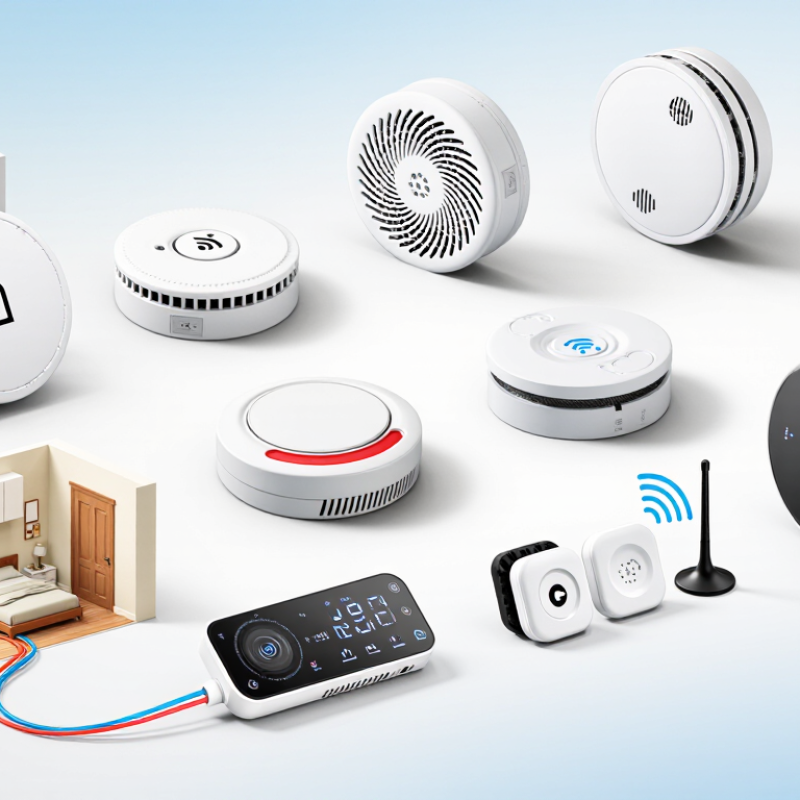
What Are the Top 10 Types of Linked Smoke Detectors?

How Linked Smoke Detectors Work and Why Interconnection Matters

Linked smoke detectors communicate through hardwired connections or wireless radio signals. When one unit senses smoke, it signals every connected detector. Alarms then sound across bedrooms, hallways, and living areas. This matters when fire begins behind a closed door. A sleeping person may hear a distant alarm too late. Interconnection reduces that delay.

The ten common categories include photoelectric, ionization, dual-sensor, heat, smoke-and-carbon-monoxide combination, hardwired, wireless, battery-powered, addressable, and voice or strobe models. These categories overlap. A photoelectric detector can also be wireless and battery-powered. That detail is often missed. NFPA’s Smoke Alarms in U.S. Home Fires report found smoke alarms were present in 74% of reported home fires from 2017 to 2021. Working alarms reduced the risk of death by about 60%. Interconnection can strengthen this protection, but only when every unit remains powered and maintained.

Installation quality still decides performance. Technicians should place detectors outside sleeping rooms and on each floor, following local requirements. Wireless links need signal testing after installation. Hardwired systems need backup batteries. Monthly testing is practical, not optional. Dust, paint, and low batteries can weaken protection. The U.S. Fire Administration recommends interconnected alarms where possible. Yet “linked” does not mean fail-proof. One poorly placed detector can still create a blind spot. Reflective inspection matters. A quiet test button is not evidence of complete coverage.

The Top 10 Types of Linked Smoke Detectors by Sensing Technology

What Are the Top 10 Types of Linked Smoke Detectors?

Linked smoke detectors can share alarms through wired or wireless connections, but their sensing methods differ. The main ten types include photoelectric, ionization, dual-sensor, multi-criteria, laser-scattering, aspirating air-sampling, projected-beam, cloud-chamber, video-based, and heat-compensated optical detectors. Photoelectric models use a light beam inside a chamber. Smoke scatters that light and triggers an alarm. Ionization models react quickly to tiny particles from fast-flaming fires. Dual-sensor units combine both responses. Multi-criteria detectors may also measure heat or carbon monoxide levels. They can reduce nuisance alarms, although no sensor is perfect.

Laser-scattering detectors identify very small particles with greater precision. Aspirating systems pull air through narrow pipes from several locations. Projected-beam detectors monitor smoke across large, open spaces. Cloud-chamber designs enlarge particles before detection, supporting sensitive measurements. Video-based systems analyze changing images, while heat-compensated optical units adjust their response as temperature rises. In field checks, placement often matters as much as sensing technology. A detector near a cooking area may need careful positioning. A high ceiling may require specialized coverage.

Tips: Match the sensor to the room, ceiling height, and likely fire behavior. Test every linked unit after installation. Check communication between distant rooms. Clean optical chambers regularly. Replace damaged or aging devices. I have found that mixed technologies can improve coverage, but they also complicate maintenance. Keep the system understandable. That matters.

What Are the Top 10 Types of Linked Smoke Detectors? - The Top 10 Types of Linked Smoke Detectors by Sensing Technology
Rank Detector Type Primary Sensing Technology How It Detects Smoke or Fire Typical Strengths Common Limitations Typical Linked-System Use
1 Photoelectric Point Smoke Detector Optical light-scattering technology using an LED and photodetector Smoke particles enter a sensing chamber and scatter light toward a photodetector. Strong response to smoldering fires; no radioactive source; widely used in homes and commercial buildings. Can be affected by dust, insects, steam, and condensation if poorly installed or maintained. Wireless or hardwired interconnected residential alarms and addressable commercial systems.
2 Ionization Smoke Detector Ionization chamber using a small radioactive source Smoke disrupts the electrical current between charged plates in the sensing chamber. Historically recognized for rapid response to some fast-flaming fires; compact sensing chamber. More susceptible to nuisance alarms from cooking; performance can vary with fire type and airflow; requires regulated disposal. Interconnected residential alarm networks where ionization sensing is permitted by local requirements.
3 Dual-Sensor Smoke Detector Combined photoelectric and ionization sensing Uses both optical scattering and ionization-current changes to identify smoke conditions. Offers broader fire coverage than either sensing method alone when properly designed and tested. May produce more nuisance alarms than a carefully selected photoelectric-only device; requires more complex electronics. Interconnected residential and light-commercial alarm systems requiring two smoke-sensing methods.
4 Dual-Wavelength Optical Smoke Detector Two optical wavelengths, commonly using different LED colors or infrared bands Compares the way smoke particles scatter different wavelengths of light. Can improve discrimination between smoke, dust, steam, and other airborne particles compared with basic optical sensing. Performance depends on algorithms, chamber design, calibration, and environmental conditions. Linked addressable systems in environments where nuisance-alarm reduction is important.
5 Heat-Assisted Photoelectric Smoke Detector Optical smoke sensing combined with a thermistor or other heat sensor Evaluates smoke concentration together with temperature or rate-of-rise information. Can help distinguish real fire conditions from transient airborne contaminants; useful in varied environments. Heat input may slow alarm operation for fires that produce smoke without a rapid temperature increase. Interconnected commercial systems and selected residential applications with environmental compensation.
6 CO-Assisted Photoelectric Smoke Detector Optical smoke sensing combined with an electrochemical carbon-monoxide sensor Combines smoke-particle information with carbon-monoxide concentration and alarm algorithms. Provides additional fire signatures and can improve nuisance-alarm management in some applications. CO sensing does not replace smoke sensing; sensors have service-life, calibration, and placement requirements. Linked residential or commercial alarms where smoke and carbon-monoxide monitoring are both required.
7 Multisensor Smoke, Heat, and CO Detector Optical smoke, temperature, and electrochemical CO sensing with algorithmic correlation Analyzes multiple fire indicators before issuing a linked alarm or supervisory signal. Can provide improved event classification and broader protection than a single-sensor detector. Higher cost and complexity; correct configuration, testing, and maintenance are essential. Addressable, networked commercial systems and advanced residential protection.
8 Aspirating Smoke Detector Active air sampling with a fan, pipe network, and optical smoke sensor Continuously draws air through sampling pipes and analyzes it for very low smoke concentrations. Very high sensitivity; suitable for large, high-value, concealed, or difficult-to-access spaces. Requires engineered pipe design, airflow monitoring, filtration, commissioning, and regular maintenance. Addressable fire-alarm networks in data centers, warehouses, clean areas, and high-ceiling spaces.
9 Projected-Beam Smoke Detector Infrared light-beam attenuation between a transmitter and receiver or reflector Smoke crossing the beam reduces received light intensity and triggers an alarm when a threshold is reached. Efficient coverage of large open areas with fewer detection points than spot detectors. Alignment, building movement, dust, fog, strong light, and obstructions can affect operation. Linked conventional or addressable systems in warehouses, atriums, sports halls, and other open spaces.
10 Video-Based Smoke Detection Digital camera imaging with software-based smoke and flame analysis Analyzes visible smoke movement, plume patterns, or flames within a camera’s field of view. Can monitor large or irregular areas and provide visual verification alongside alarm signaling. Performance depends on lighting, camera placement, visibility, network reliability, and analytics settings. Integrated fire-detection networks for large industrial, transport, infrastructure, and high-ceiling areas.
Note: “Linked” refers to detectors or alarm devices connected through wired, wireless, or addressable fire-alarm networks. Compatibility, installation requirements, and permitted detector technologies depend on local fire codes and the system design.

Key Differences in Power Sources, Communication Methods, and Design

What Are the Top 10 Types of Linked Smoke Detectors?

Linked smoke detectors differ mainly in power sources, communication methods, and physical design. Ten common types include hardwired photoelectric, hardwired ionization, dual-sensor, battery-powered radio-frequency, Wi-Fi, low-voltage wired, wireless mesh, voice-alert, smoke-and-heat combination, and visual-strobe models. Each detector can signal nearby units when one senses smoke.

Power choices affect maintenance. Hardwired models usually use household electricity with backup batteries. Battery-only units install easily, but their batteries need regular testing and replacement. Low-voltage systems suit monitored buildings and may connect to centralized control equipment. Wi-Fi models can send mobile alerts, yet they depend on a working network. That dependence is easy to overlook. Radio-frequency and mesh models communicate locally, so they may remain useful during an internet outage.

Design also changes performance. Photoelectric sensors often respond well to slow, smoky fires, while ionization sensors can react quickly to fast flames. Dual-sensor designs combine both detection methods. Voice alerts can identify the room, helping occupants act under stress. Visual-strobe models support people who may not hear an alarm. Combination units add heat sensing for kitchens or garages, but placement still matters. Avoid installing ordinary smoke detectors beside showers or cooking surfaces. Real homes are messier than specifications. I would test every linked unit after installation and review the alarm pattern with everyone living there.

How to Choose the Right Linked Smoke Detector for Each Property

Choosing among the top ten types of linked smoke detectors starts with the property, not the product. Photoelectric units suit bedrooms and living rooms because they respond well to smoldering fires. Ionization units may react faster to flaming fires, while dual-sensor models cover both patterns. Heat detectors belong in kitchens, dusty workshops, and garages where smoke alarms may trigger falsely. Combination smoke and carbon monoxide alarms add protection near sleeping areas. Hardwired linked alarms work well in new construction, while wireless linked models reduce wall damage during renovation. Sealed-battery, smart, strobe, and tamper-resistant models serve specific household needs.

For a small apartment, choose interconnected photoelectric alarms with sealed batteries and clear low-battery warnings. A multi-story house needs alarms inside bedrooms, outside sleeping areas, and on every level. Wireless linking can simplify installation, but thick walls and metal structures may weaken communication. Test every unit after installation. Do not assume one successful test proves the whole network works.

A rental property needs simple controls, visible status lights, and tamper-resistant mounting. In a kitchen, place the alarm away from cooking fumes, then consider a heat detector nearby. For older residents or people with hearing loss, add a model with a strong visual or bed-shaking alert. Large homes may benefit from smart notifications, but internet dependence creates another failure point. Keep local alarms functional. Follow the manufacturer’s spacing guidance and local fire-safety requirements, because room layout can make a standard placement unsuitable.

Installation, Testing, Maintenance, and Safety Considerations

What Are the Top 10 Types of Linked Smoke Detectors?

Linked smoke detectors may use photoelectric, ionization, dual-sensor, heat, carbon monoxide combination, voice-alert, strobe, wired, wireless, or smart networked designs. Each type suits different spaces and risks. Photoelectric models respond well to slow, smoky fires, while ionization units can react quickly to flaming fires. Heat detectors belong in dusty kitchens or garages where smoke alarms may trigger falsely. A qualified installer should check local requirements, ceiling height, airflow, and escape routes before choosing a system.

Install detectors on the ceiling or high on a wall, away from vents, fans, windows, and cooking appliances. Interconnected units should activate together when one senses danger.

Wired systems need secure connections and suitable backup power. Wireless systems require reliable signal paths and fresh batteries.

Test every linked detector after installation. Press the test button and confirm that all units sound clearly throughout the home.

Testing should happen monthly, not only after installation. Replace batteries when the low-power warning begins, and replace the detector according to its service life. Vacuum dust from openings gently; never paint over the sensor. Keep a written maintenance date near the electrical panel.

I have seen people test one alarm and assume the network works. That assumption is unsafe. A better check involves two people, one near the initiating unit and another in the farthest room. During every test, verify that strobes, voice alerts, and backup power operate properly. Small oversights matter.