What Are the Top Double Aluminium Door Types in 2026?
Choosing double aluminium doors is not just a style decision. The right system must suit the opening, traffic, weather exposure, and available space. A pair of hinged French doors can create a broad, familiar entrance. Bifold leaves fold aside, while sliding panels save room near furniture or walkways. Pivot designs offer a striking look, but their hardware and clearances need careful planning.
Dieter Rams, a renowned product-design authority, wrote, “Good design is as little design as possible.” He was not commenting specifically on doors; his principle is still useful here. A slim frame may look elegant, yet performance depends on details behind the finish. Check the glazing specification, thermal break, locking points, seals, and installation method. Ask how the door is tested, and compare the stated performance figures for the complete assembly, not just its glass.
This guide explores the leading Aluminium Doors Double types for 2026, including French, bifold, sliding, and pivot configurations. It considers where each design works well, what trade-offs deserve attention, and which questions to ask before ordering. Small details matter. A threshold that looks neat in a showroom may feel awkward with a step outside or frequent foot traffic. Product ranges also vary, so no single type suits every home. The comparison is a starting point, not a substitute for checking site measurements and technical documents.
How Double Aluminium Doors Are Classified by Opening Style
Double aluminium doors are classified mainly by how their leaves move, not just by frame shape. Hinged pairs are the familiar choice: one or both leaves swing from side-mounted hinges. They suit entrances with clear floor space and can provide a broad opening. Check the swing direction against nearby furniture, paths, and wind exposure. Small details matter.
Sliding pairs travel along tracks, so they avoid taking up swing space. They work well beside patios or narrow rooms, though the opening may be narrower than the full frame because one panel overlaps another. Keep the track clear of grit and leaves. A neglected track can make daily use frustrating.
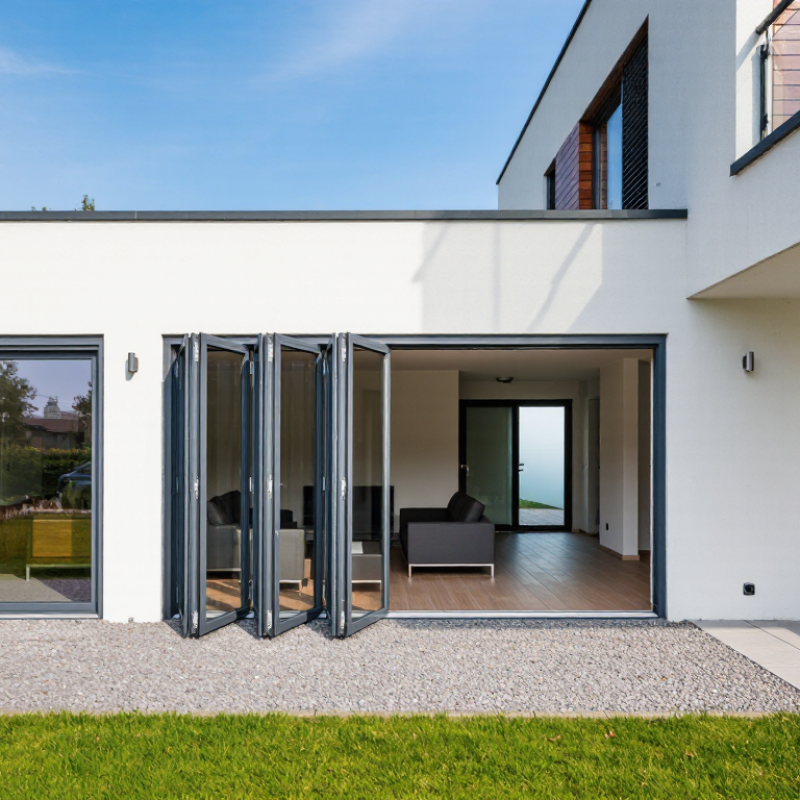
Folding doors connect several leaves that stack to one side or both sides. They can open a wide span, but need room for the folded panels and careful adjustment. Some designs combine a fixed leaf with a moving one, offering a simpler everyday entrance. Pivot-style pairs are less common; each leaf turns around a central pivot rather than a side hinge. That distinction is easy to miss. In practice, the best opening style depends on available clearance, traffic, and how often the full opening is needed. No layout wins everywhere, and measuring the finished opening—not only the rough opening—helps avoid a costly mismatch.
Top Double Aluminium Door Types in 2026: Opening Styles
The chart compares illustrative configurations, not market statistics: a hinged pair has two leaves, a two-panel slider has two panels, a four-panel bi-fold has four folding panels, and a pivot pair has two leaves. Actual layouts vary by manufacturer and project; sliding systems may include fixed panels, while bi-fold systems can have different panel counts.
French Double Doors: A Classic Hinged Design
French double doors remain a popular choice for homeowners who want a broad opening and a traditional look. Two hinged panels meet at the center, creating a balanced entrance that can connect a living room with a patio or garden. Glazed panels bring daylight inside, while divided panes can add character without making the doors feel overly ornate.
They need room to swing. That detail matters. Before choosing a configuration, check furniture placement, nearby walls, and the direction of the prevailing weather. In a real installation, a small clearance error can make a door scrape the floor or fail to close smoothly. A square, well-supported frame and properly adjusted hinges help the panels stay aligned over time. Quality weather seals and suitable glazing also support comfort, though performance depends on the whole assembly—not glass alone.
French doors can be made from aluminium with slim frames and durable finishes, but their generous glass area deserves careful consideration. Think about privacy, glare, and how the room heats up in direct sun. Security hardware and a stable central meeting point are worth discussing with a qualified installer. The classic appearance is appealing; the practical fit still needs an honest check.
Sliding and Bifold Double Doors: Space-Saving Options
What Are the Top Double Aluminium Door Types in 2026?
Sliding and Bifold Double Doors: Space-Saving Options
Sliding double aluminium doors suit rooms where floor space is tight. Their panels glide along a track instead of swinging into the room, leaving space for a dining chair or plant stand. Wide glass panels can bring daylight into a kitchen or patio area. Check the track and drainage details, though: grit can collect there, and poor upkeep may make the doors harder to move. Slim frames look appealing, but the finished opening also depends on the frame and glazing.
Bifold double doors fold and stack to one side, creating a broader opening than most sliding designs. They work well for connecting a living room with a garden or balcony. The trade-off is practical: folded panels still take up space at the opening, and the threshold needs careful planning. A narrow hallway or nearby furniture can make the stack awkward. More open does not always mean more convenient.
Tips: Measure the clear opening, not just the wall width. Check where the panels will stack and whether furniture blocks them. Ask how the track handles water and debris, and compare the threshold height before choosing. Measure twice. I would not assume the largest glass area is best; daily access and cleaning matter too.
Pivot and Folding Doors: Modern Alternatives
Pivot doors bring a sculptural feel to double aluminium entrances. Instead of hanging from side hinges, each leaf turns on pivot hardware near its top and bottom. The offset axis can create a broad, inviting opening. It also needs careful planning: the frame and supporting structure must handle the door’s weight, and the swing path must stay clear of nearby walls and furniture. It looks simple. The details are not.
Folding doors offer a different kind of flexibility. Multiple panels slide along a track and fold to one side, opening much of the doorway for patios or garden access. At home, the movement is satisfying to watch. In practice, track alignment, panel weight, and threshold design affect how smoothly the system operates. Dust or debris in a floor track can become an everyday annoyance, so maintenance access matters.
For either style, compare the clear opening, weather seals, glazing, and locking arrangement—not just the appearance. A pivot door may suit a spacious entry where a strong visual statement matters; folding panels may work better when a wide opening is the priority. Neither is automatically superior. Measure the actual opening, consider local wind exposure, and ask an installer how the hardware can be adjusted or serviced. One overlooked detail can change the experience.
How to Compare Double Aluminium Door Types in 2026
Comparing double aluminium doors in 2026 starts with how you use the opening. French doors swing inward or outward, giving a broad, traditional entrance, but need clear floor space. Sliding doors save room and suit patios, though one panel usually remains fixed. Bifold doors stack aside for a wider opening, but their tracks and hinges need careful maintenance. There is no universal winner.
Check performance, not just appearance. Compare whole-door U-factor, solar heat gain coefficient, air leakage, and water-resistance ratings; ask for tested figures rather than estimates. Thermal-break aluminium frames can reduce heat transfer, while low-emissivity glazing may help manage solar gain. The U.S. Department of Energy estimates that windows account for 25–30% of residential heating and cooling energy use. That figure is not specific to doors, but it shows why glazing and sealing deserve attention. A lower U-factor generally indicates better insulation; climate and orientation still matter. Measure twice.
Tip: Before choosing, mark the opening’s usable width, nearby furniture, and threshold height. Ask how drainage, locking points, and seals are tested. A tiny showroom sample can hide frame bulk, so inspect a full-size display if possible. I would reconsider any comparison that ranks doors by price alone; installation quality can change the result.