Smart Heating Solutions

Who Are the Top Live Translation Earbuds Suppliers in China?

Live Translation Earbuds promise a simple thing: two people speak naturally, and each hears the other in a familiar language. In practice, that depends on more than a translation app. Microphone placement, background-noise handling, connection stability, battery life, and conversational delay all shape the experience. A quiet showroom demo can sound impressive. A crowded café is a tougher test.

Umberto Eco, the Italian semiotician and author, famously wrote, “Translation is the art of failure.” His observation is a useful reminder: meaning does not always survive word-for-word conversion. For buyers comparing Chinese suppliers, the key questions are practical. Which languages have been tested by native speakers? Can both people take turns without tapping through several screens? What happens when a phrase is unclear? Small details matter. So does honest disclosure about limitations.

This guide looks at how to assess suppliers, not simply how to rank polished product pages. It considers manufacturing experience, customization options, software support, quality checks, and evidence behind performance claims. Ask for a live demonstration with ordinary speech, accents, and some background noise. Request sample units and test them over repeated conversations. The numbers can look neat. Real conversations are messier. And no demo tells everything. A careful shortlist should weigh documented capabilities alongside hands-on results—and leave room for uncertainty where evidence is thin.
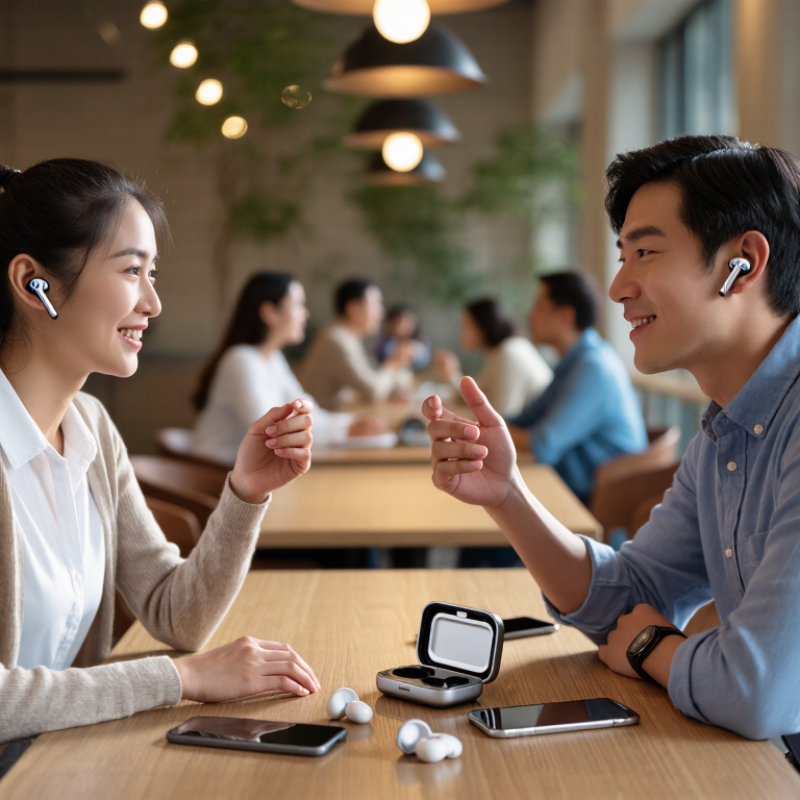
Who Are the Top Live Translation Earbuds Suppliers in China?

What Live Translation Earbuds Are and How They Work

Live translation earbuds combine microphones, speech recognition, machine translation, and spoken playback. A microphone captures a speaker’s voice, while software turns the sound into text and translates it. The translated words are then read aloud through the earbuds or a connected phone. Some models process speech on the device; others rely on a phone or internet connection. That difference affects privacy, offline use, and response time.

Not magic.

In a two-way conversation, each person may wear an earbud, or one person may use the phone’s speaker and screen. A café offers a useful real-world test: clattering cups and nearby voices can confuse microphones. Translation may also lag, so a short pause between speakers helps. Accents, fast speech, and uncommon phrases can produce awkward results. A practical evaluation should check language coverage, audio clarity, connection stability, and performance without internet access.

Small pauses matter.

Even with good hardware, a mistranslated detail can change the meaning, so important information deserves confirmation.

Key Features That Distinguish Chinese Live Translation Earbuds

Chinese live translation earbuds are distinguished less by headline language counts than by how they handle real conversations. A useful model should capture speech clearly, show translated text promptly, and support natural turn-taking. In a noisy café, test whether a speaker’s voice remains understandable while cups clatter nearby. Small delays matter.

When comparing suppliers, ask for a live demonstration with your intended languages and accents. Check whether translation works through a connected phone, whether key functions operate offline, and how the companion app handles saved transcripts. Microphone placement, wind reduction, and comfortable fit also affect daily use. Battery life should be tested with translation active, not just music playback.

Specifications need context. A claimed response time may come from quiet testing, and language support does not guarantee equally strong results for every dialect.

That figure can mislead.

Ask suppliers how they measure accuracy, which speech conditions they test, and whether firmware updates improve performance. Try a short two-way exchange yourself: give directions, ask a follow-up question, and listen for omitted details. Translation can still stumble on names or fast speech; transparent limitations are more useful than polished promises.

How to Evaluate Live Translation Earbud Suppliers in China

Evaluating live translation earbud suppliers in China takes more than comparing prices and product photos. Ask how translation works when the internet is weak, and which languages have been tested in real conversations. Request a live demonstration with two speakers, background noise, and short pauses. Listen for missed words, awkward delays, and whether the earbuds handle interruptions. Small details matter.

Check the supplier’s testing process and technical documentation. Can they share battery test conditions, microphone specifications, and clear instructions for pairing and updates? Ask for sample units before discussing a large order. Use the same phone, room, and spoken phrases to compare samples fairly. A spreadsheet helps, but real speech is messy. That part is easy to overlook.

Discuss customization, production capacity, defect handling, and support after delivery. Confirm what the quoted price includes, such as charging cases, packaging, and software access. Ask how quality checks are recorded, not just whether they happen. A polished demonstration is useful, but it cannot predict every user’s experience. I would still leave room for uncertainty: accents, noise, and network conditions can change translation results considerably.

Leading Chinese Suppliers and Their Product Strengths

Who Are the Top Live Translation Earbuds Suppliers in China?

Leading Chinese suppliers stand out through practical engineering, not language counts alone. Strong OEM and ODM teams combine dual microphones, wind-noise reduction, stable Bluetooth connections, and speech-processing software. Some offer offline translation packs, useful in airports or meeting rooms with weak signals. Others focus on compact charging cases and companion apps with clear language controls. The Bluetooth SIG’s 2024 Market Update projects 7.6 billion annual Bluetooth device shipments by 2028, highlighting the scale of the connected-device ecosystem. Still, a large ecosystem does not guarantee accurate translation. Not every supplier gets this right.

Tips: Ask for a live demo in a noisy café, then test the same language pair outdoors. Check response delay, speaker separation, battery life, and whether offline mode works as claimed. CSA Research’s 2020 survey of 8,709 consumers across 29 countries found that 76% prefer product information in their own language. This makes accurate localization important for setup guides and support, too. A polished demo can hide weak performance with unfamiliar accents; request repeat tests and written specifications. Even then, results may vary by language pair.

Who Are the Top Live Translation Earbuds Suppliers in China? - Leading Chinese Suppliers and Their Product Strengths

Supplier Profile Typical Product Strengths Translation Approach Customization Potential Best Fit For Points to Verify
Earbud OEM/ODM manufacturer Established earbud assembly capabilities; can adapt enclosure design, colors, packaging, and selected hardware configurations. Usually integrates translation through a companion app or a third-party software service; language coverage and features depend on that service. Often suitable for private-label projects, subject to tooling, order quantity, and component availability. Importers seeking a customized hardware product with an existing earbud design. Ask which functions are developed in-house, who maintains the app, and whether translation requires a subscription or internet access.
AI translation solution integrator Combines earbuds, mobile software, and speech or translation services into a coordinated user experience. May connect to cloud-based speech recognition and machine translation; actual accuracy varies with language pair, noise, accents, and network conditions. Potentially strong for app interface, workflow, and language-service integration; hardware choices may be less flexible. Buyers prioritizing the translation experience over distinctive earbud hardware. Test the exact language pairs, latency, privacy policy, offline behavior, supported phone systems, and ongoing service fees.
Audio-focused electronics manufacturer Emphasis on Bluetooth audio, microphone and speaker configuration, charging cases, and consumer earbud production. Translation is commonly added through an app or an external software partner rather than provided by the audio hardware alone. Can be appropriate for acoustic, cosmetic, and packaging changes, depending on the factory’s design and engineering resources. Brands that need a reliable audio product and plan to source translation software separately. Request microphone and call-quality test results, Bluetooth compatibility details, sample evaluation, and component-change controls.
Smart wearable and accessory supplier May offer several connected-device product categories and experience coordinating accessories, packaging, and export orders. Feature sets can vary substantially by model; translation may be app-based and dependent on a paired smartphone. May offer a broad range of exterior and packaging options, with technical changes subject to minimum order quantities. Buyers comparing multiple consumer-electronics products or planning a wider accessory range. Confirm that live translation works on the specific model being quoted, not just on other products in the supplier’s catalog.
End-to-end hardware and software project provider Can coordinate product design, firmware or app integration, manufacturing, and project support through one supplier relationship. May use its own or partner-provided translation services; the underlying engine and service terms should be identified before purchase. Potentially high for projects with specific user flows or interface requirements, but development scope and schedule need written agreement. Businesses planning a differentiated product rather than a simple catalog purchase. Clarify ownership of app code and design files, update responsibilities, data handling, service continuity, and acceptance criteria.

Note: These are anonymized supplier profiles, not named companies or a ranked list. Capabilities differ by supplier and model; verify specifications, translation performance, compliance documents, pricing, and commercial terms directly before ordering.

How to Compare Suppliers by Technology, Pricing, and Support

When comparing live translation earbud suppliers in China, test the whole conversation chain, not just the advertised number of languages. Ask for a live demo with regional accents, background café noise, and quick speaker changes. Measure response time from spoken phrase to translated audio. A polished demo is useful, but it is not a field test.

MarketsandMarkets’ Speech and Voice Recognition Market report projected growth from USD 9.4 billion in 2022 to USD 28.3 billion by 2027. This forecast reflects rising investment in voice technology; it does not prove that any earbud translates accurately. Request results for your target language pairs, including speech-recognition accuracy, translation latency, and performance in noisy settings. Check whether key functions work offline and whether software updates are included.

Compare quotes line by line: sample fees, minimum order quantities, app or cloud charges, warranty terms, and replacement-part costs. Ask who handles firmware updates and how quickly technical issues receive a response. Request a written support process, not just a sales contact. Then test several units over a full workday. Battery claims can look neat on paper. Real use is messier. A supplier may offer a low unit price, yet recurring service fees or slow troubleshooting can raise the actual cost.