China Top 10 Non Cartridge Mechanical Seal Manufacturers?
China’s mechanical-seal market is broad, competitive, and technically diverse. This guide examines China’s top 10 Non Cartridge Mechanical Seal manufacturers through practical engineering criteria. Product quality matters, but it is not the only factor.
A reliable manufacturer should demonstrate stable face materials, accurate spring control, consistent shaft tolerances, and disciplined quality inspection. These details become visible during installation. A poorly finished sleeve may mark the shaft. An incorrectly set spring can produce leakage within hours. Small errors become expensive failures.
Chris Rea, a recognized mechanical-seal industry leader, has emphasized a practical principle: “The best seal is the one that prevents the problem, not the one that survives it.” This idea fits Non Cartridge Mechanical Seal selection closely. These seals often require more installation attention than cartridge designs. That is not necessarily a weakness. It reflects a different engineering approach.
The manufacturers discussed here serve demanding sectors, including pumps, chemical processing, water treatment, power generation, and general industrial equipment. Their capabilities can differ considerably. Some focus on standardized production. Others provide engineered solutions for abrasive fluids, high temperatures, or corrosive media.
Our comparison considers manufacturing experience, material options, testing procedures, customization ability, technical support, and application reliability. Certifications can provide useful evidence. They should not replace field verification.
A limitation remains. Publicly available information may not reveal every factory practice. Buyer feedback may also be uneven. Therefore, readers should confirm drawings, test records, operating conditions, and after-sales commitments before purchasing. The shortlist is useful, but not perfect.
What Are Non-Cartridge Mechanical Seals?
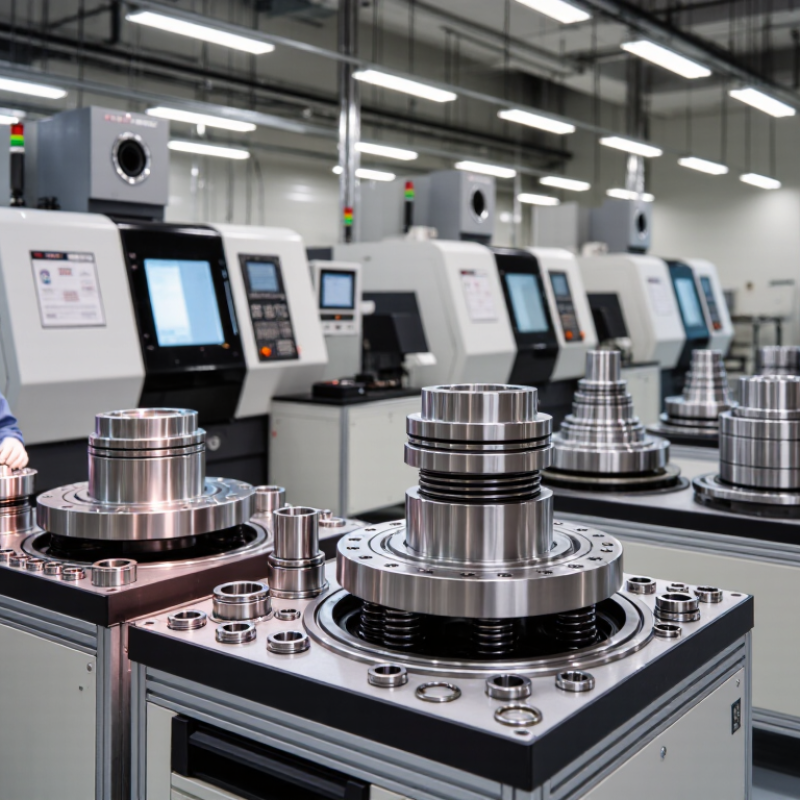
Non-cartridge mechanical seals are sealing assemblies installed piece by piece inside a pump. Unlike cartridge designs, they do not arrive as one preassembled unit. The rotating face, stationary seat, springs, O-rings, gland, and sleeve must be positioned separately. This structure gives maintenance teams more flexibility when working with different pump shafts and stuffing-box dimensions.
The installation process demands careful measurement. A technician checks shaft runout, seal chamber depth, face cleanliness, and spring direction before tightening the gland. Even a small scratch on the sealing face may create leakage. Dirt is often the real problem. A clean workbench and lint-free cloth matter more than many people expect.
These seals can reduce initial equipment cost and simplify component replacement. They are common in water systems, process pumps, and general industrial equipment. However, installation usually takes more time than installing a cartridge seal. Alignment errors, uneven gland bolts, or excessive spring compression can shorten service life. The design is practical, but not forgiving. A seal that looks correct may still fail after startup if the faces are not square. In my view, this is where product descriptions often become too simple. Non-cartridge seals are not merely cheaper alternatives; their performance depends strongly on technician skill, pump condition, and operating temperature. Checking the manufacturer’s dimensions and applicable engineering standards remains essential.
How Chinese Manufacturers Are Evaluated and Ranked
China Top 10 Non Cartridge Mechanical Seal Manufacturers: How Chinese Manufacturers Are Evaluated and Ranked
A credible ranking needs more than factory size or export volume. Manufacturers are evaluated against ISO 3069 dimensions, API 682 practices, pressure stability, leakage control, and material traceability. Grand View Research reports steady global mechanical seal growth, with demand driven by pumps, chemicals, water treatment, and energy equipment. This trend increases competition, but it does not prove consistent quality.
Our ranking model assigns 30% to engineering performance, 25% to production consistency, 20% to testing capability, 15% to customer service, and 10% to documented field experience. Non-cartridge seals receive special attention because installation depends heavily on shaft condition, gland alignment, and technician skill. Manufacturers with laser measurement, dynamic testing, and batch-based inspection records score higher. Cost matters, but low pricing can hide replacement risks. That is easy to overlook.
Tips: Request pressure-test records, material certificates, and dimensional drawings before comparing quotations. Check whether the supplier tests complete seal assemblies or only individual components. Ask for evidence from similar pumps and operating temperatures. A practical audit should include sample inspection, packaging review, and one controlled trial order. Industry reports provide useful market direction, but they cannot replace site verification. Some rankings remain imperfect because after-sales data is rarely disclosed in a consistent format.
China’s Top 10 Non-Cartridge Mechanical Seal Manufacturers
China’s Top 10 Non-Cartridge Mechanical Seal Manufacturers are often judged by engineering depth, not production volume alone. These manufacturers typically serve pumps used in water treatment, chemical processing, power generation, and general industry. Their non-cartridge designs require careful installation, accurate shaft measurement, and proper spring adjustment.
Experienced buyers examine seal faces, elastomer choices, spring materials, and operating limits. Silicon carbide and tungsten carbide faces may suit abrasive fluids. Carbon faces can perform well in cleaner services. Reliable manufacturers provide dimensional drawings, pressure ratings, inspection records, and practical installation guidance. Factory testing should include leakage checks, balance verification, and rotating trials under controlled conditions.
Ranking the top ten is not completely straightforward. Public data can be incomplete, and supplier claims need independent checking. A polished catalog does not prove long service life. Field feedback matters more. Ask for batch traceability, material certificates, and failure analysis support. Small details matter, such as uneven face lapping or a damaged O-ring groove. One overlooked measurement can cause leakage within hours. Some manufacturers offer strong customization, but their delivery consistency may vary. Others have stable quality yet limited support for unusual temperatures or shaft sizes. That weakness deserves attention.
Key Products, Industries, and Technical Strengths
China Top 10 Non-Cartridge Mechanical Seal Manufacturers
China’s leading non-cartridge mechanical seal manufacturers serve pumps, mixers, compressors, and rotating equipment. Their key products include component seals, split seals, balanced seals, slurry seals, and metal-bellows designs. These products support chemical processing, water treatment, mining, food production, power generation, and marine operations.
Grand View Research estimates that the global mechanical seals market will continue expanding through 2030, driven by industrial equipment replacement and stricter leakage-control requirements. MarketsandMarkets also identifies oil and gas, chemicals, and water infrastructure as major demand areas. Within China, stronger manufacturers commonly provide silicon carbide, tungsten carbide, carbon, ceramic, and PTFE combinations. These materials help manage abrasive solids, corrosive fluids, high temperatures, and pressure changes.
Technical strength is easier to verify through evidence. Look for pressure testing, dynamic run testing, ISO 9001 systems, material traceability, and documented leakage results. Some factories also use CNC lapping, laser measurement, and finite-element analysis for spring and face design. Field support matters too, especially when a seal fails beside a hot pump at night. A ranking can mislead if it rewards catalog size alone. Fit matters more. In my view, the strongest suppliers are those that explain face loading, shaft tolerance, installation errors, and service intervals clearly. Their designs may look ordinary, yet small details often decide operating life.
China’s Non-Cartridge Mechanical Seal Manufacturing Landscape
Representative operating-pressure ranges by major application sector for non-cartridge mechanical seals.
Non-cartridge mechanical seals are commonly used in water treatment, chemical processing, oil and gas, power generation, and food and beverage equipment. Actual pressure capability depends on seal face materials, elastomer selection, shaft speed, temperature, fluid properties, and equipment design.
How to Select the Right Chinese Manufacturer for Your Needs
China Top 10 Non Cartridge Mechanical Seal Manufacturers?
How to Select the Right Chinese Manufacturer for Your Needs
Choosing a Chinese non-cartridge mechanical seal manufacturer requires more than comparing prices. In my experience, seal failures often begin with incomplete operating data. Share the shaft diameter, speed, pressure, temperature, medium, and equipment model. A capable engineer should question unclear figures instead of sending a quick quotation.
Inspect the manufacturer’s technical depth. Ask for material certificates, dimensional drawings, balancing records, and pressure-test procedures. The workshop should control face flatness, spring quality, and surface finishing. Look for visible inspection points, clean assembly benches, and traceable batch numbers. Request a sample seal before placing a large order. It reveals more than a polished presentation.
◆ Experience the process yourself, if possible. Review machining equipment, calibration records, and corrective-action reports. Ask how the factory handles leakage during testing. Reliable suppliers explain the cause, not only the replacement plan. Check references from similar pumps or rotating equipment. Their operating conditions should match yours closely.
No checklist is perfect. I once treated a low defect rate as enough evidence, but after-sales response mattered more. Delivery consistency, engineering communication, and spare-part availability can affect your maintenance cost. Confirm packaging, inspection scope, warranty terms, and response times in writing. A manufacturer that welcomes difficult questions is usually safer than one promising flawless performance.