Smart Heating Solutions

China Top Stamped Metal Parts Manufacturers

China is home to many suppliers of stamped metal parts, but a polished catalog does not tell the whole story. Buyers need to compare more than price and production capacity. Die design, material control, dimensional consistency, and tool maintenance all affect the finished component. A bracket may look simple on a drawing, yet a small burr or a misaligned hole can complicate assembly.

Manufacturing engineer Shigeo Shingo wrote, “The most dangerous kind of waste is the waste we do not recognize.” That warning applies to supplier selection: hidden scrap, unstable processes, and unclear inspection records can create costs long after a quotation is approved. Details matter. This guide to China’s top stamped metal parts manufacturers considers practical signals such as documented quality systems, inspection methods, engineering support, and experience with specific materials and part geometries. These indicators help, but they are not guarantees; buyers should verify capabilities against their own drawings and requirements.

A strong supplier should be able to explain how it controls tolerances, checks first articles, and responds when a production run drifts. Ask about sample approval, traceability, and communication during tool changes. Not just price. Some listings may leave important questions unanswered, and that deserves a closer look. The manufacturers discussed here are starting points for comparison, not a substitute for technical due diligence. The right choice depends on the part, the production volume, and the level of support your project actually needs.
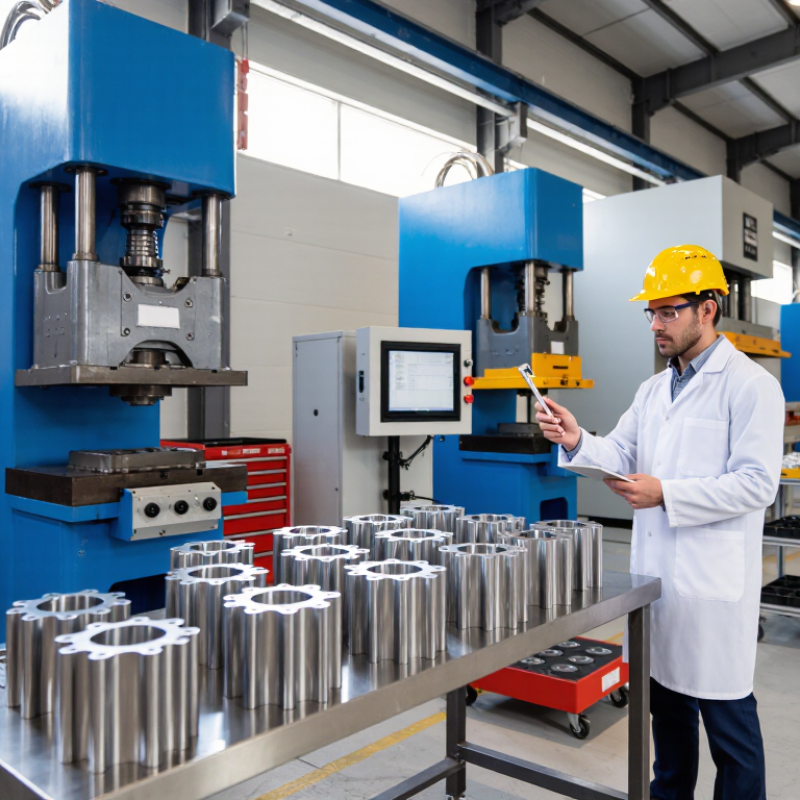
China Top Stamped Metal Parts Manufacturers

What Stamped Metal Parts Are and How They Are Made

Stamped metal parts are components formed from flat sheet or coil stock using a press and a shaped tool called a die. Common examples include brackets, clips, covers, and electrical contacts. The process can cut outlines, punch holes, bend edges, or draw shallow shapes. One press stroke may perform a single operation; a progressive die performs several as metal advances through stations. The method suits repeatable parts in steel, stainless steel, aluminum, and copper alloys.

The work begins with a drawing that specifies dimensions, material, thickness, and tolerances. A manufacturer checks these details before designing the die. A press then feeds the sheet forward and applies controlled force. The cut edges may feel sharp, so deburring can be necessary. The die matters. Even a small clearance difference can affect burrs, fit, or tool life. Parts are checked with gauges, calipers, and visual inspection, often against samples from an initial run. In China, as elsewhere, capable suppliers discuss material certificates, trial parts, and inspection methods before full production. A drawing can look complete yet miss a bend allowance or a useful datum. That is easy to overlook. Reviewing the first samples together can reveal a mismatch before it becomes a costly batch.

China Top Stamped Metal Parts Manufacturers — What Stamped Metal Parts Are and How They Are Made

Typical densities of metals commonly used for stamped parts

Metal stamping forms sheet material into parts using a press and dies. Material choice affects part weight and performance: aluminum is much less dense than steel or copper. Values are typical approximate densities in g/cm³; actual values vary by alloy and grade.

Key Materials and Processes Used in Metal Stamping

Stamped metal parts begin with a material choice that matches the job. Carbon steel is common for strong, economical brackets, while stainless steel suits parts exposed to moisture. Aluminum keeps assemblies light, and copper alloys conduct electricity well. Thickness, temper, and surface condition also matter. A sheet that looks suitable may crack at a tight bend or spring back after forming. In practice, the best choice on paper is not always the easiest one to run.

Stamping processes shape the sheet in stages. Blanking cuts the outline; piercing makes holes, and bending forms flanges. Deeper parts may need drawing, while progressive dies combine several operations along one feed path. Engineers check die clearance, bend radius, grain direction, and lubrication because small changes can affect burrs, wrinkles, or dimensional consistency. Tool trials and sample measurements help reveal issues before production, though not every variation disappears.

Tips: Share drawings, material grade, thickness, and critical tolerances early. Ask how the supplier checks burr height and formed dimensions. A simple sample review can catch problems that a drawing alone may miss.

Industries Served by China’s Stamped Metal Parts Manufacturers

China’s stamped-metal parts manufacturers serve automotive, electronics, appliance, construction, and energy industries. Automotive remains a major market. OICA recorded about 93.5 million motor vehicles produced worldwide in 2023, supporting demand for brackets, seat components, clips, and precision housings. Small parts matter. Their dimensions affect assembly speed and vibration performance.

In electronics, stamped terminals, shielding covers, and heat-management components must fit tightly and maintain consistent conductivity. WSTS reported global semiconductor sales of $627.6 billion in 2024, reflecting the scale of the electronics supply chain that depends on precise component manufacturing.

Appliance and construction companies also use stamped hinges, panels, fasteners, and structural fittings. The energy sector adds demand for brackets and enclosures used in power equipment. The International Energy Agency’s Renewables 2024 report recorded nearly 510 gigawatts of renewable capacity additions in 2023. That growth creates opportunities for suppliers able to handle repeat orders and varied material specifications.

Fit is unforgiving. Buyers should assess tooling control, inspection records, material traceability, and the supplier’s ability to maintain tolerances across production runs. A low unit price can look attractive, yet inconsistent parts may cause rework. This trade-off deserves careful review.

How to Evaluate Leading Stamping Manufacturers in China

China Top Stamped Metal Parts Manufacturers

How to Evaluate Leading Stamping Manufacturers in China

Choosing a stamping manufacturer takes more than comparing unit prices. Review its experience with your material, part geometry, thickness, and production volume. Ask for sample inspection records, tooling maintenance logs, and documented checks for burrs, dimensions, and surface defects. A capable supplier should explain how it controls variation between production runs. See the actual process, not just the sales presentation.

Automation is useful, but it does not prove stamping expertise. The International Federation of Robotics reported that China installed 276,288 industrial robots in 2023, representing 51% of global installations. This is useful context for manufacturing capacity, not a quality rating for any supplier. Request evidence specific to the parts you need, such as trial-run results and measurement reports. One detail is easy to miss: a polished sample may not reflect output after thousands of cycles.

Tips: Send the same drawing and inspection requirements to each candidate. Compare quoted tolerances, tooling ownership, lead times, and responses to defects. Visit the factory if practical, and watch a live run. Trust documented evidence, but leave room to question it.

Quality Standards, Customization, and Supplier Selection Factors

When comparing China’s stamped metal parts manufacturers, look beyond quoted price and press capacity. Ask for material traceability, calibrated gauges, and inspection records tied to your drawing revision. For a thin stainless-steel bracket, confirm the agreed limits for burrs, hole position, and flatness—not just the press tonnage. Small details matter.

Customization should include tooling ownership, prototype timing, and how engineering changes affect cost and lead time. Request first-article measurements and a capability study for critical dimensions; agree on acceptance criteria before production. Deloitte and the Manufacturing Institute projected in their 2024 study that U.S. manufacturing could need 3.8 million workers by 2033, with 1.9 million jobs potentially unfilled. That makes it sensible to check a supplier’s trained operators, backup coverage, and maintenance routines. A polished audit file cannot reveal every weak die-maintenance habit.

Raw-material control also deserves scrutiny. World Steel Association reported 1,882.6 million tonnes of global crude-steel output in 2024, down 0.9% from 2023. That figure does not prove a particular coil’s consistency. Ask how each coil is identified, what mill certificates are retained, and how substitutions are approved. Visit the production line if possible. A useful supplier review tests real parts, real records, and real response times—not promises alone.

China Top Stamped Metal Parts Manufacturers - Quality Standards, Customization, and Supplier Selection Factors

Evaluation Dimension What to Check Relevant Standards or Evidence Supplier Selection Guidance
Quality management Documented controls for order review, production, inspection, nonconforming products, and corrective action. ISO 9001:2015 certification, where applicable; confirm scope, certification validity, and issuing body. Request a current certificate and ask how process changes and customer complaints are recorded and closed.
Automotive requirements Automotive quality controls, production-part approval, traceability, and change management. IATF 16949:2016 certification for applicable automotive production; PPAP requirements as agreed with the customer. Verify that the certified scope and site cover the relevant manufacturing activity; agree on approval documents before production.
Material selection and traceability Grade, thickness, temper, coating, mechanical properties, and batch identification should match the drawing and purchase specification. Material test certificates and applicable specifications, such as ASTM A1008/A1008M for certain cold-rolled carbon steel sheet or ASTM A666 for certain stainless steel products. Specify the exact material standard and grade; confirm how incoming material is identified and linked to finished parts.
Dimensional inspection Inspection of critical dimensions, hole locations, flatness, burrs, and formed features against the approved drawing. Inspection plans, calibrated measurement equipment, first-article reports, and measurement records. Identify critical-to-quality characteristics and tolerances on the drawing; review sample reports before approving production.
Tooling and process capability Suitability of progressive, transfer, or single-operation stamping; die maintenance; press capacity; and process monitoring. Tooling plans, maintenance records, process flow, and capability studies when specified by the customer. Review who owns and maintains the tooling, how revisions are controlled, and what happens to tools at contract end.
Customization and finishing Custom geometry, material thickness, deburring, heat treatment, plating, painting, or other specified secondary operations. Approved drawings and finish specifications; process records and coating or finish inspection evidence where required. Confirm which operations are performed in-house or outsourced, and define acceptance criteria for appearance and performance.
Environmental and substance compliance Environmental management and control of restricted substances relevant to the product and destination market. ISO 14001:2015 certification where applicable; RoHS Directive 2011/65/EU, as amended, and REACH Regulation (EC) No 1907/2006 where applicable. Specify applicable regulations and request product-specific declarations or test evidence; do not rely on a general factory statement alone.
Commercial and delivery reliability Quoted tooling and unit costs, minimum order quantities, lead times, packaging, export documentation, and capacity planning. Written quotation, agreed production schedule, packaging specification, and shipment records. Compare quotations on the same drawing revision, material, finish, inspection level, order quantity, and delivery terms.

Note: Applicable standards, revisions, tolerances, and compliance obligations depend on the product, industry, and destination market. Confirm requirements in the contract and approved technical documents.