What Is a Weather Station Humidity Sensor?
A Weather Station Humidity Sensor measures the amount of water vapor in the air, usually as relative humidity. That percentage compares current moisture with the maximum air could hold at the same temperature. It is a small component, often tucked inside a ventilated radiation shield. Yet its readings help explain fog, dew, drying conditions, and changes in local weather.
Physicist Lord Kelvin is often credited with the measurement principle, “When you can measure what you are speaking about, and express it in numbers, you know something about it.” It is a useful reminder here. A humidity reading is data, not the whole story. Temperature, airflow, direct sunlight, and sensor condition can all affect what the station reports. A number can look precise and still be wrong.
This guide examines how a Weather Station Humidity Sensor works, what its readings mean, and where it performs best. It also considers common sensor types, placement, maintenance, and calibration. For example, a sensor mounted beside a warm wall may report different conditions from one exposed to free-moving air. Small details matter. So does honest uncertainty: even a well-maintained station cannot represent every corner of a yard. Understanding the sensor helps readers interpret its measurements carefully, compare observations more fairly, and recognize when a reading may need a closer look.
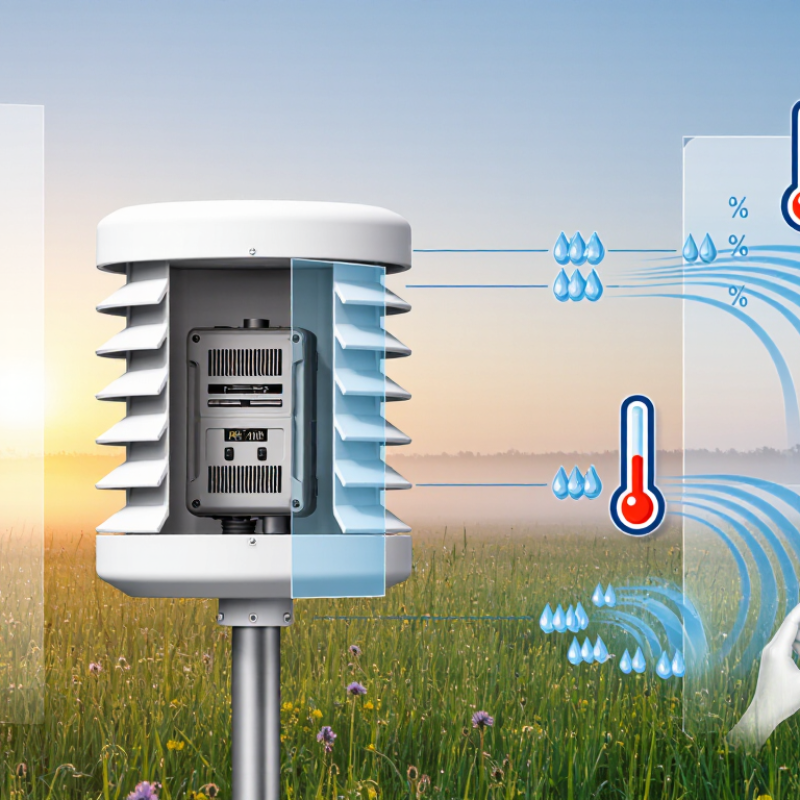
What a Weather Station Humidity Sensor Measures
What Is a Weather Station Humidity Sensor?
What a Weather Station Humidity Sensor Measures
A weather-station humidity sensor estimates how much water vapor is in the air relative to the air’s capacity at its current temperature. It reports this as relative humidity, or RH, expressed as a percentage. At 50% RH, the air holds about half the water vapor it could hold at that temperature. The reading can change when temperature shifts, even if the amount of water vapor stays steady. That distinction matters.
Many electronic sensors use a moisture-sensitive material whose electrical properties change as it absorbs water vapor. The station combines that response with temperature data to calculate RH. The World Meteorological Organization’s Guide to Instruments and Methods of Observation (WMO-No. 8) describes humidity measurement methods and gives a 3% RH uncertainty target for relevant surface observations. Small errors matter. A sensor near a warm wall, for example, may report a different reading from one in a shaded, well-ventilated spot. I still find it easy to treat one number as more certain than it is.
Tips: Place the sensor in a ventilated radiation shield, away from roofs, sprinklers, and exhaust vents. Check its readings against a calibrated instrument when possible, and note the comparison conditions. Sensor drift happens.
What a Weather Station Humidity Sensor Measures
A weather station humidity sensor measures relative humidity: the amount of water vapor in the air compared with the maximum amount the air can hold at the same temperature, expressed as a percentage. These illustrative readings show humidity rising overnight and falling during the warmer afternoon.
How Humidity Sensors Detect Moisture in the Air
What Is a Weather Station Humidity Sensor?
How Humidity Sensors Detect Moisture in the Air
A weather station humidity sensor estimates how much water vapor is in the air. Many use a small polymer film that absorbs moisture. As the film’s electrical capacitance changes, the sensor converts that change into relative humidity. It does not measure rain or liquid droplets. Relative humidity also depends on temperature, so stations often pair the humidity element with a temperature sensor. The World Meteorological Organization’s Guide to Instruments and Methods of Observation describes methods and practical considerations for humidity measurements. Small exposure errors matter.
Sensor placement affects readings. Direct sunlight can warm the sensor, while poor airflow can slow its response. A ventilated shield helps block sun and rain while allowing air to pass. For indoor context, the U.S. Environmental Protection Agency’s A Brief Guide to Mold, Moisture and Your Home advises keeping humidity below 60%, ideally between 30% and 50%. That guidance is not a target for outdoor weather readings, but it shows why humidity data needs context.
Tips: Mount the station away from walls, vents, and hot surfaces. Check its readings against a trusted reference periodically. Even a careful setup can drift; that is easy to underestimate. Temperature changes, dust, and aging can all affect performance.
Common Sensor Types Used in Weather Stations
A weather station humidity sensor estimates how much water vapor is in the air, usually as relative humidity. Common sensor types differ in how they detect moisture. Capacitive sensors use a moisture-sensitive film between electrical conductors. As the film absorbs water, its capacitance changes. These sensors are widely used because they respond quickly and can cover a broad humidity range.
Resistive sensors measure changes in a material’s electrical resistance as moisture levels shift. They can be compact and economical, but their readings may drift with age or contamination. Chilled-mirror sensors take a different approach: a mirror cools until dew forms, and the measured temperature helps determine humidity. They can provide precise readings, though they need more careful upkeep and are less suited to basic outdoor stations.
Small details matter. A sensor mounted in direct sun may report misleading values, so stations typically shield it from radiation while allowing air to pass through. In field checks, compare readings with a trusted reference and look for slow responses after rain or abrupt weather changes. No sensor stays perfect. Even a clean sensor can show small errors, especially across changing temperatures.
How Humidity Data Fits into Weather Monitoring
A weather-station humidity sensor measures water vapor in the air, usually as relative humidity (RH). RH compares the air’s current moisture with the maximum it could hold at that temperature. Because warm air can hold more moisture, the same water content may produce different RH readings as temperatures change. Small shifts matter. They can help forecasters assess fog formation, overnight dew, drying conditions, and the strain humid air adds during hot weather.
Humidity data makes temperature readings more useful, but it should not be interpreted alone.
The World Meteorological Organization’s State of the Global Climate 2023 report found that 2023 was the warmest year in its 174-year record, at about 1.45°C above the 1850–1900 average.
During hot spells, RH helps explain why similar temperatures can feel very different. A sensor placed in direct sun or near a wet surface may give a misleading reading, so exposure, ventilation, and calibration matter. One reading can still mislead. Trends across several hours, checked alongside temperature and wind, offer a more reliable picture. Even careful stations can drift, and that uncertainty deserves attention rather than being hidden.
Factors That Affect Sensor Accuracy and Performance
What Is a Weather Station Humidity Sensor?
A weather station humidity sensor estimates how much water vapor is in the air, usually as relative humidity. Its readings depend on more than the sensing element. Placement matters. A sensor beside a sun-warmed wall may report conditions unlike those in a shaded, open area. Direct sunlight can heat the housing and distort readings, while poor airflow can slow its response to changing moisture.
Moisture and dirt also affect performance. Rain, condensation, dust, and insects may interfere with the sensor or its protective screen. Keep the inlet clear, and install the unit where air can circulate without exposing it to direct rain. A reading that stays unusually high after a dry spell may indicate trapped moisture or a dirty screen. It is worth checking before assuming the weather has changed.
Calibration and sensor age matter, too. Compare readings periodically with a reliable reference, following the station maker’s maintenance guidance. Small differences are normal, especially when instruments sit in different locations. Humidity can also vary across a yard. No sensor is perfect. I would treat one odd reading cautiously, then look for a consistent pattern across several hours and check the installation before drawing conclusions.