What Are Showroom Display Stands?
Showroom Display Stands are fixtures designed to present products clearly in a retail showroom, trade space, or brand studio. They can hold samples, organize product ranges, and help visitors compare options without searching through boxes or crowded shelves. Common examples include freestanding racks, countertop units, shelving systems, and stands built for a particular product category.
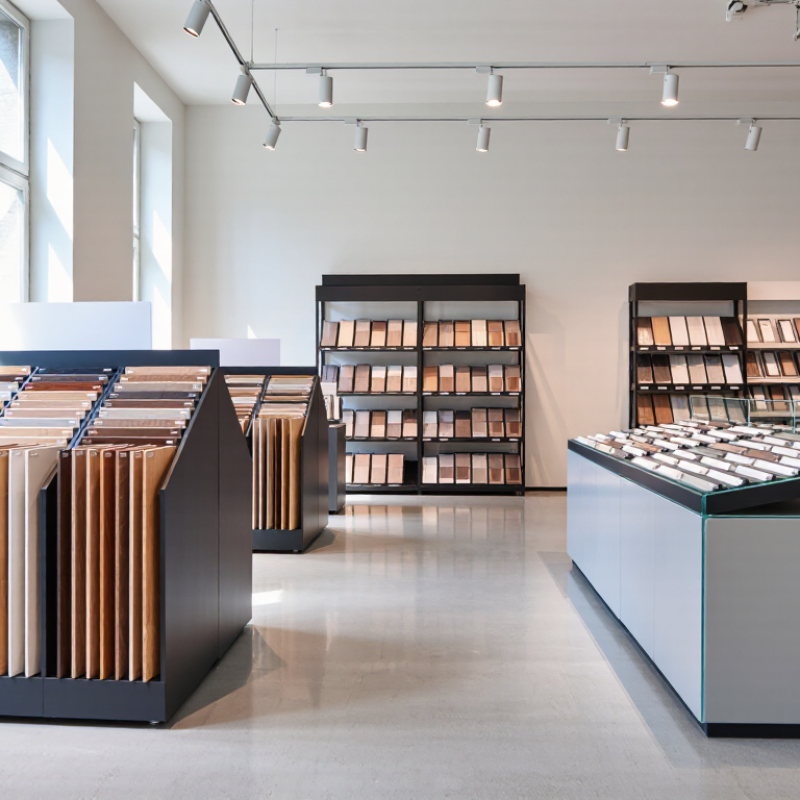
Retail researcher Paco Underhill’s phrase, “Retail is detail,” offers a useful lens for understanding their role. A stand’s height, finish, and position can affect what visitors notice and how comfortably they move around a display. A timber sample rack near a bright window, for example, may make surface differences easier to see. The same rack could feel cramped if placed beside a narrow walkway. Small choices matter.
Good Showroom Display Stands balance presentation with practical use. They should suit the product’s size and weight, provide a clear viewing angle, and fit the showroom’s layout. Materials also deserve attention: metal may feel durable and precise, while wood can create a warmer impression. Still, a polished fixture cannot rescue confusing product information. That is easy to overlook.
This guide explains the main types of showroom stands, their materials, and the factors to consider when choosing one. It also looks at layout, maintenance, and common display mistakes. No stand works everywhere. The best choice depends on the products, visitors, and space available.
Definition and Purpose of Showroom Display Stands
A showroom display stand is a freestanding or fitted structure used to present products in a physical retail or exhibition space. It may use shelves, hooks, platforms, or clear panels to hold items at a useful viewing height. Some stands also include labels, sample surfaces, or small lighting elements. The exact form depends on the product and the room. The definition sounds simple. In practice, it gets messy: a stand that suits a small sample may not support a heavier demonstration unit.
Its purpose is to make products easier to notice, inspect, and compare. A well-planned stand can give each item a clear place, keep nearby displays from feeling crowded, and help visitors understand key features without searching for staff. For example, a countertop stand might present finish samples within easy reach, while a taller unit can show several product sizes at eye level. Stability, capacity, visibility, and accessible placement all matter. A display that looks striking but blocks a walkway or hides the item’s details is not doing its job. These fixtures also shape how people move through a showroom, so their position should fit the room’s layout and the way visitors browse. It is worth checking the setup in person; measurements alone can miss awkward sightlines.
Key Components and Structural Features
What Are Showroom Display Stands?
Key Components and Structural Features
A showroom display stand is a small structure with a practical job: present products clearly and keep them stable. Most designs combine a base, vertical supports, shelves or hooks, and a top panel for messaging. The base resists tipping; the supports transfer weight; shelves set product height and spacing. Fasteners matter, too. Loose joints can make a well-finished stand wobble. Materials range from folded board to metal or timber, depending on product weight, expected use, and the desired look.
The U.S. Census Bureau’s Quarterly Retail E-Commerce Sales report put online sales at 16.1% of total U.S. retail sales in Q4 2024. That leaves physical retail with a substantial role, but the figure alone does not prove that any specific display increases sales.
Check load capacity, footprint, and assembly before choosing a stand. A broad base may improve stability, yet take up valuable floor space. One detail is easy to miss: customers need room to reach products without knocking neighboring items. A tidy drawing cannot reveal every awkward angle in a busy showroom.
Tips: Place heavier products on lower shelves, confirm the stand’s rated load, and test access with real products. If a shelf flexes or the display feels cramped, revise the layout. Don’t assume it’s finished.
Common Types of Showroom Display Stands
Common showroom display stands serve different purposes, from holding small products to shaping the flow of a room. Shelving units suit boxed goods, samples, and items that need clear labels. Adjustable shelves help when product sizes change, though crowded shelves can make even useful items hard to notice. Keep it simple. Pedestal stands raise one product to eye level and work well for featured objects, such as a ceramic vase or a compact appliance. They look clean, but a narrow base may feel unstable in a busy space.
Racks are practical for clothing, fabric swatches, or merchandise that visitors need to handle. Choose a height that lets people browse without reaching awkwardly. Glass display cases protect delicate pieces and keep small items visible, while open stands make access easier. Modular stands can be rearranged for seasonal layouts or changing product ranges. Not always. A flexible system may take longer to assemble than expected, especially when fittings are poorly labeled. Mannequins and torso forms show how clothing fits, while sign holders keep prices and product details close to the display. The right choice depends on the product, available floor space, and how visitors move through the showroom. A stand that photographs well may still block a doorway in real use.
Common Types of Showroom Display Stands
This chart compares typical shopper-accessible sides for common stand configurations. The counts describe the layouts shown, not market research; actual access depends on placement and design.
Materials and Design Considerations
What Are Showroom Display Stands?
Materials and Design Considerations
A showroom display stand must do more than hold products. Its material affects stability, appearance, upkeep, and how long it remains useful. Powder-coated steel suits heavier items, while plywood offers a warmer, furniture-like finish. Acrylic can make small products appear unobstructed, but it scratches more easily than many people expect. Glass feels refined, yet its weight and cleaning needs deserve attention. Details matter.
Match the structure to the product’s weight and the pace of customer interaction. A stand holding boxed appliances needs a broad base and secure shelves; a jewelry display may benefit from clear panels and focused lighting. Check edges, joints, and finishes at eye level, where flaws are easy to spot. In busy showrooms, wipeable surfaces and replaceable parts can reduce maintenance. Modular designs also help when layouts change, though extra fittings may loosen over time. That part is easy to overlook. Test a sample under realistic lighting and load before ordering multiple units. A finish that looks elegant in a workshop may show fingerprints under bright showroom lights.
How Display Stands Shape the Customer Experience
What Are Showroom Display Stands?
How Display Stands Shape the Customer Experience
Showroom display stands are fixtures that hold, frame, or demonstrate products. Their role is not simply to make a room look polished. A well-placed stand helps visitors notice, compare, and handle products with less effort. The experience begins before a salesperson speaks. Clear sightlines, reachable samples, and concise information make browsing easier.
PwC’s 2023 Global Consumer Insights Pulse found that 43% of consumers would pay more for greater convenience, while 42% would pay more for a friendly, welcoming experience. These figures describe retail broadly, not display stands specifically, but they show why an easy, considerate visit matters.
In practice, a stand should make one useful feature clear at a glance. A lighting display, for example, might place working samples at hand height, with controls and short labels nearby. Keep paths open. Too many signs can compete for attention and make choices harder.
Small details matter. Staff can note which samples visitors touch, where they pause, and what they overlook. Those observations help, but they are not formal research. A stand may look elegant on a plan and still feel awkward at full scale. Test it with visitors, then adjust the height, spacing, or wording. Not every change will improve the experience.