How to Choose the Best House Heater for Your Home?
Choosing the right house heater is crucial for comfort and efficiency. According to the U.S. Department of Energy, heating accounts for about 42% of a home's energy use. This makes selecting an appropriate house heater an important decision. Different factors influence the choice, including room size, insulation, and regional climate.
Industry reports indicate that energy-efficient heaters can save homeowners up to 30% on energy bills compared to traditional models. These savings can make a significant impact over time. Additionally, not all heaters work well in every environment. Many homeowners underestimate the importance of proper sizing and type when selecting their heaters.
It's essential to consider features like energy source, heating method, and output. A poorly chosen house heater can lead to discomfort and higher energy bills. Before making a decision, many overlook crucial details that could affect performance. Evaluating personal needs and home specifics is key to finding the best option.
Factors to Consider When Choosing a House Heater
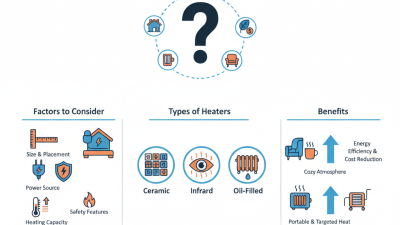
Choosing the best house heater involves evaluating several essential factors. The size of your home is crucial. A heater too small will struggle to maintain warmth. Conversely, an overpowered unit can lead to increased energy bills. Measure your space to get an accurate estimate. Consider the type of heating as well. Electric, gas, or wood options each have unique benefits and drawbacks.
Energy efficiency is another significant aspect. Check the energy rating of the heater. A higher rating often means lower running costs. Look for models with programmable thermostats. These can help regulate temperatures without wasting energy. Don't overlook safety features. Carbon monoxide detectors and automatic shut-off mechanisms are vital for peace of mind.
Installation and maintenance also deserve attention. Some heaters may require special arrangements or professional installation. Consider whether you can handle regular upkeep. Research local service providers for support. Reflect on your specific needs and the heater's capabilities. Remember, the best choice varies from one household to another. Prioritize what matters most to you, and evaluate your options accordingly.
How to Choose the Best House Heater for Your Home? - Factors to Consider When Choosing a House Heater
| Factor |
Description |
Considerations |
| Heating Type |
Different types including convection, radiant, and forced air. |
Assess your heating needs and home layout. |
| Size |
Heater size must match the area to be heated. |
Calculate BTUs required for the space. |
| Energy Efficiency |
Consider heaters with higher efficiency ratings. |
Look for ENERGY STAR certified models. |
| Installation |
Assess whether professional installation is needed. |
Consider ease of installation and modifications needed. |
| Cost |
Initial purchase price and ongoing operating costs. |
Compare long-term costs, not just upfront. |
| Safety Features |
Look for features like overheat protection and tip-over shut off. |
Evaluate safety ratings and compliance with standards. |
Types of House Heaters: Pros and Cons
When choosing a house heater, understanding the types available is crucial. Electric heaters, for instance, offer convenience and quick heating. They are often portable and easy to install. However, they can be costly to operate. According to the U.S. Department of Energy, electric heaters have an average efficiency of 100%, but their high operating cost can deter many homeowners.
Gas heaters are another popular option. They provide efficient heating and lower operational costs compared to electric models. The efficiency rating for gas heaters can range from 75% to 98%. However, they require proper ventilation and can pose safety risks, such as gas leaks. Many users overlook these factors, leading to improper installation and potential hazards.
Heat pumps offer an energy-efficient alternative. They use electricity to transfer heat, making them versatile for both heating and cooling. Studies show they can reduce energy bills by up to 50%. Yet, in extremely cold climates, their performance may decline. Homeowners often don't realize that maintenance is essential for optimal efficiency, leading to unexpected repair costs. Each type has its benefits and drawbacks, so careful consideration is needed to find the right fit for your home.
Assessing Your Home's Size and Insulation Needs
When choosing a house heater, understanding your home's size and insulation is crucial. A well-insulated home retains heat efficiently. According to the U.S. Department of Energy, proper insulation can reduce heating costs by 20% to 30%. Evaluating your insulation can lead not only to energy savings but also to a more comfortable living space.
Measure your home's square footage to determine the appropriate heater capacity. Heating experts suggest that homes with poor insulation may need a heater with higher output. Data indicates that for every 1,000 square feet, approximately 30 to 60 BTUs are required depending on the insulation quality. Therefore, if your insulation is lacking, overestimating your heating needs could lead to unexpected expenses.
Consider how air leaks affect overall efficiency. In homes with inadequate sealing, the heat loss can be significant. The U.S. Energy Information Administration notes that air leaks account for nearly 25% of heating costs in poorly insulated homes. A thoughtful assessment of your home’s insulation and size will guide you in selecting the most suitable heater for long-term efficiency and comfort.
Energy Efficiency Ratings: Understanding the Metrics
When choosing a house heater, understanding energy efficiency ratings is crucial. These metrics help gauge how effectively a heater converts energy into heat. Common ratings include the Annual Fuel Utilization Efficiency (AFUE) and the Energy Efficiency Ratio (EER). AFUE measures how much heat a heater produces compared to the energy it consumes over a year, while EER indicates cooling output against energy input.
Efficient heaters can reduce energy bills. However, high ratings often come with higher initial costs. Not all homes benefit equally from efficient models. Factors like insulation, climate, and space size play significant roles in heating performance. Many homeowners overlook the importance of these elements, leading to mismatched systems. It’s vital to assess your home’s specific needs.
Research suggests that understanding these ratings can prevent frustration. Knowing which metrics matter helps in making informed choices. A heater that seems perfect on paper might not perform well in your unique setting. Reflecting on installation processes and maintenance also aids in long-term satisfaction. Always consider seeking professional advice tailored to your situation.
Budgeting for Purchase and Installation Costs
When budgeting for a new house heater, it’s crucial to consider both the purchase and installation costs. Industry reports suggest that homeowners should expect to spend between $1,500 and $3,500 on average for heater units. In some cases, high-efficiency models can soar above this range. Installation fees can add another $500 to $1,500, depending on local labor rates and the complexity of the installation.
Understanding these costs can significantly impact your long-term spending. The U.S. Department of Energy states that a well-installed system can reduce heating bills by about 20-30%. However, the initial investment can deter many. Annual maintenance is another expense. It’s recommended to budget around $150 to $200 each year for regular servicing.
Homeowners often overlook additional costs, like ductwork repairs or upgrades. These can escalate your budget unexpectedly. Some might find themselves cutting corners to save money. This leads to decreased efficiency or even safety issues down the line. It’s essential to balance upfront costs with long-term savings, ensuring you choose a system that meets your needs without breaking the bank.