China Top Workshop Heater Suppliers How to Choose?
Choosing among China’s top workshop heater suppliers requires more than comparing prices. A warm showroom can hide weak testing, inconsistent components, or poor after-sales support. Buyers should examine heating capacity, fuel type, electrical safety, noise levels, and performance in real workshop conditions. A 3,000-square-meter factory needs different equipment from a small automotive garage.
“Do not buy heat you cannot control, measure, or safely maintain,” says Michael Chen, an industrial heating consultant with more than 20 years of field experience. His advice is practical. Ask suppliers for verified output data, protection features, installation guidance, and service records. Request product samples when possible. Inspect the thermostat response, airflow, cable quality, and casing temperature. Small details matter.
Reliable suppliers usually explain limitations clearly. They should identify suitable room sizes, ventilation needs, operating costs, and maintenance intervals. Be careful when every specification looks perfect. Real performance may change with winter temperatures, ceiling height, insulation, and door openings. A factory visit or independent inspection can reveal more than a polished catalog.
This guide compares China workshop heater suppliers through a buyer’s lens. It considers manufacturing experience, certifications, customization, delivery consistency, and technical support. It also questions common assumptions. The cheapest quotation may become expensive after installation. The strongest brand may still lack local service. Choosing well means matching the heater to the workshop, not chasing the biggest number.
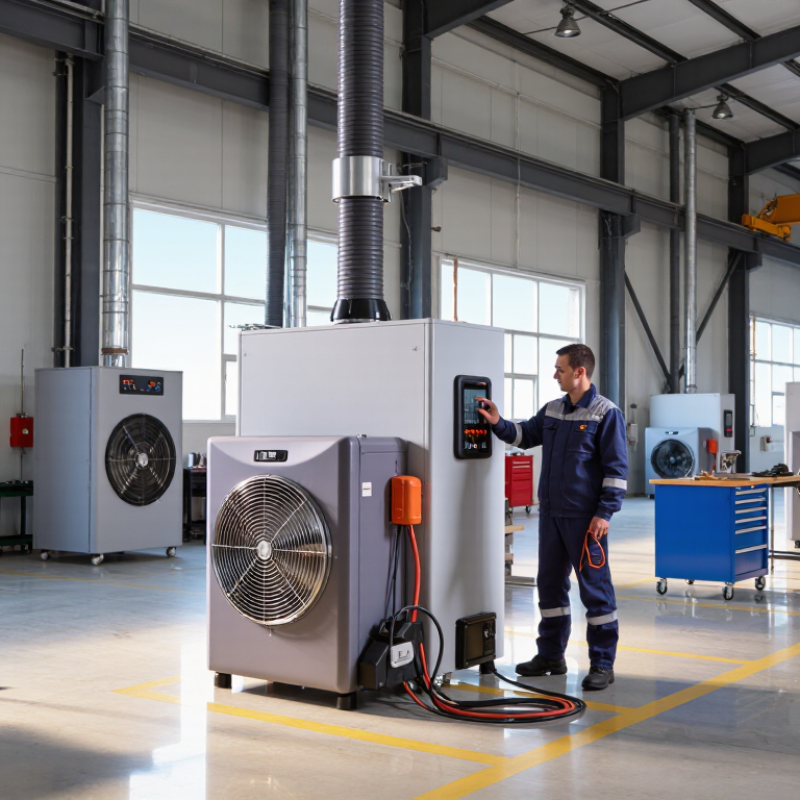
Assess Workshop Heat Demand Using EN 12831 Heat-Loss Calculations
Choosing a workshop heater starts with a measured heat-loss calculation, not a catalogue rating. EN 12831-1:2017 provides a recognised method for estimating a building’s design heating load. It considers outdoor design temperature, indoor temperature, transmission losses, ventilation, infiltration, and thermal bridges. For a workshop, large doors matter. Open them repeatedly, and cold air can quickly dominate the load.
The IEA’s Energy Efficiency 2023 report states that buildings consume about 30% of global final energy. That figure includes heating demand, which makes accurate sizing financially important. CIBSE Guide A also stresses ventilation, air leakage, and operating schedules during load assessments. A neat spreadsheet can still be wrong. Poor assumptions about door openings or roof insulation may produce an undersized heater.
Ask every supplier to show the EN 12831 heat-loss basis behind its proposed output. Provide floor area, ceiling height, insulation details, door dimensions, occupancy, and working hours. Check whether the calculation includes recovery after overnight setback. A heater matching only the average load may struggle on Monday morning. Oversizing is not automatically safer; it can cause short cycling, uneven temperatures, and wasted fuel or electricity. Independent verification is worthwhile, especially where doors remain open or machinery adds uncertain heat. Real workshops are messy. The model should admit that.
Evaluate Thermal Efficiency, COP, Noise Levels, Controls, and Warranty Terms
When comparing China workshop heater suppliers, start with measured thermal efficiency, not catalog claims. Ask for test conditions, including outdoor temperature, humidity, and power input. For heat-pump units, compare COP at temperatures your workshop actually experiences. A COP rating at 7°C may fall sharply near freezing. Real conditions matter. Request output data at low, medium, and full load. An infrared thermometer can expose cold corners during a site visit.
Noise deserves a practical check. Stand beside the running heater for several minutes. Ask whether quoted decibels were measured at one meter, half load, or maximum output. Fan vibration through steel framing can feel louder than the meter suggests. Controls should support staged heating, schedules, temperature limits, and fault alerts. Test the controller with gloves and dusty hands. Remote access is useful, but it should not replace local controls. Some interfaces look advanced yet hide basic settings.
Review warranty terms line by line. Confirm coverage for compressors, heating elements, fans, sensors, controls, labor, and shipping. Check whether installation by an approved technician is required. A two-year warranty means little if replacement parts take eight weeks. Request service records, spare-parts availability, and written response times. In workshop evaluations, this paperwork often reveals more than a polished sales presentation. One mistake is trusting the longest warranty without checking exclusions. I would also ask who handles repairs after the supplier’s local agent changes. Thermostats can fail early. Technicians should explain realistic failure points, not promise perfect operation.
Audit Factory Quality Systems, Testing Records, Certifications, and After-Sales Support
Choosing a workshop heater supplier requires more than comparing wattage and price. The IEA’s Energy Efficiency 2023 report states that buildings consume about 30% of global final energy. Efficient, controlled heating therefore affects operating costs and workplace comfort.
Audit the factory’s quality system on site or through verifiable records. Check incoming material inspections, production traceability, calibration dates, and corrective-action reports. Request test records for grounding continuity, insulation resistance, thermal cut-off, airflow, noise, and endurance. Records should show model numbers, test dates, operators, and failed-unit handling. A neat certificate file is not proof. ISO 9001 certification can support process control, yet the ISO Survey 2023 recorded more than 1.2 million certificates worldwide; certification alone does not confirm heater performance. Inspect the actual scope and certificate validity.
Verify market-specific conformity documents and applicable electrical safety testing before purchase. Ask whether samples were tested under normal and abnormal operating conditions. After-sales support needs equal attention. Require written response times, spare-parts availability, warranty exclusions, remote troubleshooting procedures, and failure-rate reporting. A supplier that shares repeat-defect data may appear less perfect, but this honesty is useful. Beware of suppliers showing only successful test sheets. Ask for one rejected batch and its corrective action. That uncomfortable detail often reveals the real quality culture. Check packaging, manuals, wiring diagrams, and replacement procedures with a technician, not only a salesperson. Short audits miss small weaknesses.
How to Evaluate Workshop Heater Suppliers
This suggested procurement model assigns the highest weight to product safety testing and factory quality systems. Verify ISO 9001:2015 procedures, applicable IEC 60335 requirements, test reports from competent laboratories, certification or conformity documents required in the target market, production traceability, and documented after-sales processes.
The percentages are an illustrative audit-weighting framework, not a certification result or supplier ranking.