Smart Heating Solutions

10 Best Industrial Heaters for Global Buyers

Industrial heating is a practical challenge, not a simple equipment purchase. In a food plant, a heater may warm stainless-steel tanks, maintain fluid viscosity, or prevent condensation inside a production line. In a metal workshop, it may face dust, vibration, and continuous high temperatures. These conditions make the right industrial heater essential for safety, product quality, and operating cost control.

The International Energy Agency reports that industry consumes about 37% of global final energy. Its tracking reports also identify process heat as a major source of industrial energy demand. The U.S. Department of Energy’s Industrial Decarbonization Roadmap highlights process heating as a key opportunity for efficiency improvements. Small design choices matter. Better insulation, accurate sensors, and suitable controls can reduce wasted heat. However, performance depends on installation quality, maintenance, fuel availability, and local electricity prices.

This guide examines 10 Best Industrial Heaters for Global Buyers. It compares electric, gas, infrared, immersion, duct, circulation, and explosion-protected solutions. Each option should be assessed against temperature range, heating capacity, airflow, materials, control response, and duty cycle. Buyers should also verify applicable certifications, enclosure ratings, voltage requirements, and regional safety standards. IEC 60519 provides an important reference for the safety of electroheating installations, while local certification requirements may differ. No ranking fits every factory. That is the uncomfortable part. A low-cost heater can become expensive when it causes uneven heating, frequent shutdowns, or difficult spare-parts sourcing. This review aims to support careful decisions with practical details, credible technical references, and realistic limitations.
10 Best Industrial Heaters for Global Buyers

Industrial Heater Fundamentals and Selection Criteria

10 Best Industrial Heaters for Global Buyers

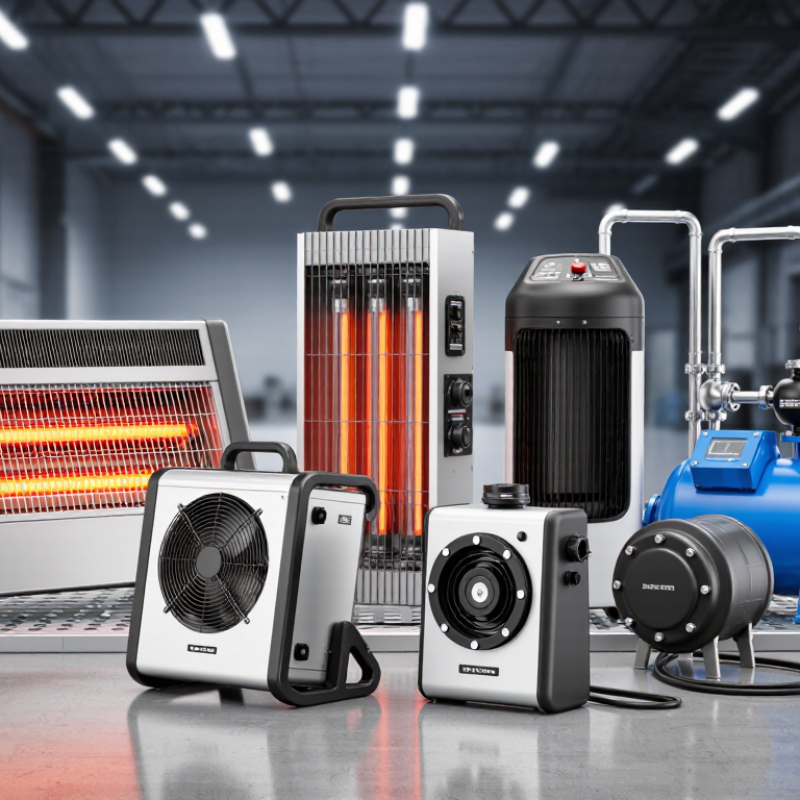
Industrial heaters convert electrical, fuel, or steam energy into controlled process heat. Their performance depends on more than rated wattage. A heater must match the material, airflow, operating temperature, and duty cycle. In practice, the ten strongest options often include air heaters, immersion heaters, band heaters, cartridge heaters, duct heaters, infrared units, circulation heaters, drum heaters, strip heaters, and process ovens.

Selection begins with the heating medium. Immersion units need compatible sheath materials and sufficient liquid coverage. Air heaters require calculated airflow and outlet temperature. For plastics, watt density matters because excessive surface heat can damage sensitive materials. Corrosive environments demand careful review of seals, insulation, and metal alloys.

Small details matter.

Control quality is equally important. Use sensors near the actual process zone, not merely beside the heater. Proportional control can reduce temperature swings, while independent over-temperature protection improves operational safety. Check voltage, phase, enclosure rating, installation space, and local electrical requirements before ordering. Global buyers should also request test records, wiring diagrams, material certificates, and clear maintenance instructions.

Field experience shows that oversized heaters often create unstable cycles and unnecessary energy use. Yet undersizing can be just as troublesome. Ambient losses, startup loads, insulation quality, and seasonal temperatures deserve realistic calculations. I would not trust a selection based only on catalogue temperature. Real equipment conditions are messier. A short factory trial may reveal airflow problems that specifications miss.

Comparing the 10 Best Industrial Heaters for Global Buyers

Comparing the 10 best industrial heaters for global buyers requires more than checking rated output.

The strongest candidates include electric resistance, infrared, induction, gas-fired, steam, thermal-fluid, duct, drum, immersion, and catalytic systems.

Electric resistance heaters offer precise control and simple installation. Infrared heaters warm surfaces quickly. Induction systems can heat metal parts efficiently, but they need compatible materials and careful coil design. Gas-fired units suit high-temperature production, although ventilation and fuel infrastructure increase complexity.

The U.S. Department of Energy’s Industrial Decarbonization Roadmap states that process heating represents about 51% of energy use in American manufacturing. That figure makes efficiency a practical buying issue. The IEA’s Energy Efficiency 2023 report also places industry at roughly 37% of global final energy consumption in 2022.

Thermal-fluid and steam heaters provide stable, even heat for continuous processing. Immersion heaters work well in tanks, while duct heaters respond quickly in air-handling systems.

Small mistakes matter.

For global buyers, the comparison should include temperature range, heat-up time, control accuracy, insulation quality, maintenance access, and local voltage compatibility. Infrared may reduce warm-up losses in open work areas. Induction can shorten cycle times but may cost more initially. Gas-fired equipment often performs strongly in heavy-duty applications, yet emissions reporting and site permits require attention. Safety verification should reference applicable IEC, ISO, or regional requirements. No ranking is perfect; a lower-cost heater may become expensive when spare parts, downtime, or technician training are included.

Heating Technologies, Applications, and Performance Differences

Industrial heaters differ less by shape than by heat-transfer method, temperature range, and operating environment. The U.S. Department of Energy reports that process heating uses about 51% of energy in American manufacturing (Industrial Decarbonization Roadmap, 2022). This makes heater selection a production decision, not a simple equipment purchase.

Gas-fired units remain practical for furnaces, kilns, and high-temperature lines, especially where fuel infrastructure is reliable. Electric resistance heaters deliver precise control and nearly 100% point-of-use conversion. Induction heating is faster for conductive metals, but it cannot heat every material. Infrared systems suit coatings and thin surfaces, while thermal-fluid heaters provide stable, indirect heat for tanks and reactors. Industrial heat pumps can reduce energy demand in low-temperature processes. The International Energy Agency reports that heat pumps typically deliver three to five units of heat for each electricity unit used (The Future of Heat Pumps, 2022).

Performance changes with moisture, airflow, insulation, and load cycling. A heater rated at 500 kW may perform poorly beside an uninsulated vessel. Real factories are messier. Buyers should compare useful heat delivered, control response, maintenance access, and local electricity or fuel emissions. Safety systems matter too, especially around combustible dust or high-temperature surfaces. The best choice is application-specific, and that is inconvenient but reliable.

10 Best Industrial Heaters for Global Buyers - Heating Technologies, Applications, and Performance Differences

Rank Industrial Heater Type Heating Technology Typical Temperature Capability Best-Fit Applications Main Performance Advantages Key Limitations Energy and Control Profile
1 Electric Resistance Duct Heater Electrical resistance elements transfer heat directly to moving air or process gas. Approximately 50–750°C process-air outlet temperature, depending on airflow, element design, and insulation. HVAC air handling, drying ovens, cleanrooms, air preheating, and process-gas systems. Fast response, precise staged or modulating control, clean operation, and easy installation where electrical power is available. High electrical demand at large capacities; requires airflow protection to prevent element overheating. Nearly all supplied electrical energy becomes heat at the point of use; SCR or staged control can provide accurate temperature regulation.
2 Infrared Radiant Heater Infrared radiation heats exposed surfaces directly without requiring a heated air stream. Emitter surface temperatures commonly range from 300–1,000°C, with lower workpiece temperatures. Paint curing, plastics forming, food processing, textile drying, coating lines, and localized workspace heating. Very rapid heat-up, strong zone control, minimal air movement, and effective heating of large or moving surfaces. Requires suitable line-of-sight and careful emitter spacing; shaded areas may receive less heat. Can reduce warm-up losses compared with whole-room heating; output is controlled by emitter zoning, power modulation, and distance.
3 Gas-Fired Direct-Air Heater A burner transfers combustion heat directly into the process airstream. Typically 40–300°C for process air, with higher temperatures possible in specialized systems. Warehouses, agricultural buildings, drying systems, paint booths, and large-volume air heating. High heat output, low fuel cost in many regions, and strong suitability for large airflow volumes. Combustion products enter the airstream; ventilation, fuel quality, emissions compliance, and flame safety are essential. Thermal efficiency is commonly high in well-designed systems; burner modulation and airflow control determine fuel consumption.
4 Gas-Fired Indirect-Air Heater Combustion occurs in a heat exchanger so the heated air remains separate from combustion gases. Commonly 40–250°C process-air temperature, subject to heat-exchanger design. Food processing, pharmaceutical production, clean manufacturing, spray finishing, and odor-sensitive processes. Provides cleaner process air than direct firing and supports operation where product contamination must be minimized. Higher purchase cost, larger footprint, and somewhat lower heat-transfer efficiency than direct-fired designs. Fuel consumption depends on exchanger effectiveness, exhaust temperature, insulation, and burner turndown capability.
5 Steam Process Heater Condensing steam releases latent heat through coils, jackets, or heat exchangers. Usually approximately 100–250°C, depending on steam pressure. Chemical processing, food production, tank heating, reactors, air coils, and jacketed vessels. Uniform heat transfer, stable temperature control, high heat-transfer coefficients, and low surface-temperature variation. Requires a reliable boiler and condensate-return system; poor drainage can cause water hammer and uneven heating. Efficient when steam infrastructure already exists; control commonly uses modulating valves, traps, and condensate management.
6 Thermal Fluid Heater A liquid heat-transfer medium is heated and circulated through process coils, jackets, or heat exchangers. Commonly 150–350°C; some specialized fluids and systems operate at higher temperatures. Reactors, dryers, asphalt processing, edible oils, chemical plants, and high-temperature indirect heating. High-temperature operation at relatively low system pressure, good temperature uniformity, and flexible multi-user distribution. Fluid degradation, oxidation, leakage, and pump or expansion-tank maintenance must be managed carefully. Can use gas, electric, or other heat sources; efficiency depends on fluid condition, insulation, circulation, and exhaust heat recovery.
7 Immersion Heater Electrical elements are immersed directly in water, oil, chemical solutions, or other process liquids. Liquid temperatures commonly range from ambient to 250°C, depending on the medium and element materials. Storage tanks, plating baths, wash systems, process vessels, freeze protection, and hot-water generation. Direct heat transfer, compact installation, simple maintenance access, and precise liquid-temperature control. Scale, corrosion, low liquid level, and poor circulation can shorten element life or create local overheating. High point-of-use efficiency; thermostats, RTDs, flow switches, and low-level cutouts are commonly used for protection.
8 Circulation Heater A heated chamber warms a continuously pumped liquid or gas as it passes through the unit. Approximately 50–650°C, depending on the fluid, pressure, flow rate, and materials of construction. Hydraulic systems, compressed gases, chemical lines, fuel conditioning, and closed-loop process heating. Compact design, fast response, accurate outlet-temperature control, and easy integration into piping systems. Requires dependable flow; pressure drop, fouling, and material compatibility must be considered during sizing. Electrical input is closely matched to process demand; flow interlocks and outlet-temperature feedback are important.
9 Induction Heater An alternating electromagnetic field induces currents in electrically conductive workpieces and generates internal heat. Workpiece temperatures from below 100°C to above 1,000°C are achievable, depending on material and frequency. Metal forging, brazing, hardening, annealing, melting, tube welding, and selective surface treatment. Extremely fast heating, repeatable localized treatment, clean operation, and reduced heat-affected zones. Limited mainly to electrically conductive materials; coil design, workpiece geometry, and power-frequency matching are critical. High electrical efficiency is possible when properly matched; power electronics enable rapid modulation and automated recipes.
10 Electric Band and Strip Heater Flexible or rigid resistance elements heat barrels, dies, pipes, plates, and other solid surfaces by conduction. Typical surface temperatures range from 100–750°C, depending on insulation, element construction, and duty cycle. Plastic extrusion and injection molding, packaging equipment, dies, nozzles, pipes, and hot plates. Simple construction, low installation space, independent heating zones, and accurate surface-temperature control. Poor contact, insufficient insulation, contamination, or uneven clamping can create hot spots and premature failure. Best performance comes from tight surface contact, suitable insulation, and independent PID-controlled zones.

Note: Temperature capabilities and performance characteristics are typical engineering ranges. Actual results depend on heater capacity, material compatibility, airflow or fluid flow, insulation, control strategy, ambient conditions, and local safety requirements.

Safety Standards, Energy Efficiency, and Maintenance Requirements

Selecting the 10 best industrial heaters starts with risk, not price. Electric resistance, infrared, duct, drum, immersion, and process air heaters each suit different loads. The International Energy Agency reports that industry used about 37% of global final energy in 2022. Small efficiency losses become expensive at factory scale. Choose insulated chambers, accurate thermostatic controls, and variable output where heating demand changes.

Safety requirements vary by location and application. IEC 60519-1 covers safety for industrial electroheating installations. NFPA 86 addresses ovens and furnaces, including combustion safeguards and ventilation. Equipment used in explosive atmospheres may also require suitable hazardous-area certification. Maintenance teams should inspect terminals, sensors, filters, insulation, and airflow paths. The U.S. Department of Energy’s industrial guidance repeatedly identifies insulation and control improvements as practical energy-saving measures. Still, published savings can disappoint when operators bypass controls or ignore calibration.

Tips: Request test certificates, wiring diagrams, and spare-part lists before purchase. Measure actual heat demand for one production week. Check surface temperatures near walkways. Schedule infrared inspections every few months. Do not trust a heater’s maximum rating alone. I would also challenge any ranking that ignores local voltage, ambient dust, humidity, and technician skills. A highly efficient heater can perform poorly in a dirty plant. The IEA’s Energy Efficiency 2023 report supports a whole-system approach, yet maintenance records remain imperfect in many facilities. That weakness deserves attention.

Global Purchasing Factors: Costs, Compliance, and Supplier Support

10 Best Industrial Heaters for Global Buyers

Industrial heater selection should begin with lifetime cost, not catalog price. The IEA reports that industry consumes about 37% of global final energy. Therefore, efficiency directly affects production margins. Compare rated output, control accuracy, insulation losses, and expected operating hours. Include freight, installation, spare parts, and local taxes in the purchasing model. A cheaper heater may become expensive after two years. This is often missed.

Tips: Request a five-year total-cost estimate from each supplier. Ask for measured efficiency data, test conditions, and calibration records. Do not accept “high efficiency” without numbers. A small spreadsheet can expose major differences.

Compliance is equally practical. Check electrical ratings, enclosure protection, grounding, and site-specific safety requirements before ordering. IEC 60519 provides guidance for the safety of electroheating installations, while local authorities may require additional approvals. For pressure, hazardous, or high-temperature applications, technical review should happen before commercial negotiation. Supplier support also matters. Confirm factory acceptance testing, installation supervision, spare-part availability, response times, and documentation in your language. The IEA’s Energy Efficiency 2023 report emphasizes that efficiency improvements require both technology and proper implementation. That point deserves attention. Even a well-designed heater can underperform when sensors are poorly positioned or maintenance is delayed. Procurement teams should record these risks, although real operating conditions rarely match the original quotation.