China Top 10 Programmable Thermostat Manufacturers?
Heating and cooling account for a significant share of building energy use. The International Energy Agency reports that buildings consume about 30% of global final energy and produce roughly 26% of energy-related emissions. This context makes the programmable thermostat more than a convenience device. It becomes a practical control point for reducing unnecessary operation.
Market research also signals strong demand. Grand View Research estimates that the global smart thermostat market will expand substantially through 2030, supported by connected homes, energy-efficiency policies, and replacement demand. However, smart and programmable categories are not identical. A programmable thermostat may use fixed schedules, while a smart model can adjust settings through sensors, applications, or learning algorithms. Buyers should not confuse marketing language with verified performance.
This guide examines China’s top 10 programmable thermostat manufacturers through practical criteria. These include product design, temperature accuracy, scheduling functions, certifications, factory capability, export experience, and after-sales support. The U.S. Department of Energy states that proper temperature setbacks can reduce annual heating and cooling costs by up to 10%. Real savings still depend on building insulation, climate, user habits, and installation quality.
No ranking is universally correct. That deserves attention. Some manufacturers excel at OEM customization, while others focus on branded residential products or commercial controls. Product pages may also omit important details, such as relay ratings, standby consumption, or operating limits. Therefore, this overview combines public company information, technical specifications, and industry evidence to help distributors, contractors, and property owners compare suppliers more reliably.
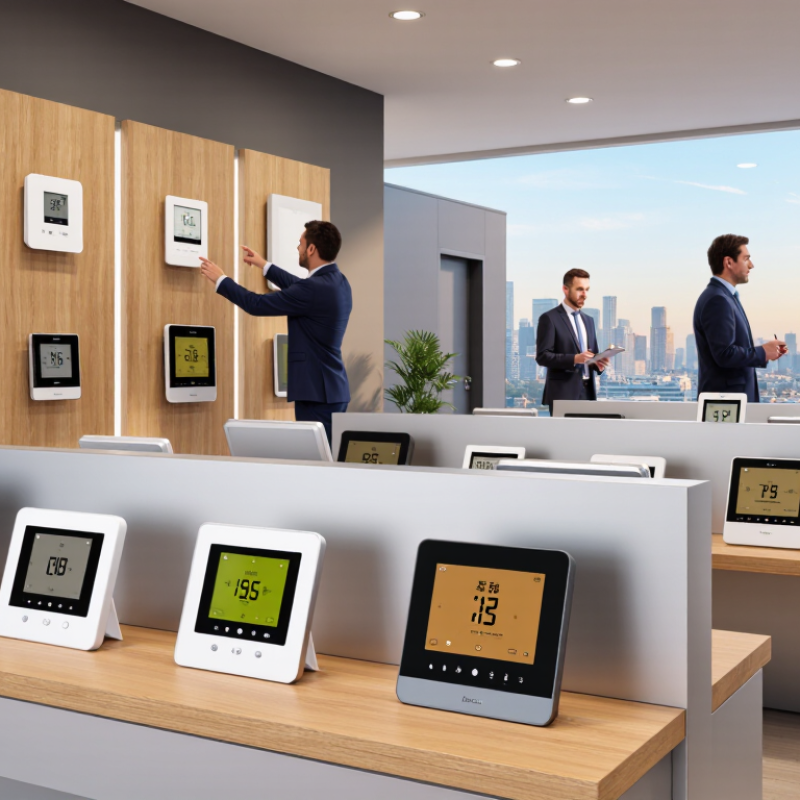
What Is a Programmable Thermostat?
A programmable thermostat is a control device that adjusts heating or cooling according to a preset schedule. Unlike a basic thermostat, it can change the indoor temperature automatically during the day. For example, it may lower heating at 11 p.m. and restore comfort before the family wakes. This simple timing function can reduce unnecessary energy use.
Most models use a digital screen, temperature sensor, and internal clock. Users can create settings for waking, leaving home, returning, and sleeping. In practical HVAC inspections, correct placement matters greatly. The thermostat should sit on an interior wall, away from sunlight, cooking steam, drafts, and supply vents. A poor location can produce inaccurate readings.
It is not magic.
A programmable thermostat works best when household routines remain fairly stable. People with changing schedules may ignore the preset plan or adjust it repeatedly. That reduces its practical value. I have also seen temperature settings chosen for comfort without checking equipment limits or local climate conditions. Professional installation can verify wiring, system compatibility, sensor accuracy, and safe operating ranges.
When comparing manufacturers in China, buyers should examine testing records, control accuracy, material quality, warranty terms, and technical support rather than relying only on appearance or price. A clear manual and responsive service team often matter more than extra screen features.
How Chinese Programmable Thermostat Manufacturers Are Evaluated
China Top 10 Programmable Thermostat Manufacturers?
Evaluating Chinese programmable thermostat manufacturers requires more than comparing catalog prices. A reliable review examines engineering experience, production controls, and documented field performance. Ask for test records showing temperature accuracy, relay durability, and battery behavior. A practical benchmark checks operation at 5°C and 30°C, with accuracy near ±0.5°C.
Look for clear quality systems and traceable assembly records. Each unit should connect to a production batch, inspection date, and test operator. Manufacturers with in-house firmware teams can usually handle scheduling logic, sensor calibration, and interface changes more effectively. Compatibility also matters. Confirm support for selected wiring systems, communication protocols, and power requirements before ordering samples.
Sample testing should include repeated heating cycles, screen readability, button response, and recovery after power loss. Test it in a real room.
Factory audits can reveal details that brochures omit, such as loose terminals or inconsistent labeling. Ask how rejected units are isolated and how corrective actions are recorded. Certifications should match the target market and product configuration, not merely appear in a presentation. A polished sample can mislead. One weakness in this evaluation is that short tests may miss failures after months of switching. Longer pilot runs, transparent warranty data, and responsive technical support provide stronger evidence of reliability. Supplier claims still need independent verification.
China Top 10 Programmable Thermostat Manufacturers? – How Chinese Programmable Thermostat Manufacturers Are Evaluated
This chart presents a practical B2B evaluation framework for programmable thermostat manufacturers. The percentages represent the relative importance of each criterion when assessing suppliers, rather than rankings or performance data from individual companies.
Product quality, compliance, customization capability, and manufacturing reliability usually carry the greatest weight because they directly affect safety, integration, total cost, and long-term customer satisfaction.
China’s Top 10 Programmable Thermostat Manufacturers
China’s Top 10 Programmable Thermostat Manufacturers deserve careful comparison, not quick rankings. Strong candidates usually combine stable production, accurate temperature control, and responsive technical support. Their product lines may include Wi-Fi, touchscreen, floor-heating, and multi-zone models. Some factories specialize in private-label production, while others develop complete control systems. The best choice depends on application, installation method, and target market.
A reliable evaluation should examine factory experience, quality procedures, and test records. Ask how each manufacturer checks sensor accuracy, relay durability, and power-failure recovery. A thermostat should hold a steady room temperature, even when outdoor conditions change sharply. Review wiring diagrams carefully. Small terminal differences can create installation problems. Confirm current certifications for the destination market, such as safety and electromagnetic compatibility requirements. Factory audits, sample testing, and traceable batch records add practical confidence. However, online information can be incomplete. My own review would never replace independent testing.
Tips: Request three samples from different batches. Compare readings beside a calibrated thermometer. Test scheduling, screen visibility, and Wi-Fi reconnection. Inspect the enclosure, terminals, and included instructions. A low unit price can hide higher service costs. Ask about firmware updates and replacement policies before ordering. Also, avoid judging manufacturers only by polished catalogs. A plain-looking supplier may deliver better consistency, although this assumption can still be wrong.
China Top 10 Programmable Thermostat Manufacturers? - China’s Top 10 Programmable Thermostat Manufacturers
| Rank |
Anonymous Manufacturer Profile |
Primary Product Focus |
HVAC Compatibility |
Programming |
Connectivity |
Power Options |
Typical Temperature Range |
OEM/ODM Support |
Common Compliance Markets |
| 1 |
Profile 01 |
Wi-Fi smart thermostats |
Single-stage and multi-stage HVAC |
7-day, 5+2-day |
2.4 GHz Wi-Fi |
24 VAC, battery backup |
5–35 °C |
Available |
North America, Europe |
| 2 |
Profile 02 |
Wired digital thermostats |
Boilers, radiators, fan-coil units |
5+2-day |
None / optional gateway |
230 VAC, battery |
5–35 °C |
Available |
Europe, Middle East |
| 3 |
Profile 03 |
Fan-coil thermostats |
2-pipe and 4-pipe fan coil |
Daily scheduling |
RS-485 / optional Wi-Fi |
85–265 VAC |
5–35 °C |
Available |
Asia-Pacific, Europe |
| 4 |
Profile 04 |
Electric floor-heating controls |
Electric underfloor heating |
7-day, holiday mode |
Wi-Fi / Bluetooth options |
90–240 VAC |
5–45 °C |
Available |
Europe, North America |
| 5 |
Profile 05 |
Heat-pump thermostats |
Heat pumps with auxiliary heat |
7-day, adaptive recovery |
Wi-Fi |
24 VAC |
5–37 °C |
Available |
North America, Australia |
| 6 |
Profile 06 |
Commercial HVAC controllers |
AHU, FCU and packaged systems |
Weekly scheduling |
Modbus RS-485 |
24 VAC / 230 VAC |
0–50 °C |
Available |
Global commercial projects |
| 7 |
Profile 07 |
OEM programmable room thermostats |
Boilers and hydronic systems |
6-period daily schedule |
No wireless connection |
Battery powered |
5–35 °C |
Available |
Europe, Asia-Pacific |
| 8 |
Profile 08 |
Smart-home integrated thermostats |
Residential HVAC and radiant heating |
7-day, scene-based control |
Wi-Fi, Bluetooth, app control |
24 VAC or batteries |
5–35 °C |
Available |
Global consumer markets |
| 9 |
Profile 09 |
Low-voltage programmable controls |
Central air-conditioning systems |
5+2-day, vacation mode |
Optional Wi-Fi module |
24 VAC |
7–35 °C |
Available |
North America, Latin America |
| 10 |
Profile 10 |
Basic programmable thermostats |
Electric heating and cooling |
Daily and 5+2-day |
No connectivity |
Batteries |
5–35 °C |
Available |
Asia-Pacific, Africa |
Key Features and Technologies to Compare
China Top 10 Programmable Thermostat Manufacturers: Key Features and Technologies to Compare
When comparing China’s leading programmable thermostat manufacturers, examine control accuracy, scheduling flexibility, and HVAC compatibility. A reliable unit should support daily and weekly programs, multiple heating stages, cooling stages, and fan control. Look for temperature accuracy near ±0.5°C, but verify how manufacturers test it. Laboratory figures may not match a drafty office or sunlit bedroom. Small details matter.
Connectivity also deserves careful review. Wi-Fi, Bluetooth, or wired communication can support remote adjustments and building automation. Check whether the thermostat works during internet interruptions. Local memory is useful because schedules should continue offline. Energy reports, adaptive recovery, open-window detection, and occupancy sensing may reduce waste. However, advanced sensors can create false readings when installed near vents, windows, or appliances. Installation guides, wiring diagrams, certifications, warranty terms, and technical support reveal a manufacturer’s practical reliability.
Tips: Compare real test data, not only catalogue claims. Ask for calibration records, sample units, and compatibility lists before selecting a supplier. Confirm data protection practices and software update policies. My own comparisons have not always been tidy; a feature-rich model can perform poorly with weak installation support. Review screen visibility, button response, battery life, and replacement access. Also inspect the terminal design. A thermostat that is difficult to wire may increase project time and service costs.
How to Choose the Right Chinese Manufacturer
When comparing China’s top ten programmable thermostat manufacturers, inspect their production evidence, not only their websites. A reliable supplier should provide factory photos, audit records, and recent quality reports. Ask whether the factory controls circuit boards, sensors, software, and final assembly. This reduces delays between subcontractors. Request a working sample before discussing large orders. Test temperature accuracy, screen visibility, button response, and Wi-Fi stability in real rooms.
Check the manufacturer’s experience with your target market. Their engineers should understand electrical safety, radio requirements, energy rules, and installation standards in your selling region. Ask for relevant certificates and test reports, then verify their issuing laboratories independently. A strong supplier explains firmware updates clearly. They also document data handling and user permissions. Do not accept vague promises. Details matter.
Commercial terms need equal attention. Compare minimum order quantities, tooling fees, sample charges, warranty periods, spare parts, and replacement procedures. Ask for a written production schedule with inspection points. I once focused too heavily on unit price and underestimated packaging damage during shipping. That mistake changed my evaluation process. Now I request carton-drop tests, pilot production, and pre-shipment inspections. Some factories may resist these checks. That response itself is useful evidence. A capable partner should discuss defects openly, even when its process is not perfect.