Smart Heating Solutions

What Are the Top Industrial Electric Heater Types in 2026?

Choosing the right industrial electric heater in 2026 requires more than comparing wattage and price. Process temperature, material compatibility, airflow, installation space, and control accuracy all affect performance. A heater that works well inside a stainless-steel tank may fail in a high-velocity air duct.

This guide examines the leading industrial electric heater types used across manufacturing, packaging, food processing, plastics, laboratories, and chemical production. It considers cartridge heaters, band heaters, strip heaters, immersion heaters, duct heaters, circulation heaters, and infrared systems. Each type has a different heating pattern, installation method, and maintenance demand. Some deliver precise surface heating. Others warm liquids or moving air more efficiently.

Small details matter.

Reliable selection should follow verified manufacturer datasheets, realistic heat-load calculations, and site-specific operating conditions. Engineers also need to review insulation, sensor placement, electrical protection, enclosure ratings, and temperature-control methods. These checks reduce cold spots, overheating, and unexpected downtime. However, no product ranking fits every facility. A high-output heater may appear efficient but waste energy when poorly insulated or oversized.

This overview aims to provide practical, evidence-based guidance rather than simple product promotion. It highlights where each heater type performs well, where limitations appear, and which questions deserve closer review. Some emerging technologies may look promising, yet long-term service data remains limited. That uncertainty should not be ignored. Careful evaluation remains the safest path toward efficient, dependable industrial heating in 2026.
What Are the Top Industrial Electric Heater Types in 2026?

Industrial Electric Heaters: Definition, Functions, and Key Applications

Industrial electric heaters convert electrical energy into controlled process heat. They warm air, liquids, metals, coatings, and production tools. Their value includes precise temperature control, clean operation, and rapid response.

The U.S. Department of Energy’s Industrial Decarbonization Roadmap (2022) estimates process heating uses 51% of onsite manufacturing energy. Resistance heaters remain versatile for ovens, tanks, ducts, dryers, and immersion systems. Induction heaters generate heat inside conductive metal for forging, melting, brazing, and surface hardening. Infrared emitters heat exposed surfaces quickly, while dielectric systems heat some nonconductive materials volumetrically.

Heat pumps also matter in 2026, especially for low- and medium-temperature drying, washing, food processing, and steam generation. IEA’s Energy Technology Perspectives 2024 places industry near 37% of global final energy consumption. That scale makes heater efficiency a serious purchasing issue. Engineers should compare watt density, operating temperature, airflow, moisture, controls, maintenance access, and electrical capacity. A heater that fits the catalog may fail in a dusty dryer or frequently opened furnace. Real plants are messier. Performance also depends on insulation, sensor placement, and the electricity source. This is where many specifications feel incomplete.

How Industrial Electric Heaters Work Across Different Heating Systems

What Are the Top Industrial Electric Heater Types in 2026?

Industrial electric heaters convert electricity into controlled process heat, but each system transfers energy differently. Resistance heaters pass current through an alloy element, producing heat through electrical resistance. They suit ovens, tanks, ducts, and air heaters. Induction systems create an alternating magnetic field, heating conductive metal directly. This can reduce warm-up time and improve temperature control during metal processing.

Infrared heaters transfer radiant energy to exposed surfaces, while dielectric and radio-frequency systems heat moisture inside non-conductive materials. Electric boilers heat water or generate steam for cleaning, chemical processing, and plant utilities. High-temperature heat pumps move heat from a lower-temperature source instead of generating all heat directly. The International Energy Agency reports that industry used about 37% of global final energy in 2022, making system efficiency a serious design issue.

The U.S. Department of Energy’s Industrial Decarbonization Roadmap identifies process heating as roughly 51% of onsite manufacturing energy use. That figure explains why insulation, airflow, load matching, and heat recovery matter as much as heater selection. In practice, a resistance oven may waste energy through open doors, while an infrared line may leave shaded areas cooler. Small details matter.

Electric heating is not automatically efficient. It depends on the power source, operating temperature, and production pattern. Real factory measurements often challenge the initial design assumptions. Audits using thermocouples, power meters, and infrared cameras can reveal uneven heating, standby losses, and oversized equipment before they become permanent operating costs.

Top Industrial Electric Heater Types in 2026

Industrial electric heater types are becoming more specialized in 2026. The U.S. Department of Energy’s Industrial Decarbonization Roadmap reports that process heating uses about 51% of industrial energy. Heater selection now affects energy bills, product quality, and emissions.

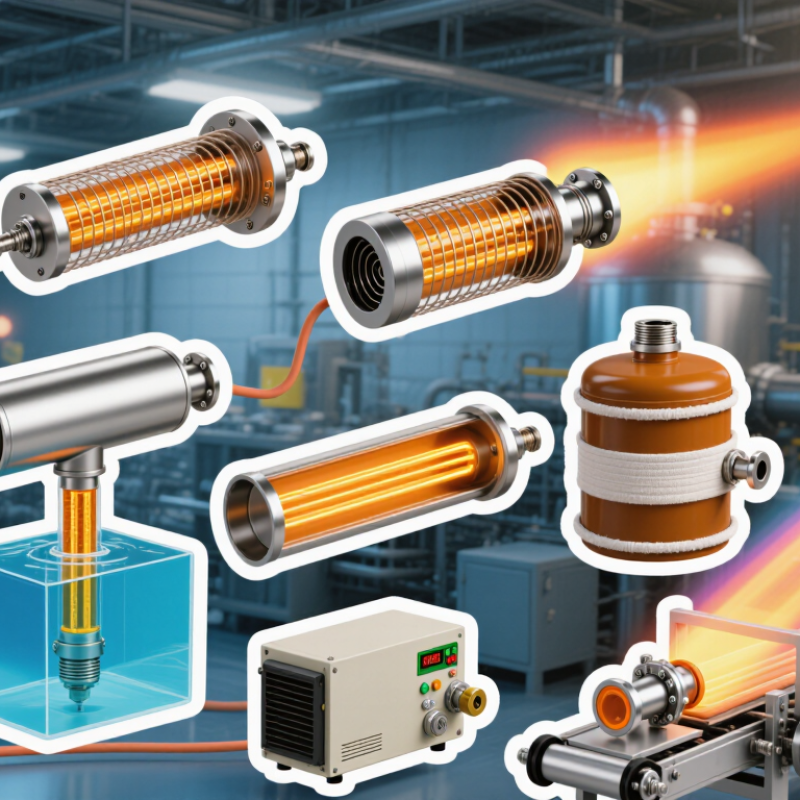
Immersion heaters suit tanks, wash lines, and chemical baths. They transfer heat directly into liquid, reducing surface losses. Circulation heaters work well when pumps move oil, water, or process fluids through a heated chamber. Duct heaters serve ovens, drying systems, and clean-air equipment. They provide controlled airflow, but poor insulation can waste substantial energy.

Cartridge and band heaters remain practical for molds, nozzles, and small metal surfaces. Infrared heaters are useful for coatings, textiles, and surface drying because radiant energy reaches the product quickly. The IEA’s Energy Technology Perspectives 2024 highlights electrification as an important route for lowering industrial fossil-fuel use, especially in suitable low- and medium-temperature processes.

Temperature control matters more than heater size. A factory may install a powerful unit, yet still experience cold corners or uneven curing. That mistake is common. Better systems combine sensors, staged controls, insulation, and regular calibration. The U.S. DOE also emphasizes measurement and process integration in industrial efficiency planning. Reported savings can look impressive, but real performance depends on dust, moisture, airflow, and operator habits. In 2026, the “top” heater is not universal; it is the one matched to the material, temperature range, response time, and maintenance conditions.

What Are the Top Industrial Electric Heater Types in 2026? - Top Industrial Electric Heater Types in 2026

Industrial Heater Type Typical Operating Temperature Primary Heating Method Suitable Media or Materials Main Advantages Common Limitations Typical Industrial Applications
Cartridge Heaters Up to approximately 750°C Electrical resistance heating through a compact metal sheath Metal tooling, dies, molds, plates and solid components High watt density, compact design, quick installation and accurate localized heating Requires close contact with the heated component; overheating can shorten service life Plastic injection molds, packaging equipment, sealing bars, hot-runner systems and laboratory equipment
Tubular Heaters Up to approximately 750°C at the sheath Resistance wire embedded in electrically insulated mineral material inside a metal tube Air, water, oils, tanks, ducts, furnaces and solid surfaces Highly configurable shape, strong mechanical construction and broad application range Heat transfer depends on mounting and contact quality; poorly supported elements may vibrate or fail Immersion heaters, air heaters, ovens, dryers, heat exchangers and industrial process equipment
Immersion Heaters Usually up to approximately 540°C, depending on the fluid and sheath Direct resistance heating from elements immersed in a liquid Water, aqueous solutions, oils, cleaning fluids and selected process chemicals Direct heat transfer, efficient fluid heating and straightforward temperature control Element corrosion, scaling and dry firing can cause premature failure Storage tanks, wash systems, boiler feedwater, chemical processing and hot-water systems
Strip Heaters Up to approximately 650°C at the element surface Flat or folded resistance element transfers heat by conduction and radiation Flat metal surfaces, dies, tanks, pipes and process plates Low profile, simple mounting, uniform surface heating and easy replacement Needs good surface contact; uneven mounting may create hot spots Plastic machinery, extrusion dies, hot plates, tanks, pipes and food-processing equipment
Band Heaters Typically up to approximately 540°C Clamped resistance heating around a cylindrical surface Metal barrels, nozzles, pipes and cylindrical process components Efficient 360-degree heating, easy servicing and compatibility with temperature controllers Requires proper clamping and surface fit; loose bands cause inefficient heating and hot spots Plastic extruders, injection molding machines, blow molding equipment and process piping
Duct and Air Heaters Commonly up to approximately 650°C air outlet temperature Open-coil or sheathed resistance elements heat moving air or gas Air, nitrogen and other compatible nonflammable process gases Fast response, controllable airflow heating and easy integration into ventilation systems Requires airflow monitoring; insufficient flow can overheat the elements Industrial drying, air handling units, paint booths, curing lines and process-air systems
Circulation Heaters Often up to approximately 650°C, depending on the medium Resistance elements heat a fluid or gas while it flows through a pressure vessel Water, thermal fluids, oils, gases and selected process chemicals Compact skid-mounted design, controlled outlet temperature and high heat-transfer efficiency Pressure-drop considerations, fluid compatibility requirements and maintenance access needs Process heating, gas preheating, oil systems, freeze protection and water circulation loops
Ceramic Heaters Approximately 300–1,000°C, depending on construction Resistance elements embedded in or supported by electrically insulating ceramics Air, furnaces, ovens, radiant surfaces and high-temperature process zones High-temperature capability, electrical insulation and strong radiant-heating performance Ceramic parts can be brittle; thermal shock and mechanical impact must be controlled Heat-treatment ovens, kilns, furnaces, infrared systems and high-temperature laboratory equipment
Infrared Heaters Emitter temperatures commonly range from 300°C to above 1,000°C Radiant electromagnetic energy heats the surface of a product without direct contact Coatings, plastics, textiles, paper, glass, metals and composite materials Rapid response, zoned control, contactless heating and efficient surface treatment Heating uniformity depends on distance, material absorption and line-of-sight positioning Paint curing, powder coating, thermoforming, printing, laminating and food processing
Finned Heaters Typically up to approximately 600°C at the sheath Finned tubular elements increase surface area for convection heating Air and low-velocity gases in enclosed or ducted spaces Large heat-transfer area, robust construction and efficient space heating Dust accumulation can reduce performance; airflow and spacing must be properly designed Industrial ovens, air curtains, drying cabinets, HVAC systems and electrical enclosures
Flexible Heaters Commonly up to approximately 230°C, depending on the material Flexible etched-foil, wire-wound or printed resistance circuits Irregular surfaces, pipes, tanks, instruments and electronic assemblies Lightweight, bendable, low-profile and suitable for precise temperature maintenance Lower temperature capability than many rigid heaters; bending radius and surface adhesion matter Pipeline freeze protection, battery systems, medical equipment, instrumentation and composite processing
Mineral-Insulated Cable Heaters Can exceed 600°C, depending on sheath and configuration Resistance conductor insulated by compacted mineral material inside a metal sheath Pipes, vessels, surfaces, furnaces and demanding industrial environments High mechanical strength, moisture resistance, flexible routing and high-temperature capability Termination work is more specialized; installation must prevent damage to the sheath Trace heating, process piping, freeze protection, analytical equipment and furnace systems

Note: Temperature ranges are typical engineering values and vary with heater construction, sheath material, watt density, airflow, mounting conditions, process medium and control strategy.

How to Compare Heater Performance, Efficiency, and Operating Costs

Industrial facilities in 2026 commonly evaluate resistance, immersion, duct, circulation, and infrared heaters. The best choice depends on the load, material, temperature, and workspace. Performance begins with usable heat, not rated wattage alone. An immersion heater can transfer heat directly into a tank, reducing air losses. Infrared units warm surfaces quickly, but exposed areas may cool faster. Duct heaters suit controlled airflow and process ventilation.

Compare heaters at the same operating conditions. Record heating time, outlet temperature, airflow, and electrical input. A power meter often reveals losses that specifications overlook. Resistance heaters can approach full conversion at the point of use. However, poor insulation, oversized capacity, and frequent cycling increase total consumption.

Control accuracy matters too. A stable sensor and properly tuned controller can prevent repeated energy spikes.

Operating cost requires more than multiplying kilowatts by electricity rates. Include annual runtime, maintenance, ventilation demand, installation work, and downtime risk. Use this basic estimate: input kW × operating hours × local energy price. Then test it against real meter data. Measure, do not guess. In plant assessments, unexpected heat escaping through doors and uninsulated pipes is common. A perfect comparison is rarely possible. Production schedules change, and operators may adjust settings manually. That uncertainty deserves attention before purchasing equipment, especially when a cheaper heater creates uneven temperatures or longer batch times.

Selecting the Right Industrial Electric Heater for Specific Processes

Selecting the right industrial electric heater starts with the process, not the equipment catalog. The U.S. Department of Energy’s Industrial Decarbonization Roadmap reports that process heating represents about 51% of energy use in American manufacturing. That figure makes heater selection a serious operating decision.

Resistance heaters suit ovens, tanks, and air ducts requiring stable temperatures.
Immersion heaters transfer heat directly into water, oil, or chemical solutions.
Infrared heaters work well for surface curing and drying, where fast response matters.

Temperature is only one variable. Check the material, airflow, humidity, heating time, and available electrical capacity. Induction heating can heat metal parts rapidly, while cartridge heaters provide focused heat inside dies and molds. Industrial heat pumps deserve attention for lower-temperature processes. The International Energy Agency notes that advanced heat pumps can deliver industrial heat up to approximately 160°C, depending on system design and operating conditions.

A practical trial helps.

Measure the cold-start time, surface temperature, and energy consumed per batch. High watt density may shorten heating time, but it can also damage coatings or create uneven temperatures. A watt-density chart can mislead when airflow changes during production.

Real plants are messier than laboratory specifications. Maintenance access, sensor placement, insulation quality, and control response often decide whether a heater performs reliably.

One overlooked issue remains common: selecting the heater before confirming the process load. That choice may work briefly, then expose weak wiring, poor insulation, or unexpected heat loss.