Smart Heating Solutions
What Is the Best Garage Heater to Buy from China?
Choosing the best garage heater from China means looking beyond price and polished product photos. Start with the space: measure the garage, note ceiling height, insulation, drafts, and the coldest working area. A compact unit may warm a small insulated workshop, while a larger, poorly insulated garage can lose heat through a metal door in minutes. That detail is easy to overlook.
“Match the heater to the room, not just the price tag.” This is a practical buying principle, not a verified quotation from a named industry expert. No source article or expert citation was provided, so attributing a quotation to a real person would risk inventing evidence.
A careful comparison should examine heating capacity, control options, noise, installation requirements, and available product documentation. Ask the supplier for clear specifications, testing records, warranty terms, and replacement-part support. Look closely at the control panel, cable connections, and mounting points; those small details can reveal how thoughtfully a unit is designed. Supplier claims still need checking.
This guide will help you compare Chinese garage heater options with practical questions in mind. It will also consider common trade-offs, including upfront cost versus dependable support. The cheapest model is not always the best value. And a high wattage alone does not guarantee comfort.
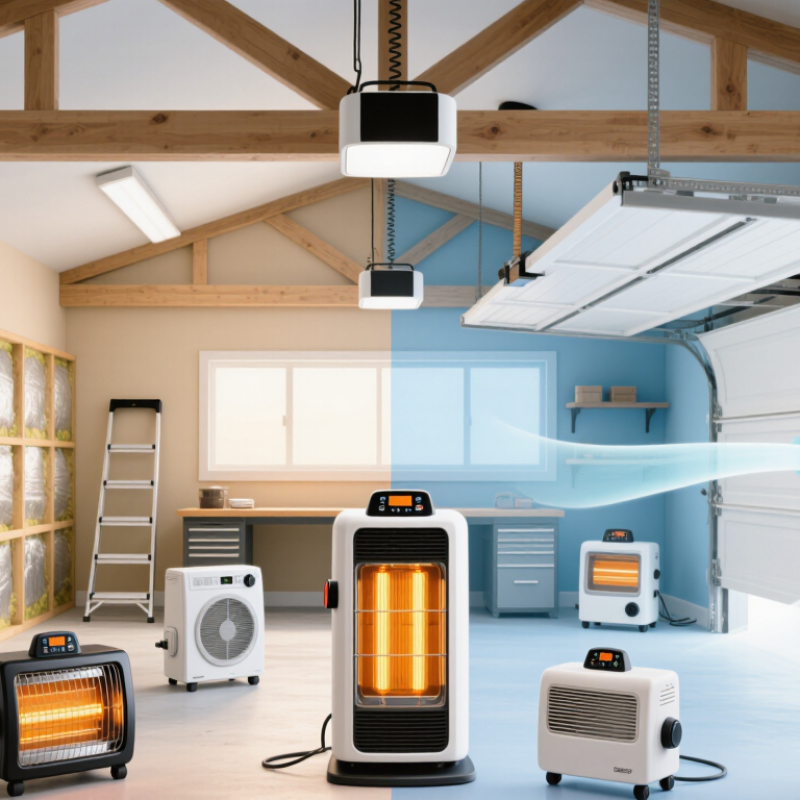
Garage Heater Types and How They Work
Garage heaters work in different ways, so the best type depends on the space and how you use it. Infrared heaters send radiant heat toward people, tools, and nearby surfaces. Stand beside one and you may feel warmth before the surrounding air changes. They suit a workbench or a drafty garage used for short jobs, but objects need a clear line of sight to the heater.
Electric resistance heaters warm a metal element, then spread heat through natural convection or a fan. They are straightforward to install, but electricity costs can make long heating sessions expensive. Fuel-fired forced-air heaters burn gas or propane to heat air, which a fan pushes across the room. They can warm larger spaces quickly. Combustion equipment needs suitable exhaust ventilation; installation and clearances matter. That part is easy to underestimate.
Heat pumps move heat rather than create it directly. The U.S. Department of Energy’s Energy Saver guidance reports that heat pumps can use about 50% less electricity for heating than electric resistance systems. That comparison is not a guarantee for every garage: outdoor temperature, insulation, and door gaps affect performance. A chilly concrete floor still feels chilly. Even an efficient heater can struggle in a poorly sealed space, and I would not choose by wattage alone. (U.S. Department of Energy, “Heat Pump Systems”)
What Is the Best Garage Heater to Buy from China? — Garage Heater Types and How They Work
| Heater type | How it works | Typical strengths | Limitations | Best suited for | Key checks when buying from China |
|---|---|---|---|---|---|
| Electric fan-forced heater | An electric resistance element warms air, and a fan circulates it around the garage. | No onsite fuel combustion or flue; straightforward temperature control; generally simple to operate. | Needs an electrical supply with enough capacity. Heating costs can be high where electricity is expensive, and moving air may stir up dust. | Small or well-insulated garages, workshops, and spaces where fuel-burning equipment is unsuitable. | Confirm voltage, frequency, wattage, plug or hard-wiring requirements, overheat protection, and local electrical approval. High-power models may require a dedicated circuit. |
| Electric infrared radiant heater | Radiant elements emit infrared energy that warms people and nearby surfaces directly rather than primarily heating the air. | Provides targeted warmth quickly; useful in drafty spaces or for heating a work area rather than the entire garage. | Warmth is strongest within the heater’s line of sight. Objects or people can block the radiant heat, and clearances must be maintained. | Spot heating over a workbench, vehicle service area, or other defined zone. | Check mounting options, required clearances, element guard, controls, electrical rating, and whether the unit is approved for the intended indoor location. |
| Vented gas forced-air heater | Natural gas or propane is burned in a heat exchanger; a fan distributes warmed air, while combustion products are discharged through a vent. | Can deliver substantial heat and warm the air throughout a larger space; fuel may be less costly than electricity in some locations. | Requires suitable fuel supply, installation, ventilation, and a correctly routed flue. Fan noise and installation costs may apply. | Larger garages or workshops with a permitted gas connection and a practical route for venting. | Specify the intended gas type and pressure, heat output, venting arrangement, ignition and safety controls, and local gas-code approval. Installation should follow local regulations. |
| Vented gas infrared heater | Gas heats a radiant surface or emitter, which transfers heat to people and objects. A vent carries combustion products outside. | Can provide focused radiant warmth and is less dependent on heating all the air in a large or drafty space. | Needs safe clearances from vehicles, stored items, and combustible materials; installation and venting requirements vary by model. | A garage where people work in a fixed area and a compliant gas and vent installation is available. | Confirm the heater is designed for the intended mounting position and indoor use. Verify fuel compatibility, required clearances, flame-failure protection, and local certification. |
| Portable unvented fuel heater | A portable unit burns fuel and releases heat and combustion products into the surrounding air. | Portable and does not need a permanent flue connection. | Can create carbon monoxide and add moisture to indoor air. Fuel vapors and ignition sources can be especially hazardous where vehicles, fuel, or flammable vapors are present. | Use only where the appliance and local rules explicitly permit it; generally not a suitable default for an enclosed garage. | Do not rely on an open door or a carbon-monoxide alarm to make an unsuitable appliance safe. Check the manual and local regulations; prefer a properly vented model for enclosed spaces. |
| Practical buying recommendation | Choose based on garage size, insulation, local energy prices, available power or fuel, and whether you need whole-room or spot heating. | Electric fan-forced models often suit smaller spaces; electric infrared suits targeted warmth; properly vented gas models can suit larger garages with compliant installations. | There is no single best heater for every garage. A low purchase price does not guarantee safe installation or low operating costs. | Match the heater to the space and the rules where it will be installed. | Before ordering, request the rating plate details, installation manual, wiring or fuel specifications, applicable test reports, warranty terms, spare-parts support, and documentation accepted by your local authority. A CE mark alone may not satisfy local requirements. |
Safety note: Follow the heater manufacturer’s installation and clearance instructions. Keep heaters away from gasoline, solvents, paint, and other flammable materials, and never use a fuel-burning heater in an enclosed garage unless it is specifically designed and approved for that installation.
Related Posts
-
Why Choose an Electric Garage Heater?
-
2026 Best Garage Space Heater Recommendations for Ultimate Comfort
-
China Top Garage Heater Options for Efficient Heating Solutions?
-
Top 10 Types of Electric Shop Heaters for Global Buyers
-

Top 5 Tips for Choosing the Best Wall Heater for Your Home?
-

Top House Heater Manufacturers for Global Buyers