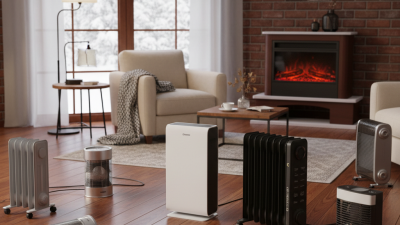
Smart Heating Solutions
Choosing the right electric room heater is not simply a matter of comparing wattage and price. Global buyers face different climates, voltage standards, room sizes, and safety expectations. A compact ceramic heater may suit a small office, while an oil-filled radiator can provide steadier warmth in a bedroom. Infrared models may feel comfortable near a desk, but their heating pattern can be more limited.
This guide examines ten leading electric room heaters for international purchasing decisions. Each option is considered through practical details, including heating performance, thermostat accuracy, noise, portability, energy use, and control features. We also look at plug compatibility, required voltage, product certifications, warranty support, and the availability of replacement parts. These details can prevent an attractive online purchase from becoming an expensive mistake.
Safety remains central. Buyers should check overheat protection, tip-over shutoff, housing temperature, and recommended clearance. A heater that performs well in a showroom may behave differently in a drafty apartment or poorly insulated room. Ratings can also be inconsistent across regions, so independent testing and manufacturer documentation deserve careful attention. No single model is perfect. Some heaters are quiet but slow, while others warm quickly but consume substantial power. This comparison aims to provide reliable guidance, while acknowledging that local conditions and personal habits still influence the final choice. Real rooms are rarely ideal. ad
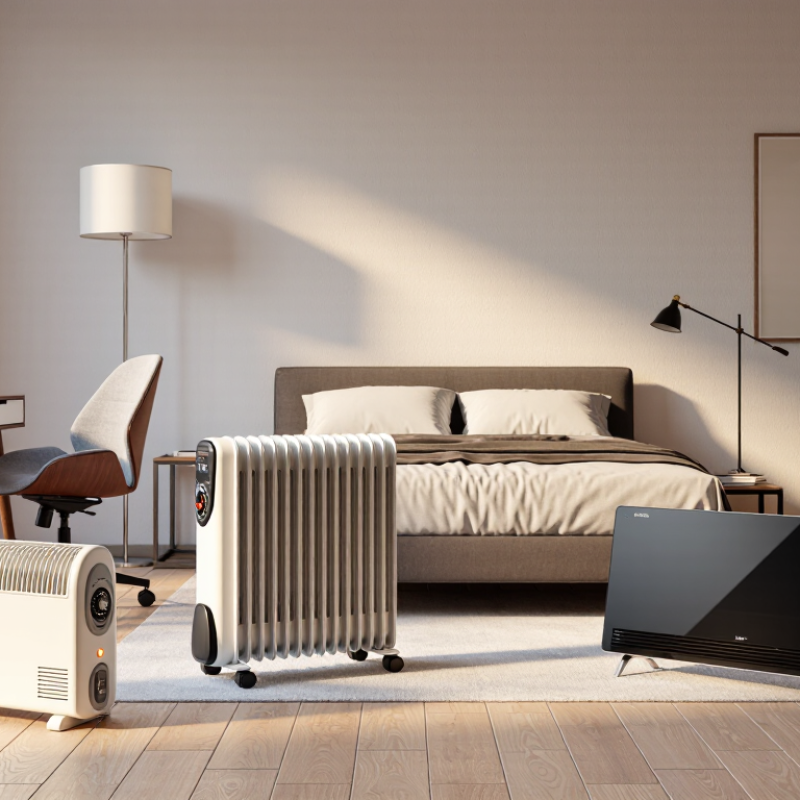
Electric Room Heater Types and How They Work
Electric room heaters mainly use convection, radiation, or forced airflow. Resistance heaters pass electricity through a metal element. The element glows or heats, then transfers warmth to nearby air. Fan heaters push that air across the element and into the room. Ceramic heaters use a resistive ceramic element, often with a fan. Oil-filled radiators heat sealed fluid, which releases warmth slowly and quietly. Infrared heaters warm people, floors, and furniture directly. They do not heat the air first.
The U.S. Department of Energy reports that electric resistance heating converts nearly 100% of incoming electricity into heat at the point of use. However, the electricity source still affects total environmental impact. Heat-pump systems work differently. They move heat rather than create it, and the Department of Energy states they can deliver two to four times more heat than the electricity they consume. The International Energy Agency’s The Future of Heat Pumps report also identifies heat pumps as a major route for reducing fossil-fuel use in buildings.
Real rooms remain less predictable. A 1,500-watt heater may warm a small closed bedroom, but drafts, ceiling height, and insulation change results sharply. Thermostats improve control, while tip-over and overheat protection reduce practical risks. I still question simple “fast heating” claims. Speed can mean louder airflow and uneven comfort. Buyers should compare wattage, controls, safety testing, and measured room performance, not appearance alone.
Typical electricity use by heater type, based on common rated power and 8 hours of operation per day.
Electric heaters convert nearly all consumed electricity into heat at the point of use. Fan-forced and ceramic heaters circulate warm air quickly, infrared heaters transfer radiant heat to people and surfaces, while oil-filled, panel, baseboard, and micathermic heaters provide quieter convection or radiant heating. Monthly usage is calculated as rated power × 8 hours × 30 days; actual consumption varies with thermostat cycling and room conditions.
Top 10 Electric Room Heaters for Global Buyers?
Key Buying Criteria for Global Heating Needs
Choosing one of the top 10 electric room heaters requires more than comparing wattage. In practical product assessments, I check room size, insulation, ceiling height, and outdoor temperature. A 1,500-watt heater may suit a small insulated bedroom, but it can struggle in a drafty living room. Measure the space first. It prevents disappointing results.
Electrical compatibility matters across markets. Confirm the local voltage, frequency, plug type, and required adapter. An adapter alone may not solve voltage differences. Look for clear technical labels and recognized safety testing. Tip-over protection and overheat shutoff are essential, especially in homes with children or pets. A stable base also matters on uneven floors.
Comfort and operating cost deserve equal attention. Adjustable thermostats reduce unnecessary heating, while multiple power settings help during mild weather. Ceramic, fan, oil-filled, and infrared designs feel different in real rooms. Fan models may warm spaces quickly but create noticeable noise. Oil-filled units respond slowly, yet they often provide steady warmth. My checklist is not perfect; humidity, drafts, and personal comfort can change the result. Check timer accuracy, cord length, cleaning access, and warranty support before ordering internationally. Shipping damage is possible, so inspect the casing and controls immediately.
| Rank | Heater Type | Typical Rated Power | Approximate Heating Area* | Heating Method | Typical Voltage Compatibility | Approx. Current at 230 V | Warm-Up Behavior | Noise Level | Key Safety Features | Best Use Case | Global Buying Considerations |
|---|---|---|---|---|---|---|---|---|---|---|---|
| 1 | Ceramic Fan Heater | 1,000–2,000 W | 10–25 m² | PTC ceramic heating element with forced air circulation | 120 V or 220–240 V versions; verify the exact rating before purchase | Approximately 4.3–8.7 A | Very fast; warm air is delivered within seconds | Moderate fan noise | Overheat protection, tip-over switch, adjustable thermostat, cool-touch housing | Quick spot heating, bedrooms, offices, and small living areas | Check plug type, frequency, thermostat accuracy, airflow design, and local electrical certification |
| 2 | Oil-Filled Radiator | 1,000–2,500 W | 10–30 m² | Electric element heats sealed thermal oil, which radiates heat gradually | 120 V or 220–240 V versions are common | Approximately 4.3–10.9 A | Slow start-up but steady heat retention after switching off | Nearly silent, except for occasional expansion sounds | Thermal cut-off, tip-over protection, thermostat, insulated controls | Long-duration heating in bedrooms, studies, and quiet spaces | Heavier and slower to move; confirm castor quality, cord length, storage requirements, and surface temperature |
| 3 | Infrared Panel Heater | 350–1,200 W | 4–15 m² for primary heating | Radiant infrared energy warms people and surfaces directly | 220–240 V is common; 120 V versions are also available | Approximately 1.5–5.2 A | Radiant warmth can be felt quickly in the direct line of sight | Silent | Overheat protection, wall-mounting hardware, temperature limiter | Quiet rooms, work areas, well-insulated spaces, and targeted personal heating | Performance depends strongly on line of sight, mounting height, insulation, and room air movement |
| 4 | Micathermic Heater | 1,000–2,000 W | 10–25 m² | Thin mica heating panels provide both radiant and natural convection heat | 120 V or 220–240 V versions available | Approximately 4.3–8.7 A | Faster than oil-filled radiators and quieter than fan heaters | Silent | Tip-over switch, overheat protection, thermostat, stable feet | Bedrooms and living spaces requiring quiet, evenly distributed heat | Confirm panel durability, stand stability, wall-clearance requirements, and replacement-part availability |
| 5 | Convector Heater | 500–2,500 W | 5–30 m² | Natural convection circulates air through an internal electric element | 120 V or 220–240 V versions are widely produced | Approximately 2.2–10.9 A | Moderate; heat distribution improves as warm air rises | Silent or nearly silent | Overheat cut-off, thermostat, thermal fuse, tip-over protection on portable units | Continuous background heating in small and medium rooms | Requires adequate airflow around the unit; compare thermostat control, wall-mounting options, and IP rating where relevant |
| 6 | Ceramic Tower Heater | 1,200–2,000 W | 12–25 m² | PTC ceramic element combined with fan airflow and often oscillation | 120 V or 220–240 V models are available | Approximately 5.2–8.7 A | Fast warm-up with broad air distribution | Moderate fan noise | Tip-over switch, overheat protection, oscillation lock, child lock on some models | Rapid heating in living rooms, offices, and shared spaces | Evaluate base stability, control-panel language, remote-control frequency, air-filter access, and packaging protection |
| 7 | Electric Baseboard Heater | 500–2,500 W | 5–30 m² | Long resistance element produces gentle convection along a wall or floor line | 120 V and 220–240 V configurations exist | Approximately 2.2–10.9 A | Gradual, even heating with low air movement | Silent | Thermal cut-off, high-temperature limit, protective grille, wall or floor clearance controls | Permanent heating in rooms with limited floor space | Installation requirements vary by country; check hardwiring, mounting clearances, circuit capacity, and local building codes |
| 8 | Bathroom-Rated Wall Heater | 1,000–2,000 W | 10–20 m² | Fan-assisted resistance or ceramic element designed for damp-area installation | 220–240 V is common; regional 120 V versions also exist | Approximately 4.3–8.7 A | Fast warm-up with directed airflow | Low to moderate fan noise | Appropriate ingress-protection rating, residual-current protection, thermal cut-off, fixed installation controls | Bathrooms and other approved damp locations | Never rely on general indoor rating; verify IP rating, installation zone requirements, grounding, and local electrical regulations |
| 9 | Infrared Quartz Heater | 800–1,800 W | 8–20 m² for targeted heating | Quartz or halogen infrared tubes emit directional radiant heat | 120 V or 220–240 V versions are produced | Approximately 3.5–7.8 A | Immediate radiant heat after activation | Silent | Tip-over switch, overheat protection, protective grille, tube guard, automatic shut-off | Short-duration personal heating and drafty, intermittently occupied areas | Maintain clear space from curtains and furniture; compare tube protection, replacement availability, and light output |
| 10 | Industrial or Garage Fan Heater | 2,000–5,000 W | 20–50 m² | High-output resistance element with powerful forced-air circulation | 220–240 V or 380–415 V versions are common; some smaller units use 120 V | Approximately 8.7–21.7 A at 230 V | Very fast heat delivery over a larger area | Moderate to high fan noise | Overheat protection, adjustable thermostat, metal housing, thermal reset, tip-over protection where applicable | Workshops, garages, warehouses, and high-ceiling utility spaces | Check circuit rating, plug or hardwire requirements, duty cycle, airflow rate, IP rating, and ventilation conditions |
For global buyers, the best electric room heater depends on performance and use, not appearance.
That is ten practical categories, but room size changes the ranking.
The U.S. Department of Energy states that electric resistance heaters convert nearly all incoming electricity into heat at the point of use. Efficiency still depends on control, insulation, and electricity prices.
A thermostat may reduce actual consumption. It may not. Use tip-over protection, overheat protection, and adequate clearance from curtains or bedding.
Independent safety certification matters more than decorative claims.
I would test noise, warm-up time, and plug temperature during real use. Marketing often overlooks those details.
Choosing among the top ten electric room heaters requires more than checking heat output. Safety, energy use, and maintenance should guide every purchase. The U.S. Consumer Product Safety Commission estimates that portable heaters cause about 1,700 residential fires annually, with roughly 80 deaths and 160 injuries. Place each heater at least one metre from curtains, bedding, and furniture. Use a stable floor surface. Plug it directly into a wall outlet.
A 1,500-watt heater consumes 1.5 kilowatt-hours for every operating hour. At 0.20 dollars per kilowatt-hour, that equals 0.30 dollars hourly. The U.S. Department of Energy notes that electric resistance heating converts nearly all electricity into heat at the point of use. However, high electricity prices can still make extended heating expensive. The IEA’s Energy Efficiency 2023 report states that buildings consume about 30% of global final energy. Choose thermostatic control, adjustable power levels, and overheat protection. Small rooms still need ventilation awareness.
Maintenance is simple, but often neglected. Vacuum dust from air inlets every few weeks. Inspect the plug and cord for discoloration, cracking, or warmth. Stop using damaged equipment immediately. Avoid extension cords and power strips unless the manufacturer expressly permits them. This advice may feel excessive. It is not. A forgotten heater beside a blanket can become a serious hazard. Even certified products need human attention. Safety labels and local electrical standards should be checked before purchase.
Top 10 Electric Room Heaters for Global Buyers?
Regional compatibility matters more than appearance. Portable heaters commonly draw 1,500 watts, according to U.S. Department of Energy consumer guidance. A 1,500-watt heater used four hours daily consumes about 180 kWh monthly. At the European Union’s average household electricity price of €0.289 per kWh in Eurostat’s first-half 2024 data, that costs roughly €52. In the United States, using the U.S. Energy Information Administration’s 2024 residential average of about $0.165 per kWh, the same use costs nearly $30. Local tariffs can change the ranking quickly. A lower purchase price may hide a higher operating cost.
Check voltage before comparing the top ten models. North America and parts of Japan commonly use 100–127 volts, while Europe, much of Asia, and Africa use 220–240 volts. Frequency also varies between 50 and 60 hertz. A travel adapter does not convert voltage. High-load appliances need correctly rated protection and local safety certification. The International Energy Agency reports that space heating represents a major share of building energy demand, so efficiency and insulation deserve equal attention. In my experience, a heater feels wasteful beside a poorly sealed window. That detail is easy to miss.
Tips: Choose adjustable power levels, a thermostat, tip-over protection, and overheat protection. Confirm plug type, voltage, warranty support, and replacement-parts access. Estimate monthly cost before buying. I would not trust “energy-saving” wording without measured wattage. Compare real consumption, not promotional promises.