Smart Heating Solutions
An electric unit heater can warm a workshop, warehouse bay, or service room without heating every connected space. That targeted approach is useful where doors open often, occupancy changes by shift, or a cold corner makes routine work uncomfortable. Picture a maintenance bench near a loading door: the goal may be dependable warmth at the work area, not uniform temperatures throughout the building.
There is a broader energy reason to examine heating choices carefully. The U.S. Energy Information Administration’s 2018 Commercial Buildings Energy Consumption Survey reported that space heating accounted for about 32% of commercial buildings’ total energy consumption. That figure does not prove that electric heaters save energy; it shows why matching equipment to the actual space matters. A properly sized unit, sensible thermostat placement, and realistic operating schedule can help avoid heating empty areas. Small details count.
Electric units can also simplify projects where extending fuel piping or installing a flue is impractical. They have no combustion exhaust at the heater, but they still require suitable electrical capacity, safe clearances, and qualified installation. Operating cost deserves an honest comparison, too. Electricity prices, local climate, insulation, and run hours can change the result substantially. Not every building benefits. An electric unit heater is most convincing when its convenience and controllable, localized heat fit the job—not when it is treated as a universal replacement for every heating system. A site assessment is less exciting than a product claim, but it is often the more reliable starting point.
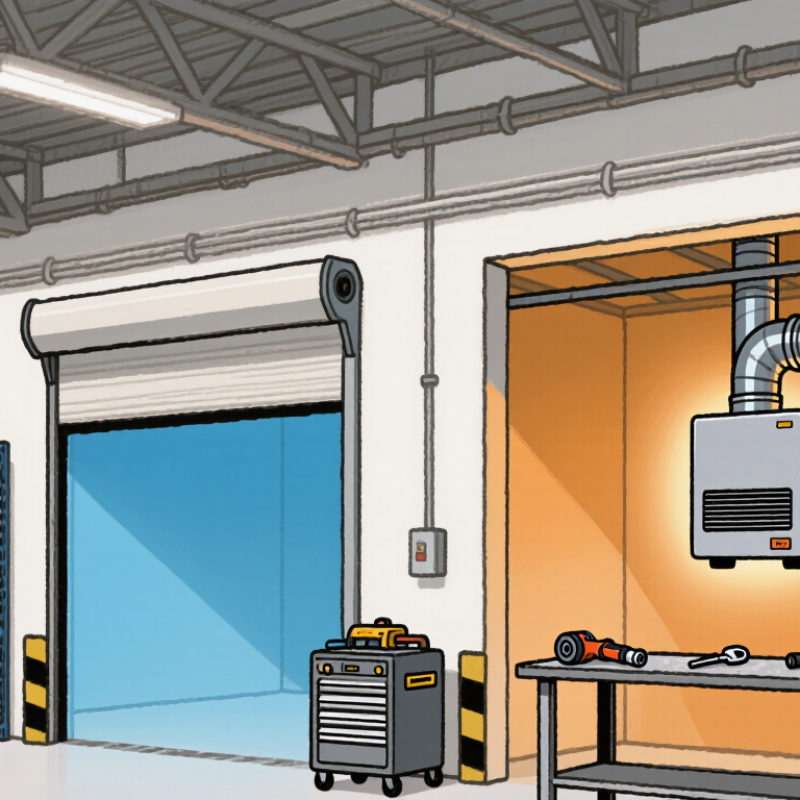
An electric unit heater is a compact appliance designed to warm a defined area, such as a workshop, garage, or loading space. Inside, electrical resistance elements heat up when current flows through them. A fan moves room air across the elements and sends warmed air back into the space. No fuel is burned. There is no combustion flue.
Most units use a thermostat or control to switch heating on and off around a selected temperature. Some also offer fan-only operation, adjustable output, or overheat protection; features vary by model. A unit may be mounted on a wall or ceiling, away from benches and floor clutter. You’ll feel the warmth near the outlet first. Air across a large room may take longer to warm.
The basic idea is simple, but installation details matter. Electrical supply, circuit capacity, mounting height, and clearances affect safe operation and performance. A unit that is too small may run constantly without making the space comfortable. Bigger is not automatically better. Drafts, insulation, and ceiling height can make sizing estimates imperfect. Have a qualified electrician verify the circuit and installation requirements before choosing a unit.
An electric unit heater can warm a defined area without heating every room around it. That matters in workshops, garages, and loading areas where doors open often or people work in one spot. A thermostat switches heat on when the local temperature falls; a ceiling-mounted unit can direct warm air toward a cold workbench. Placement matters. Poor airflow or a blocked outlet can leave cold corners.
The U.S. Energy Information Administration’s 2018 Commercial Buildings Energy Consumption Survey found that space heating accounted for about 32% of commercial-building energy use. A unit heater does not guarantee savings, but targeted operation can help avoid heating unused spaces. The U.S. Department of Energy’s Energy Saver guidance says electric resistance heaters convert nearly all incoming electricity into heat at the point of use. Nearly all. That figure describes conversion, not the cost of electricity or the building’s overall efficiency. Insulation, ceiling height, and door traffic still affect comfort and running costs. A quick temperature check near the occupied area may reveal that the thermostat setting needs adjustment.
Why choose an electric unit heater? A unit heater can provide heat directly to a selected space, supporting zone-by-zone heating. The chart shows calculated heat output at several example electrical input ratings, using 1 kW = 3,412 BTU/h. Actual delivered heat depends on the installation and room conditions.
Electric unit heaters are most useful in spaces that need focused, dependable warmth without extending a central heating system. Think of a detached workshop where an exterior door opens often, or a garage that is occupied only for a few hours. A ceiling-mounted unit can keep the floor clear while directing heat toward a workbench or vehicle bay. That matters on cold mornings.
They also suit loading areas, utility rooms, small warehouses, and other spaces with changing heat needs. In a high-ceiling room, warm air can collect overhead, so placement and airflow deserve attention. A fan-assisted model can move heat through the occupied zone, but it cannot compensate for poor insulation or a heater that is undersized. Check room dimensions, ceiling height, door traffic, and available electrical capacity before choosing equipment. A qualified installer can verify the circuit and mounting requirements.
There is a trade-off. Electric heat avoids on-site combustion, but operating costs may be higher where electricity is expensive. For a seldom-used space, that may be acceptable; for an occupied building running all day, compare expected energy use carefully. Controls also matter. A thermostat placed near a drafty door may keep calling for heat while the rest of the room feels warm. Small detail, big difference. Even careful planning can miss a cold corner, so observe the space during its first few weeks of use.
An electric unit heater can deliver quick, localized warmth to a workshop bay, loading area, or intermittently occupied room. Its fan pushes heat across the space, while resistance elements avoid onsite combustion and need no flue. That can simplify installation where gas piping is unavailable or unwanted. The U.S. Department of Energy’s Energy Saver guidance explains that electric resistance heating converts nearly all incoming electricity into heat at the point of use. No fumes onsite. A thermostat and sensible placement still matter; a heater aimed at an open door wastes useful warmth.
Running cost is the central limitation, especially during long shifts. The U.S. Energy Information Administration’s Electric Power Monthly reported an average U.S. commercial electricity price of about 12.7 cents per kilowatt-hour in 2023. Local tariffs differ, so that benchmark cannot predict a facility’s bill. DOE notes that heat pumps can use about 50% less electricity than electric resistance heating under suitable conditions. That is the catch. A unit heater remains simple and responsive, but its modest purchase cost may hide recurring energy expense. In practice, door openings, ceiling height, and operating hours can overturn neat estimates.
Selecting an electric unit heater starts with the room, not the catalog. Measure floor area, ceiling height, insulation, and how often doors open. A drafty workshop with a tall ceiling loses heat differently from a compact, insulated office. Use a heat-load estimate where possible; floor area alone can mislead. Too little capacity may leave cold corners. Too much can make the heater cycle frequently.
Check the available electrical supply before choosing a heater. Its voltage and current draw must suit the circuit, and installation may require a qualified electrician. Do not assume an existing outlet is adequate. Mounting height and clearances matter, too. Keep the airflow path clear of shelves, stored items, and curtains so warm air can reach the occupied area. A fan heater may feel drafty if it points directly at a desk.
Consider controls and everyday maintenance. A thermostat near a doorway or in direct sunlight may not reflect the room’s temperature. Simple fix? Choose a practical sensing location and check the control range. In dusty or damp spaces, verify that the heater is rated for those conditions; appearance is not a reliable guide. Consider noise and grille cleaning, since neglected airflow can affect comfort. I would revisit the sizing after observing how the room is actually used. That detail is easy to miss.
| Selection Factor | What to Consider | Practical Guidance |
|---|---|---|
| Heating requirement | Room area alone does not determine heater size. Ceiling height, insulation, air leakage, windows, climate, and desired indoor temperature all affect heat loss. | Use a room heat-loss calculation or qualified heating professional to estimate the required heating capacity rather than choosing by floor area alone. |
| Electrical supply | Check the available voltage, circuit capacity, wiring, and whether the installation requires a dedicated circuit. | Match the heater’s electrical requirements to the building supply. Have a licensed electrician verify circuit sizing and installation requirements. |
| Operating cost | Electric resistance heaters convert nearly all the electricity they use into heat at the point of use, but the cost depends on electricity rates and how long the heater runs. | Estimate energy use from the heater’s input rating and expected operating hours, then apply the local electricity price. Compare this with other available heating options. |
| Heating pattern and airflow | Fan-forced models distribute warm air around a space, while radiant models warm people and objects more directly. | Consider whether the space needs broad air circulation, localized comfort, or a combination of both. Account for drafts and obstructions. |
| Mounting and clearances | Ceiling or wall placement can save floor space, but the heater needs suitable mounting support and safe distance from combustible materials. | Follow the product’s installation instructions for mounting height, orientation, and clearance. Do not assume clearances are the same for every model. |
| Controls and temperature management | A built-in or remote thermostat can help maintain a set temperature. Some spaces may benefit from a timer or a separate room control. | Choose controls that suit how the space is used, and place thermostats where they can sense room temperature without being affected by direct heater airflow. |
| Safety and intended location | Dust, moisture, vehicle traffic, and nearby stored materials can affect suitability and safe operation. | Use a heater rated for the location and follow applicable electrical and building codes. Keep air inlets and outlets clear. |
| Noise and comfort | Fan-driven heaters produce airflow and operating noise; the level varies by design and installation. | For quiet work areas or bedrooms, review the manufacturer’s sound information and consider whether a non-fan or lower-noise option is appropriate. |
| Installation and maintenance | Installation may require electrical work, secure mounting, and compliance with local codes. Dust buildup can restrict airflow. | Plan for professional installation where required, and follow the manufacturer’s cleaning and inspection instructions with power disconnected. |
| Best-fit applications | Electric unit heaters can suit garages, workshops, utility rooms, and other spaces where a compact, direct electric heating source is useful. | Confirm that the heater’s capacity, electrical supply, location rating, and operating cost fit the space before purchasing. |
Always follow the heater manufacturer’s instructions and local electrical and building requirements. Actual performance and operating cost depend on the building, installation, usage, and local energy prices.