Smart Heating Solutions
Choosing an industrial heater is not simply a matter of selecting the highest temperature rating. The right unit must match the process, material, workspace, and available energy supply. A heater used to dry coated parts, for example, may need different airflow and controls than one warming a liquid tank. Small mismatches matter. They can cause uneven temperatures, slower production, unnecessary energy use, or premature equipment wear. This guide explains how to compare heater types and define operating requirements before requesting a quote. It also covers details that are easy to overlook, including installation space, maintenance access, and control accuracy. No single design suits every plant.
Start with the process: identify the target temperature, heat-up time, load size, and expected operating schedule. Then consider the equipment’s surroundings. Dust, moisture, ventilation, and nearby materials can affect heater construction and placement. The energy source matters too; electrical and fuel-fired options have different infrastructure and operating requirements. Assess an industrial heater against documented needs, not a vague preference for “more power.” Ask suppliers for relevant performance data, safety features, service intervals, and examples from comparable applications. A careful comparison can narrow the choices, but calculations and site conditions still need qualified review. That part can be inconvenient. And honestly, no checklist captures every quirk of an older plant. Verify assumptions on site before committing; a promising specification sheet is not the same as proven performance in your process.
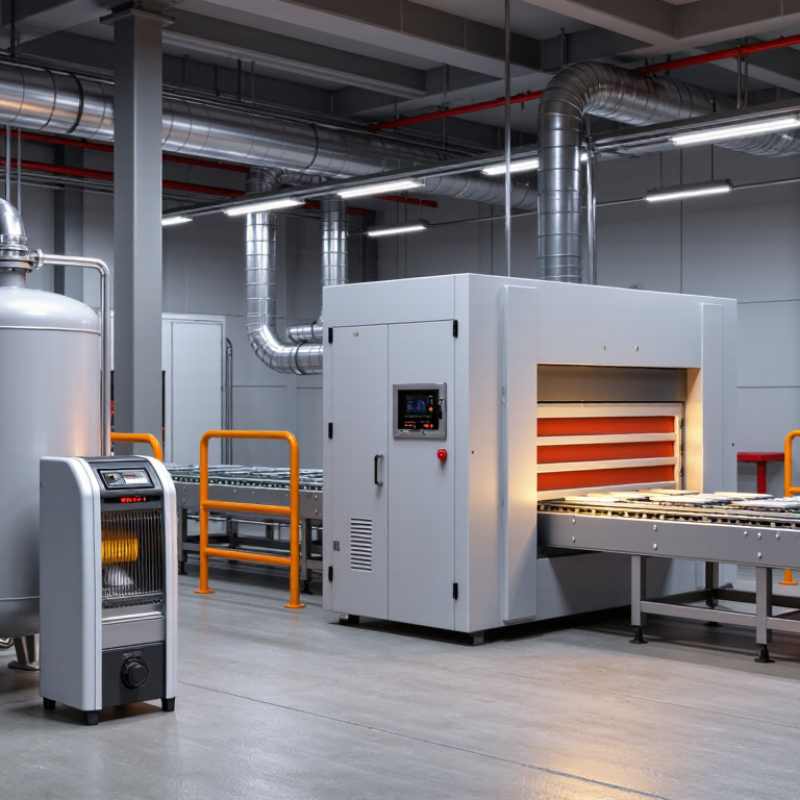
Choosing an industrial heater starts with a clear description of the job. Is it warming air, circulating liquid, or keeping a metal part at temperature? The answer affects heater type, placement, and heat transfer. Record the required temperature, material, batch size, and desired heating time. A target temperature alone is not enough; it can hide the real constraint. For example, a tank may need to reach 80°C, but its contents, flow rate, and insulation determine how much heat the process actually needs. Measure where temperature matters, not just where a sensor is easiest to install.
Then define the operating conditions around the heater. Note ambient temperature, airflow, humidity, dust, washdown exposure, available power, and daily operating hours. These details can change performance and service life. A heater working near a cold loading door may lose heat faster than one inside an insulated enclosure. Intermittent use also differs from continuous operation. Leave room for control equipment and safe maintenance access. Check temperature limits for nearby materials, cables, and process fluids, and confirm the required controls with a qualified engineer. Real sites are rarely as tidy as drawings suggest. Recheck assumptions against the actual installation before selecting equipment.
Compare Industrial Heater Types and Heat-Transfer Methods
Industrial heaters work in different ways, so match the heat-transfer method to the material and process. Electric resistance heaters generate heat at an element, then transfer it through air, a metal surface, or a liquid. They offer precise control for ovens and tanks, but may need careful attention to electrical capacity. Gas-fired heaters can deliver high heat quickly. Direct-fired designs heat process air directly, while indirect-fired units keep combustion gases separate. That matters when product cleanliness is important.
Infrared heaters radiate energy onto surfaces, making them useful for curing coatings or warming moving products. They heat exposed areas quickly, though shadows and uneven spacing can leave cold spots. Immersion heaters transfer heat directly into liquids, while circulation heaters warm fluids as they pass through a heated chamber.
Not always the best fit.
Compare the fluid’s viscosity, flow rate, and operating temperature before choosing. Also consider startup time, insulation, maintenance access, and how steadily the process must hold temperature.
A heater that performs well in a test may behave differently in a drafty plant or with changing product loads. That uncertainty deserves a real-world trial, not just a spreadsheet.
Choosing an industrial heater begins with the material that contacts the process. A stainless-steel sheath may suit many water applications, while corrosive fluids can require a different alloy. Check the fluid chemistry, operating temperature, pressure, and cleaning method against reliable material data. For immersion heating, confirm that the element stays covered and that fluid circulates around it. Low flow can create hot spots. Small details matter.
Size the heater from the material’s mass, heat capacity, target temperature, warm-up time, and heat loss—not tank volume alone. Then select power that meets demand without exceeding the process’s safe temperature. Controls matter just as much. A sensor placed near the outlet may read differently from one beside the heater, so consider where heat must be consistent. A temperature controller can regulate normal operation; an independent high-limit device adds protection. One detail is easy to miss: insulation changes heat loss and may affect the required power. Verify assumptions with process data, and review performance during a controlled commissioning run. No estimate is perfect.
| Heater Type | Best-Fit Process | Common Materials | Power and Heat-Transfer Considerations | Recommended Controls | Key Selection Check |
|---|---|---|---|---|---|
| Immersion heater | Heating liquids directly in tanks, baths, or process vessels. | Copper for compatible, non-corrosive water; stainless steel for many general-purpose liquid applications; nickel-based alloys or other specified materials for elevated temperatures or demanding chemistries. | Available in a wide range of ratings. Size from the liquid mass, specific heat, required temperature rise, heat-up time, and vessel heat loss. Keep watt density within the limit appropriate for the liquid and sheath material. | Temperature controller with a properly located liquid sensor; independent high-limit cutout. Use level protection where low liquid level could expose the elements. | Confirm fluid chemistry, concentration, flow or agitation, minimum liquid level, and allowable sheath temperature. |
| Circulation heater | Heating liquids or gases flowing through an insulated pressure vessel or pipe loop. | Stainless-steel pressure vessel and element sheath are common starting points; select wetted materials to suit the process fluid, pressure, and temperature. | Power depends on flow rate and required outlet-temperature rise, plus system losses. Adequate flow helps limit element temperature and reduce local overheating. | Outlet-temperature PID control, flow or low-flow interlock, and independent over-temperature protection. | Check flow range, pressure rating, fluid compatibility, allowable pressure drop, and startup conditions. |
| Band heater | Heating cylindrical surfaces such as plastic-processing barrels, pipes, and nozzles. | Mica-insulated designs are common for moderate surface temperatures; ceramic-insulated designs can suit higher-temperature service. Stainless-steel outer covers are widely used. | Power is selected for barrel size, insulation, operating temperature, and heat-up time. Good fit and firm contact improve heat transfer and reduce hot spots. | Zone-based PID control with a surface thermocouple; use a high-limit device where overheating could damage the barrel or process material. | Match heater diameter and width to the barrel, and verify the maximum sheath temperature and insulation type. |
| Cartridge heater | Heating dies, molds, platens, and other solid metal tools through drilled holes. | Metal sheath with compacted magnesium-oxide electrical insulation is a common construction. Sheath alloy should be selected for the operating temperature and environment. | Power per cartridge depends on its diameter, heated length, fit, and heat flow into the workpiece. Close-fitting, correctly sized bores help avoid excessive element temperature. | PID control using a thermocouple near the heated zone; independent over-temperature protection for critical tooling. | Check bore tolerance, insertion depth, lead-wire temperature, and permitted watt density for the specific installation. |
| Duct heater | Heating air or other compatible gases in ventilation, process-air, and drying systems. | Finned tubular elements commonly use stainless-steel or nickel-based alloy sheaths, selected for air temperature and operating conditions. | Size using air mass flow, specific heat, required temperature rise, and duct losses. Airflow and element spacing affect heat transfer and element temperature. | Staged or modulating control, airflow proving switch, and automatic high-limit cutouts. Interlock heater operation with the fan. | Verify airflow at all operating conditions, duct temperature limit, electrical supply, and required safety interlocks. |
| Infrared heater | Rapid surface heating, curing, drying, and heating of materials on a production line. | Quartz emitters provide a fast response; ceramic emitters generally have greater thermal mass and slower response. Reflectors are often made from reflective metal. | Choose emitter wavelength and power density for the material, target surface temperature, line speed, and emitter-to-product distance. Coverage and product absorptivity matter as much as total power. | On/off, staged, or power-modulated control; add temperature feedback when product temperature must be tightly managed. | Test the actual material where possible, and account for surface color, moisture, line speed, and surrounding heat-sensitive equipment. |
Power-sizing principle: A first estimate of required heat is Q ≈ m × cp × ΔT ÷ t, plus heat losses, where m is the heated mass, cp is specific heat, ΔT is the temperature rise, and t is the target heat-up time. Final heater rating, materials, and safety controls should be confirmed against the process conditions and applicable electrical and equipment requirements.
Assess the job before comparing heater types. Record the target temperature, process material, room conditions, and hours of operation. A heater warming a small tank needs different controls from one heating a drafty workshop. Check for dust, moisture, corrosive vapors, and nearby combustible materials. These details affect enclosure ratings, placement, and required clearances.
Safety matters. Look for over-temperature protection, reliable sensors, and controls suited to the process. Have a qualified professional confirm electrical supply, grounding, and installation requirements. A heater that fits the budget but overloads a circuit is not a good choice.
Efficiency depends on more than the heater’s rated output. Insulation, air leaks, cycling frequency, and control accuracy all shape energy use. For example, a poorly insulated duct can waste heat before it reaches the work area. Compare operating conditions, not just catalog figures.
Installation also deserves a practical check: Is there enough room for airflow, wiring, and future access? Measure the space, including doors and service panels. Small oversight, big headache.
Maintenance needs can change the decision. Ask how often filters, elements, sensors, or connections require inspection, and whether replacement parts are accessible. Dust buildup may reduce airflow; loose electrical connections can create hazards.
Keep a simple service log with dates, readings, and unusual noises. In real facilities, maintenance plans are sometimes optimistic. Be honest about who will do the work and how much downtime the process can tolerate.
Choosing an industrial heater means checking more than its rated output. Confirm that applicable electrical, fire-safety, and installation standards fit your site and process. Requirements can differ by location and operating environment. Ask for current certificates, test reports, and clear explanations of what each document covers. A label alone is not enough.
Compare total cost over the expected service life, not just the purchase price. Include installation, energy use, controls, routine maintenance, and likely downtime. A heater that runs continuously beside a loading bay may cost more to operate than its specification sheet suggests. Small details matter. Check whether replacement elements are readily available and whether servicing requires production to stop.
Review the supplier’s specifications against your actual conditions: required heat load, temperature range, airflow, materials, enclosure rating, and control accuracy. Request written performance data for those conditions, plus warranty terms and recommended maintenance intervals. If a supplier gives only a broad temperature claim, ask how it was measured. I would also leave room for uncertainty: real process losses can differ from estimates, especially after equipment or workflow changes. A modest design margin may help, but excessive capacity can waste energy and complicate control.