Smart Heating Solutions
Top Plug In Heaters for Room Heating?
A plug in heater for room can make a chilly bedroom or home office feel comfortable without warming every unused corner. But the best choice is not simply the model with the highest wattage. Room size, insulation, thermostat accuracy, noise, and safe placement all shape everyday performance. Small details matter: a heater beside a drafty window may run longer, while one tucked behind a chair may heat unevenly. There is no perfect pick.
The U.S. Energy Information Administration’s 2020 Residential Energy Consumption Survey reports that space heating accounted for about 42% of residential energy use. That figure covers whole homes, not plug-in heaters alone, but it shows why heating choices deserve attention. Energy-efficiency expert Amory Lovins is often credited with the reminder, “The cheapest energy is the energy you don’t use.” It is a useful lens, though it does not tell you which heater will cost less in your home. Electricity rates, room conditions, and usage time matter.
This guide compares leading plug-in heaters for room heating by practical features, including adjustable thermostats, tip-over protection, and output settings. It also separates manufacturer claims from factors a buyer can check. A heater’s comfort can vary from one room to another. I still find that easy to overlook. The goal is a warmer space, sensible energy use, and a model suited to the room—not a promise of effortless savings.
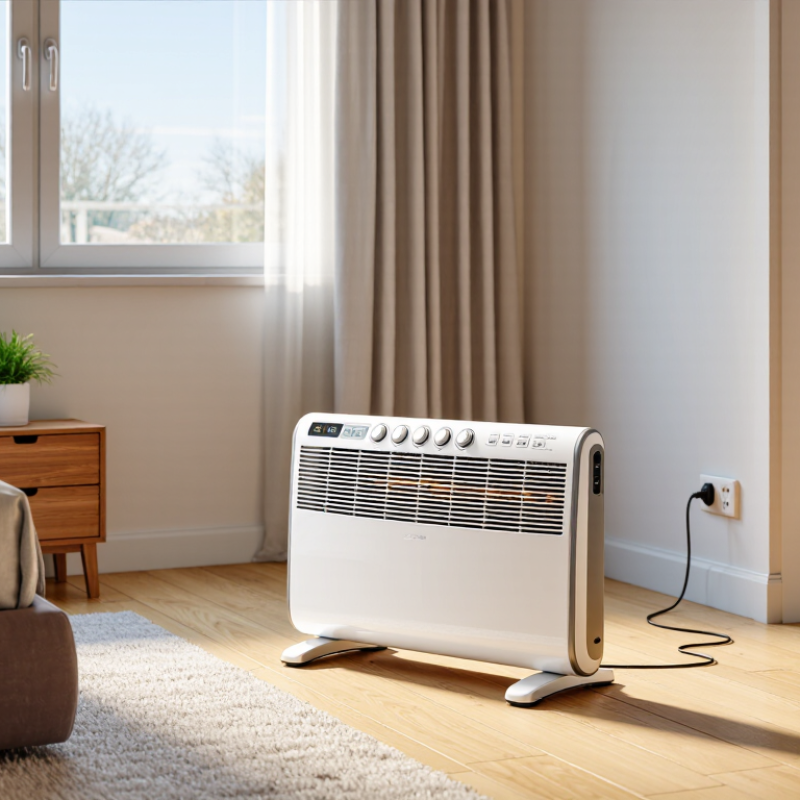
What Plug-In Heaters Are and How They Warm a Room
Plug-in heaters are compact electric appliances that draw power from a wall outlet to warm nearby air. Many use a resistance element, while some add a fan to move heated air around the room. The warmth is usually strongest close to the heater. It may take longer to reach a chilly corner, especially in a large or drafty space.
Tips: Check the heater’s instructions and keep its air openings clear. Place it on a stable, level surface, away from curtains, bedding, and furniture. Avoid using an extension cord unless the instructions specifically allow it. A clear space matters.
A thermostat can help maintain a steadier temperature, but it does not make every room equally warm. Closed doors, poor insulation, and high ceilings can affect performance. I’ve found it helpful to treat a plug-in heater as supplemental warmth, not a guaranteed replacement for central heating. And cold floors can still feel cold. Keep the heater where people can notice it, and switch it off when leaving the room or going to sleep, unless its instructions clearly provide otherwise.
Top Plug-In Heaters for Room Heating? — What Plug-In Heaters Are and How They Warm a Room
| Heater type | Typical electrical input | How it warms a room | Best suited to | Practical strengths | Things to consider |
|---|---|---|---|---|---|
| Ceramic fan heater | Commonly 750–1,500 W | An electric element heats ceramic material, and a fan moves the warmed air into the room. | Quick, temporary warmth in a small room or near a desk | Heats the nearby air quickly; many models offer more than one heat setting. | The fan can be audible, and warmth may be less noticeable once the heater is switched off. |
| Radiant or infrared heater | Commonly about 300–1,500 W | Infrared energy warms people and nearby objects directly rather than first heating all the room air. | Spot heating in a work area or seating area | Provides a direct feeling of warmth without needing a fan. | Comfort is strongest within the heater’s line of sight; objects close to the heater can become hot. |
| Oil-filled radiator | Commonly 700–1,500 W | An electric element heats sealed oil inside the radiator; the warm surface then heats surrounding air and objects. | Steadier supplemental warmth over a longer period | Operates quietly and continues releasing some stored heat after switching off. | Warms up more slowly than fan heaters, and the radiator can be hot to the touch. |
| Convection panel heater | Commonly about 400–1,500 W | Air warmed by the panel rises, while cooler air moves in to be heated, creating gradual air circulation. | Gentle supplemental heating in a small, reasonably enclosed room | Usually quiet and provides a steady flow of warmth without a fan. | Typically takes longer to change how warm the room feels than a fan heater. |
| Micathermic heater | Commonly about 600–1,500 W | Electrically heated mica panels release heat through a combination of radiant warmth and natural convection. | Supplemental heating where both direct and circulating warmth are useful | Often operates quietly and can begin warming nearby areas relatively quickly. | Surface temperature and performance vary by model; keep the unit clear of fabrics and furniture. |
| Compact personal plug-in heater | Often about 200–500 W | A small heating element warms air close to the unit, sometimes with a small fan. | Personal warmth close to a desk or workstation | Lower power use than a full-size portable heater when used for localized warmth. | Generally intended for nearby personal comfort, not for heating an entire room. |
How to compare output: Electric resistance heaters convert nearly all the electricity they use into heat at the point of use. A 1,500 W heater produces about 5,100 Btu per hour. The area it can keep comfortable depends on ceiling height, insulation, outdoor temperature, drafts, and the room layout, so wattage alone does not guarantee whole-room heating.
Safety: Follow the heater’s instructions, plug it directly into a suitable wall outlet, and keep it at least 3 feet (about 0.9 m) from bedding, curtains, furniture, and other combustible materials. Do not leave a portable heater unattended while operating.
Related Posts
-
Top 10 Portable Space Heaters for Global Buyers
-

What is a Baseboard Heater and How Does It Work?
-
10 Best Electric Shop Heaters for Efficient Winter Heating Solutions?
-
2025 How to Choose the Best Space Heater for Your Home Needs
-
How to Choose the Best House Heater for Your Home?
-
How to Choose the Best Portable Space Heater